
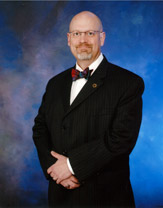
 Roman Catholicism has a gospel that does not give peace, because it fundamentally violates the Scriptural teaching on how one is made right with God. Rome has a false gospel that cannot save, hence, I have no reason to abandon the peace I have with God through Christ’s perfect atonement for the treadmill of Rome’s sacramental system of salvation… the person who has embraced the gospel of grace has not only landed his boat on the far side [of the Tiber River], but has torn the boat apart to use the wood as a pulpit from which to proclaim freedom in Christ to those trapped on the other shore. – Dr. James White
At his blog at www.aomin.org, Dr. White also writes:
Last week I received the following e-mail, and I felt it would be best to share my response here on the blog.
Dear Mr. White, For someone considering converting to Catholicism, what questions would you put to them in order to discern whether or not they have examined their situation sufficiently? Say, a Top 10 list. Thanks.
TOP TEN LIST
When I posted this question in our chat channel a number of folks commented that it was in fact a great question, and we started to throw out some possible answers. Here is my “Top Ten List” in response to this fine inquiry.
10. Have you listened to both sides? That is, have you done more than read Rome Sweet Home and listen to a few emotion-tugging conversion stories? Have you actually taken the time to find sound, serious responses to Rome’s claims, those offered by writers ever since the Reformation, such as Goode, Whitaker, Salmon, and modern writers? I specifically exclude from this list anything by Jack Chick and Dave Hunt.
9. Have you read an objective history of the early church? I refer to one that would explain the great diversity of viewpoints to be found in the writings of the first centuries, and that accurately explains the controversies, struggles, successes and failures of those early believers?
8. Have you looked carefully at the claims of Rome in a historical light, specifically, have you examined her claims regarding the “unanimous consent” of the Fathers, and all the evidence that exists that stands contrary not only to the universal claims of the Papacy but especially to the concept of Papal Infallibility? How do you explain, consistently, the history of the early church in light of modern claims made by Rome? How do you explain such things as the Pornocracy and the Babylonian Captivity of the Church without assuming the truthfulness of the very system you are embracing?
7. Have you applied the same standards to the testing of Rome’s ultimate claims of authority that Roman Catholic apologists use to attack sola scriptura? How do you explain the fact that Rome’s answers to her own objections are circular? For example, if she claims you need the Church to establish an infallible canon, how does that actually answer the question, since you now have to ask how Rome comes to have this infallible knowledge. Or if it is argued that sola scriptura produces anarchy, why doesn’t Rome’s magisterium produce unanimity and harmony? And if someone claims there are 33,000 denominations due to sola scriptura, since that outrageous number has been debunked repeatedly (see Eric Svendsen’s Upon This Slippery Rock for full documentation), have you asked them why they are so dishonest and sloppy with their research?
6. Have you read the Papal Syllabus of Errors and Indulgentiarum Doctrina? Can anyone read the description of grace found in the latter document and pretend for even a moment that is the doctrine of grace Paul taught to the Romans?
Continue reading
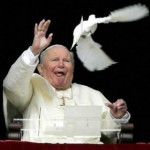 “Looking to Christianity’s third millennium, Pope John Paul II has declared “The Great Jubilee of the Year 2000?—and indulgences from punishment for sin are a centerpiece of the jubilee celebration. The practice which brought Luther to his break with Rome is once again front and center in Catholic practice as the new millennium approaches.
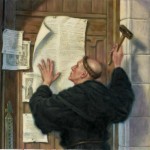 It was the appearance of Johannes Tetzel, a Dominican monk, selling indulgences for the building of St. Peter’s that so offended Martin Luther. The more Luther heard of Tetzel’s preaching, the more he saw the evil of the practice. The famous “Ninety-Five Theses” Luther nailed to the Wittenberg church door opened with an attack on the theological heart of the indulgences issue. His words still thunder through the centuries: “Those who believe that they can be certain of their salvation because they have indulgence letters will be eternally damned, together with their teachers” [Thesis 32]. “Any truly repentant Christian has a rich right to full remission of penalty and guilt, even without indulgence letters” [Thesis 36].
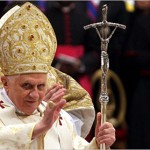 Bringing this issue up to date, the present Pope Benedict XVI places great importance on indulgences. Evidence of this is found in the following articles: