
Solving the moral debt crisis:
The Ledger of Peace:

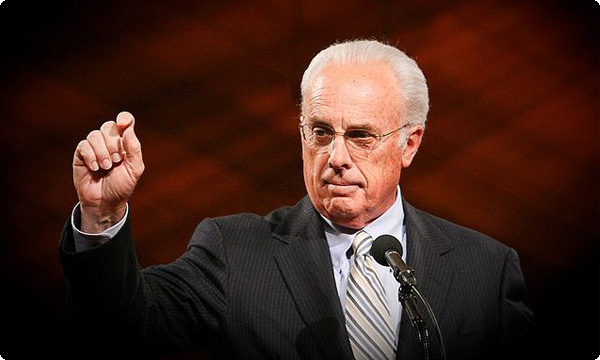 Article by John MacArthur (original source here)
Let’s be clear from the outset: The Roman Catholic doctrine of purgatory is taught nowhere in Scripture. It was invented to accommodate Catholicism’s denial of justification by faith alone. And it offers false hope to millions who anticipate ample time beyond the grave—perhaps eons, if necessary—to achieve their own justification.
Scripture very clearly teaches that an absolutely perfect righteousness is necessary for entry into heaven. Jesus said, “I say to you that unless your righteousness surpasses that of the scribes and Pharisees, you will not enter the kingdom of heaven” (Matthew 5:20). He then added, “Therefore you are to be perfect, as your heavenly Father is perfect” (Matthew 5:48)—thus setting the standard as high as it can possibly be set.
The Only Way to Heaven
Later in His ministry, when the rich young ruler approached Jesus to ask how he might enter heaven, Jesus upheld this same standard of absolute perfection. He began by challenging the clear implication that the young man hoped he could attain a sufficient goodness of his own to merit heaven: “Why are you asking Me about what is good? There is only One who is good” (Matthew 19:17). Notice: Jesus did not disclaim that He Himself was sinlessly perfect (a common misinterpretation of this passage). He was simply pointing out plainly that the standard of perfection required to earn heaven is impossible for fallen creatures.
Because the young man was undeterred by this, however, Jesus told him that to obtain eternal life, he must have a track record of perfect obedience to the law (Matthew 19:17-22). Again and again, Jesus made the required standard of righteousness impossibly high for all who would seek to earn God’s favor on their own.
The young ruler clearly did not understand or acknowledge his own sinfulness. He assured Jesus that he had indeed kept the law from his youth up (v. 20).
Jesus subtly pointed out the young man’s covetousness (v. 21), which was a violation of the tenth commandment. From the outset of His conversation with the young man, the Lord was prodding him to confess that no one but God Himself is truly good. But the rich young ruler was unwilling to face his own sinfulness, and so he went away without salvation.
The disciples marveled at this. The young man was evidently—from a human perspective—one of the most righteous individuals they’d encountered. Notice that no one disputed his claim that he had obeyed the law. That suggests there were no overt sins in his life that anyone could point to. He seemed the best of men. So the disciples were floored when he walked away with no assurance of eternal life from Jesus. In fact, Jesus told them, “Truly I say to you, it is hard for a rich man to enter the kingdom of heaven. Again I say to you, it is easier for a camel to go through the eye of a needle, than for a rich man to enter the kingdom of God” (Matthew 19:23-24).
There’s no mistaking Jesus’ point. He was setting the standard at an impossible height. He was saying that the most fastidious legal observance is not enough. The most flawless external righteousness is not enough. All the worldly advantages of wealth are of no help. Only absolute perfection is acceptable to God. Our Lord kept underscoring these truths because He wanted people to see the utter futility of trying to earn righteousness by any system of works.
The disciples got the message. They asked, “Then who can be saved?” (Matthew 19:25).
And Jesus replied, “With people this is impossible, but with God all things are possible” (Matthew 19:26).
Accepted By Imputation
We know from Paul’s treatise on justification in Romans 4 that God saves believers by imputing to them the merit of Christ’s perfect righteousness—by no means because of their own righteousness. God accepts believers “in Christ.” He clothes them with the perfect righteousness of Christ. He declares them perfectly righteous because of Christ. Their sins have been imputed to Christ, who has paid the full penalty. His righteousness is now imputed to them—and through His imputed righteousness—they receive His full merit. That is what justification by faith means. The Father “made Him who knew no sin to be sin on our behalf, so that we might become the righteousness of God in Him” (2 Corinthians 5:21). Continue reading
 (Updated)
In July of 2013 the Vatican announced that indulgences would be granted not only to those attending World Youth Day in Rio de Janeiro, held from July 23 to 28, but also to the faithful who followed the events through what the decree called the new means of social communication, the papal Twitter account included. A good many people were surprised. The only thing new about it was the Twitter component.
Let me be fair to Rome before I am critical of Rome. The announcement was not as automatic as the headlines made it sound. Archbishop Claudio Maria Celli, then head of the Pontifical Council for Social Communications, said plainly that merely checking the pope’s Twitter feed would not obtain an indulgence for anyone, and that the one seeking it must be truly contrite. He was right about his own church’s teaching. The usual conditions still applied: sacramental confession, Holy Communion, and prayer for the intentions of the pope. Partial indulgences had already been available at World Youth Day in Madrid in 2011 to those who followed from a distance and met the same spiritual conditions. Rio simply spelled it out.
Which is the very point I want to press. There was no innovation here, and no aberration. The doctrine of indulgences remains a settled teaching of the Roman Catholic Church.
PURGATORY
(Latin: purgatorium, from purgare, to purge). The condition, process, or place of purification. According to Rome, it is where the souls of those who die in a state of grace are made ready for heaven.
The doctrine of purgatory is integral to the Roman Catholic understanding of redemption.
Let me state Rome’s position carefully, because it is often misreported, and because the truth of it is more troubling than the caricature. Rome does not teach that the soul in purgatory is waiting to learn whether it is saved. The Catechism is explicit that these are the souls who die in God’s grace and friendship (CCC 1030). On Rome’s own terms they are already justified. They are certainly going to heaven. What remains, says Rome, is purification: the discharge of a debt of temporal punishment that forgiveness did not cancel.
Rome insists that purgatory is not hell, and Rome does not describe it as the outpouring of divine wrath. The word Rome uses is purification.
How long does it last? The Catechism gives no measure, and Rome has deliberately avoided assigning any temporal value to it. Sit with that silence for a moment, because the silence is the pastoral problem. A soul in Rome’s purgatory is forgiven, is loved, is certainly bound for heaven, and cannot be told when the purging will end. That is no small thing to say to a widow standing at a graveside.
I would now like to take you through all the Bible verses that teach the doctrine of purgatory ______________________.
Well, that did not take long, because there are none. We do not find either the word or the concept of purgatory anywhere in Scripture. It is a tradition of the Roman Catholic Church that developed over a long period of time.
WHERE INDULGENCES CAME FROM
At the Council of Clermont in November 1095, Pope Urban II called for what became the First Crusade. The official canons of that council do not survive, but according to the list preserved by Lambert of Arras, who was present, the council decreed that whoever went to Jerusalem to liberate the Church of God out of devotion alone, and not to gain honour or money, could count that journey in place of all penance. Historians generally regard this as the first unambiguous plenary indulgence. Several later accounts of Urban’s preaching go further than the canon does, reporting that those who took up the pilgrimage and died on it might be assured of the forgiveness of their sins and of eternal reward. None of those accounts was written down at the time, and they differ among themselves, so I give the substance they share and not a sentence from his mouth.
Mark the chronology, because it matters. Purgatory as a defined doctrine was still taking shape in 1095. It would not be formally defined until the Second Council of Lyons in 1274, and again at the Council of Florence in 1439. The indulgence and the doctrine grew up together.
THE TREASURY OF MERIT
(Latin: thesaurus meritorum). Rome teaches that the church possesses a treasury of spiritual goods. The Catechism describes it as the infinite value, which can never be exhausted, which the merits of Christ have before God (CCC 1476).
Then comes the sentence that ought to stop every reader. The same treasury, says the very next paragraph, holds also the prayers and good works of the Blessed Virgin Mary, and the prayers and good works of all the saints, who in attaining their own salvation are said to have cooperated in the saving of their brethren (CCC 1477).
Set those two paragraphs side by side and see the difficulty. Infinite is not a figure that takes additions. If the treasury is already inexhaustible in Christ, nothing Mary prayed and nothing any saint did can raise the balance by so much as a penny. The moment anything is deposited alongside the merits of the Son of God, something has been said about the sufficiency of those merits, and it is not a compliment.
Mary was a wonderful sister in Christ, and she herself was well aware of her need of salvation. “And Mary said, My soul magnifies the Lord, and my spirit rejoices in God my Savior” (Luke 1:46 to 47). Mary was saved by believing in her Son, the Lord Jesus Christ, in exactly the way anyone else is saved.
Who opens the treasury? The Catechism grounds it in the power of binding and loosing, saying that the church intervenes on behalf of individual Christians and opens for them the treasury of the merits of Christ and the saints (CCC 1478). In practice the granting of indulgences is handled by the Apostolic Penitentiary, a permanent office of the Roman Curia, and diocesan bishops may grant partial indulgences within their own territories under current canon law (canons 992 to 997).
INDULGENCES
An indulgence, the Catechism says, is a remission before God of the temporal punishment due to sins whose guilt has already been forgiven (CCC 1471). It is partial or plenary according to whether it removes part or all of that punishment, and it may be gained for oneself or applied to the dead.
Two corrections are needed here to what is commonly said about indulgences, including by me in the original version of this article.
First, indulgences are no longer counted in days and years. Older grants carried designations such as “three years and three quarantines,” and those figures never measured time in purgatory. They referred to periods of canonical penance on earth. Pope Paul VI abolished the classification altogether in his apostolic constitution Indulgentiarum Doctrina of January 1, 1967. Today an indulgence is simply partial or plenary, with no number attached.
Second, indulgences are not sold, and have not been sold since the Council of Trent. Anyone who says otherwise is attacking a practice Rome ended four centuries ago.
Now notice what that second correction costs Rome. Nothing whatever. And it happened in two stages, seventeen months apart.
At the twenty-first session, on July 16, 1562, Trent abolished the questors of alms, the licensed collectors whose conduct had scandalized Europe, declaring their name and office henceforth utterly abolished. Indulgences were in future to be announced by the local bishops, with the alms received by two members of the chapter who were to take nothing for themselves, so that everyone might understand that these treasures of the church are administered not for gain but for godliness.
Then at the twenty-fifth session, on December 3 and 4, 1563, the council turned to the doctrine itself. It declared the use of indulgences most salutary, pronounced its anathema on anyone who says they are useless or that the church has no power to grant them, and abolished the evil gains that had attached to them.
The council dismissed the sales force and kept the product. What Trent reformed was the delivery system. The doctrine came through untouched, and it is still in place.
THE SABBATINE PRIVILEGE
One example shows how such traditions come into being and how long they can outlive their evidence.
In its classic form the Sabbatine Privilege held that those who fulfil certain requirements will be released from purgatory by the Blessed Virgin on the Saturday after they die. The requirements are the wearing of the brown scapular with proper enrolment, chastity according to one’s state in life, and the daily recitation of the Little Office of the Blessed Virgin, or an approved substitution.
The privilege takes its authority from a bull attributed to Pope John XXII, Sacratissimo uti culmine, dated March 3, 1322, in which the pope is represented as reporting an apparition of Mary.
Here is the part the devotional literature rarely mentions. The bull is a forgery. This is not a Protestant accusation. The Catholic Encyclopedia of 1913 calls it apocryphal in its opening sentence, notes that no original appears in the registers of John XXII’s pontificate, and records that the Carmelite historian Benedict Zimmerman joined in rejecting it. Carmelite scholars have traced it to a Sicilian forgery of the fifteenth century.
And yet the privilege was preached for centuries. In 1613 the Holy Office under Pope Paul V issued a decree setting out what the Carmelites might preach of the privilege. That decree makes no reference at all to the bull of John XXII, and none to the apparition, and it does not simply repeat the guaranteed release. What it permits is the pious belief that Mary will assist the souls of members after death by her intercession, her merits and her protection, and especially on Saturdays.
So the document was eventually set aside as a basis of proof. The devotion did not go with it. It was reformulated and allowed to continue.
That sequence is worth remembering. A devotional promise can long outlive the paperwork that once justified it, and people will keep resting their eternity on it.
BACK TO INDULGENCES
By Luther’s day, the early sixteenth century, indulgences had become a remarkably effective means of raising money. The indulgence preached in Germany in 1517 was authorized to fund the rebuilding of St. Peter’s Basilica in Rome, and a share of the proceeds went to repay the debt Albert of Brandenburg had incurred with the Fugger bank to secure the see of Mainz while already holding other sees. St. Peter’s took some hundred and twenty years to build and drew on many streams of revenue, so it would be too much to say the basilica was built on indulgences. It is not too much to say the indulgence was preached to pay for it.
It was the preaching of this doctrine that sparked the Protestant Reformation into flame. When John Tetzel, a Dominican, came into Germany with the indulgence, he so incensed Martin Luther, an Augustinian friar, that Luther lifted his voice in protest.
A long and lurid speech is usually attributed to Tetzel at this point, and I quoted it at length in the original version of this article. I have removed it. It reaches us through J. H. Merle d’Aubigne’s nineteenth century History of the Reformation, and d’Aubigne’s set speeches are literary reconstructions rather than transcripts. No contemporary manuscript of Tetzel preaching those words survives. The gospel has no need of embellished history, and quoting such a speech only hands a critic an easy way out of the argument.
What we do have is better, because it comes from Luther’s own hand at the time. In Thesis 27 he condemned those who preach that the moment “the money clinks into the money chest,” the soul flies out of purgatory. Whether Tetzel used those exact words or not, Luther heard the substance of it preached, and he named it as the doctrine of men.
The ninety-five theses went to the heart of the matter. In Thesis 32 Luther warned that those who suppose themselves certain of salvation because they hold letters of indulgence will be damned along with their teachers. In Thesis 36 he insisted that any truly repentant Christian has full remission of penalty and guilt, and has it “even without indulgence letters.”
Luther wrote them in Latin, hoping to open a scholarly debate with his peers. Whether he nailed them to the door of the Castle Church at Wittenberg on October 31, 1517, has been debated among historians since Erwin Iserloh challenged the account in 1961. What is documented beyond dispute is the letter Luther sent that same day to Albert of Mainz, enclosing the theses and protesting the preaching of the indulgence. Some of his students, without his permission, translated them into German and put them through the printing press, an invention then some sixty years old. Luther’s friend Friedrich Myconius later reported that within a fortnight they had run through the whole of Germany.
Go to Rome today and you can climb the Scala Sancta, the Holy Stairs near the Lateran, on your knees, and an indulgence is still attached to the climb. What you will not find, since 1967, is a posted tariff telling you how many days it is worth. The bookkeeping was retired. The doctrine was not.
WHAT SCRIPTURE SAYS
We are told that it is appointed for man to die once, and after that comes judgment (Hebrews 9:27). There is no intermediate state in which anyone improves his condition after this life. If a person is not ready to go to heaven at the moment of death, he never will be.
And the reason a believer is ready is not that he has finished paying. It is that the payment was finished for him. “For by a single offering he has perfected for all time those who are being sanctified” (Hebrews 10:14). The writer draws his own conclusion four verses later: “Where there is forgiveness of these, there is no longer any offering for sin” (Hebrews 10:18). No longer any offering. Not a smaller one, not a supplementary one, not a further satisfaction to be made by the sinner or borrowed from a saint.
This is the whole difference over justification. The Protestant view, recovered by Luther out of Scripture, is that the moment a person puts his faith in Jesus Christ, at that moment he has passed from death to life, and his entrance into heaven is a matter of certainty. He still goes through the whole process of sanctification in this world, but when he dies he receives the benefits of a justification he already possessed. Those who are justified have peace with God right now, and access into His presence.
Luther saw the point before he had fully worked out the gospel. Buried in the ninety-five theses, at number sixty-two, is the sentence that answers the treasury of merit across five centuries: the true treasure of the church is “the most holy gospel of the glory and grace of God.”
FAITH ALONE
Against the background of a Europe filled with the traditions of men, including priestly absolution, penances, indulgences, pilgrimages, and prayer to the saints, Luther and the Reformers made the bold cry of faith alone. This did not mean faith in isolation, or a dead faith that produced no works. It referred to a living faith, for only a living and not a dead faith results in justification. Faith without works is dead, and a dead faith will not save anyone (James 2:17). Sola fide, faith alone, was the conviction that faith alone is the instrument of justification, without any meritorious works of man added to it.
Rome believed then, as it does now, that justification is by grace, through faith, and because of Christ. What Rome does not believe is that justification is by faith alone, or by grace alone, or by Christ alone. For Rome, justification is by grace plus merit, through faith plus works, by Christ plus the sinner’s contribution of inherent righteousness.
In contrast, the Reformers called the church back to the one true biblical gospel. Salvation is by God’s grace alone, received through faith alone, because of Christ alone, on the authority of Scripture alone, to the glory of God alone.
May I ask you something? When you stand before God, what will you have to plead? A treasury administered by an office in Rome, released by decree, with conditions attached and terms subject to revision? Or the blood and obedience of the Son of God, reckoned to your account, finished at Calvary, and never once withdrawn?
He has perfected for all time those who are being sanctified. To Him be the glory, forever. Amen.