

How to Distinguish Genuine Christianity from False Teaching

Dan PhillipsBy Pastor Dan Phillips (original source cook, working as an investigator, hosting a talk show, IT education and support, and teaching in various institutions. He is a pastor, an author, and an international conference speaker. He has written two books: The World-Tilting Gospel (Kregel: 2011), and God’s Wisdom in Proverbs (Kress Biblical Resources: 2011). He was also one of the three contributors to the popular and influential blog, Pyromaniacs. He pastors Copperfield Bible Church in Houston, Texas, where he lives with his dear wife Valerie and two of their four children.)

Every Christian is called to contend earnestly for the faith delivered to the saints 2000 years ago (Jude 3) in Scripture alone (2 Timothy 3:15—4:4; Hebrews 2:1-4). There are various legitimate ways of doing this. Paul’s approach with the Colossian error is particularly instructive.

The Colossians had a sound beginning, learning the saving good news of Christ from Paul’s associate Epaphras (Col. 1:7). They had made a healthy start (Col. 1:4-6, 8).

But now a personable, dynamic individual had come with a strange mix-and-match set of doctrines. Like modern charismatics, he made much of his own experiences (2:18). He posed a real danger to these young believers (2:4, 8).

Paul’s way of responding is striking. He doesn’t name the man, or go into detail about his teachings. Instead, what Paul does is make a great deal about Christ and His salvation. He shows what a glorious Lord Jesus is, and what a great salvation Christ has accomplished (see all my online studies, starting here).

As promised last time, I want to do this same sort of thing in marking off genuine Christianity from false teachings. Get a hold of these points of distinction, and you’ll be prepared to resist error – or be delivered from the error that enslaves you.

1. Sound doctrine spotlights the person and work of Jesus Christ

This is a matter of emphasis. Christ saw all parts of the Old Testament as pointing to Him (Luke 24:27, 44) and said that the ministry of the Spirit would be to continue to glorify Him (John 16:14). Understood correctly, then, everything in the whole Bible tends to the glory of Jesus Christ, and to prompt us to center our lives around Him (Col. 2:6, 7, 10). False teaching always ends up focusing our attention elsewhere and has us chasing in a different direction.

2. Sound doctrine is based on the saving work of Christ, conveyed to us in the Gospel

It glories in every aspect of Christ’s work redeeming helpless, lost sinners (Romans 3—5; Ephesians 1—3; and on and on). Everything – whether issues of personal ethics, marriage, family, church life –is directly related to who Jesus is to us, and what Jesus has done for us (cf. Eph. 4:1—6:9). False teaching has little time for such matters, being obsessed instead with the esoteric, private experiences that only the false teacher and his movement has had or can provide.

3. Sound doctrine is really, really old

Age alone is no guarantee of truth. The germs of every heresy ever hatched were already prowling around in New Testament times. That said, two truths guide us: (1) our doctrine must be clearly taught in the Bible; and (2) someone must surely have seen something about it before today! The Bible contains every word we need from God. Believers have studied it closely for centuries. Is it possible that someone could catch something major that tradition blinded others to? Yes. But possible is not a synonym for likely! It is unlikely that an isolated, accountability-averse autodidact with his KJV will see what all his betters missed, despite their years of delving deep in the Hebrew and Greek texts. Spurgeon said a number of times, “There is nothing new in theology but that which is false.” The more I learn the Bible and history, the more I see this truth: every claim to a “new move of God” is probably neither new, nor of God. God said His last word to us long, long ago (Hebrews 1:1-2; 2:1-4). Continue reading
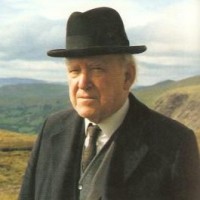

No True Evangelism Without It

martyn-lloyd-jones2_12There is no true evangelism without the doctrine of sin, but I say that a gospel which merely says ‘Come to Jesus,’ and offers Him as a Friend, and offers a marvelous, new life, without convicting of sin, is not New Testament evangelism. The essence of evangelism is to start by preaching the law; and it is because the law has not been preached that we have had so much superficial evangelism. Go through the ministry of our Lord Himself and you cannot but get the impression that at times, far from pressing people to follow Him and to decide for Him, He put great obstacles in their way. He said in effect: ‘Do you realize what you are doing? Have you counted the cost? Do you realize where it may lead you? Do you know that it means denying yourself, taking up your cross daily and following Me?’ True evangelism, I say, because of this doctrine of sin, must always start by preaching the law. This means that we must explain that mankind is confronted by the holiness of God, by His demands, and also by the consequences of sin. It is the Son of God Himself who speaks about being cast into hell. If you do not like the doctrine of hell you are just disagreeing with Jesus Christ. He, the Son of God, believed in hell; and it is in His exposure of the true nature of sin that He teaches that sin ultimately lands men in hell. So evangelism must start with the holiness of God, the sinfulness of man, the demands of the law, the punishment meted out by the law and the eternal consequences of evil and wrongdoing. It is only the man who is brought to see his guilt in this way who flies to Christ for deliverance and redemption. Any belief in the Lord Jesus Christ which is not based on that is not a true belief in Him. You can have a psychological belief even in the Lord Jesus Christ; but a true belief sees in Him one who delivers us from the curse of the law. True evangelism starts like that, and obviously is primarily a call to repentance, ‘repentance toward God, and faith toward our Lord Jesus Christ.’

D. MARTYN LLOYD-JONES, STUDIES IN THE SERMON ON THE MOUNT, [GRAND RAPIDS: WM. B. EERDMAN’S PUBLISHING COMPANY: 1984], 207.

Expository Preaching – The Cure for Anemic Worship

MohlerBy Al Mohler (original source sparking a renaissance of thought and conversation on what worship really is and how it should be done. Even if this renewed interest has unfortunately resulted in what some have called the “worship wars” in some churches, it seems that what A. W. Tozer once called the “missing jewel” of evangelical worship is being recovered.

Nevertheless, if most evangelicals would quickly agree that worship is central to the life of the church, there would be no consensus to an unavoidable question: What is central to Christian worship? Historically, the more liturgical churches have argued that the sacraments form the heart of Christian worship. These churches argue that the elements of the Lord’s Supper and the water of baptism most powerfully present the gospel. Among evangelicals, some call for evangelism as the heart of worship, planning every facet of the service—songs, prayers, the sermon—with the evangelistic invitation in mind.

Though most evangelicals mention the preaching of the word as a necessary or customary part of worship, the prevailing model of worship in evangelical churches is increasingly defined by music, along with innovations such as drama and video presentations. When preaching the word retreats, a host of entertaining innovations will take its place.

Traditional norms of worship are now subordinated to a demand for relevance and creativity. A media-driven culture of images has replaced the word-centered culture that gave birth to the Reformation churches. In some sense, the image-driven culture of modern evangelicalism is an embrace of the very practices rejected by the Reformers in their quest for true biblical worship.

Music fills the space of most evangelical worship, and much of this music comes in the form of contemporary choruses marked by precious little theological content. Beyond the popularity of the chorus as a musical form, many evangelical churches seem intensely concerned to replicate studio-quality musical presentations.

In terms of musical style, the more traditional churches feature large choirs—often with orchestras—and may even sing the established hymns of the faith. Choral contributions are often massive in scale and professional in quality. In any event, music fills the space and drives the energy of the worship service. Intense planning, financial investment, and priority of preparation are focused on the musical dimensions of worship. Professional staff and an army of volunteers spend much of the week in rehearsals and practice sessions.

All this is not lost on the congregation. Some Christians shop for churches that offer the worship style and experience that fits their expectation. In most communities, churches are known for their worship styles and musical programs. Those dissatisfied with what they find at one church can quickly move to another, sometimes using the language of self-expression to explain that the new church “meets our needs” or “allows us to worship.”

A concern for true biblical worship was at the very heart of the Reformation. But even Martin Luther, who wrote hymns and required his preachers to be trained in song, would not recognize this modern preoccupation with music as legitimate or healthy. Why? Because the Reformers were convinced that the heart of true biblical worship was the preaching of the word of God.

Thanks be to God, evangelism does take place in Christian worship. Confronted by the presentation of the gospel and the preaching of the word, sinners are drawn to faith in Jesus Christ and the offer of salvation is presented to all. Likewise, the Lord’s Supper and baptism are honored as ordinances by the Lord’s own command, and each finds its place in true worship.

Furthermore, music is one of God’s most precious gifts to his people, and it is a language by which we may worship God in spirit and in truth. The hymns of the faith convey rich confessional and theological content, and many modern choruses recover a sense of doxology formerly lost in many evangelical churches. But music is not the central act of Christian worship, and neither is evangelism nor even the ordinances. The heart of Christian worship is the authentic preaching of the word of God.

Expository preaching is central, irreducible, and nonnegotiable to the Bible’s mission of authentic worship that pleases God. John Stott’s simple declaration states the issue boldly: “Preaching is indispensable to Christianity.” More specifically, preaching is indispensable to Christian worship—and not only indispensable, but central.

The centrality of preaching is the theme of both testaments of Scripture. In Nehemiah 8 we find the people demanding that Ezra the scribe bring the book of the law to the assembly. Ezra and his colleagues stand on a raised platform and read from the book. When he opens the book to read, the assembly rises to its feet in honor of the word of God and respond, “Amen, Amen!”

Interestingly, the text explains that Ezra and those assisting him “read from the book, from the law of God, translating to give the sense so that they understood the reading” (Neh 8:8). This remarkable text presents a portrait of expository preaching. Once the text was read, it was carefully explained to the congregation. Ezra did not stage an event or orchestrate a spectacle—he simply and carefully proclaimed the word of God.

This text is a sobering indictment of much contemporary Christianity. According to the text, a demand for biblical preaching erupted within the hearts of the people. They gathered as a congregation and summoned the preacher. This reflects an intense hunger and thirst for the preaching of the word of God. Where is this desire evident among today’s evangelicals?

In far too many churches, the Bible is nearly silent. The public reading of Scripture has been dropped from many services, and the sermon has been sidelined, reduced to a brief devotional appended to the music. Many preachers accept this as a necessary concession to the age of entertainment. Some hope to put in a brief message of encouragement or exhortation before the conclusion of the service.
As Michael Green so pointedly put it: “This is the age of the sermonette, and sermonettes make Christianettes.”

The anemia of evangelical worship—all the music and energy aside—is directly attributable to the absence of genuine expository preaching. Such preaching would confront the congregation with nothing less than the living and active word of God. That confrontation will shape the congregation as the Holy Spirit accompanies the word, opens eyes, and applies that word to human hearts.