
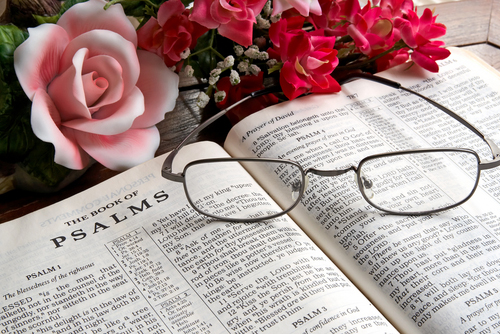
 Article by Brandon Craig: Exclusive Psalmody: is it Biblical? Is it the only Reformed position? (Part 1) (Original source here) (Part 2 below)
This is the first part in a series on Exclusive Psalmody. For those who are unaware Exclusive Psalmody (referred to as EP from here on out) is the claim that we are only to sing Psalms in corporate worship and no uninspired songs may be sung. To understand EP one has to know a bit about the Regulative Principle of Worship (RPW). The RPW says that in corporate worship we may only do those things that God has commanded. This is in contrast to the Normative Principle of Worship (NPW) which says that anything God has not forbidden, is acceptable in worship. So for example the Bible never says we cannot watch someone do a painting on stage during corporate worship as a form of worship. The NPW would say that means painting on stage is an acceptable form of corporate worship. The RPW would reject this because we have no command in Scripture to paint as a form of worship. Examining the merits of the RPW is a worthy endeavor that I most assuredly will undertake at some point on my blog. However we will accept it as correct for this series. (For if it is incorrect then EP has no argument whatsoever. However the RPW is a key part of Reformed theology and thus we are discussing an “in house” issue where both sides already accept the RPW).
Now adherents to EP will say that you cannot accept the RPW without holding to EP. Along with that in the circles that I debate and discuss online the EP adherents like to imply that one is not truly reformed if they do not hold to EP. They will bring up reformers who held to EP and if a person didn’t know better you would think that historically EP was the only position any of the reformers ever held to. In this article I wish to show that EP was not the only position held by the reformers and that those who are reformed and sing hymns are in good company both historically and today. In future parts to this series I intend to show that one may hold to the RPW and still consistently reject EP.
The natural place to start would be to consider if the New Testament church practiced singing exclusively the 150 Psalms recorded in the book of Psalms. I of course will have to answer this more in depth in future posts because I intend to look at Scripture itself to consider if EP is what is prescribed. However a brief look is warranted. Starting in Acts 2:42 42 “And they continued steadfastly in the apostles’ doctrine and fellowship, in the breaking of bread, and in prayers” if we are to agree with Calvin’s interpretation those prayers are both spoken and sung (1).
The next important place to look is 1 Cor 14:26 How is it then, brethren? Whenever you come together, each of you has a psalm, has a teaching, has a tongue, has a revelation, has an interpretation. Let all things be done for edification.
When we look at this list it would be poor exegesis to say that the psalm a person brings is an already used song (from the Psalter). None of the other things on the list would be something previously used. Context says that the psalm a person brings would be one he composed. Consider from that list if another person were to bring a teaching or a revelation. They would not be bringing something someone else has already said. They would be bringing something they have “composed” themselves. It is clear then that the psalm a person would bring would also be a newly composed psalm.
Finally we have Pliny the Younger when he reported about the Christians saying that they could be distinguished by their singing of hymns to Christ as unto a god. Now some have said that just means they were singing the psalms that talk about the Messiah. However if that was the case it would not distinguish them from the Jews whatsoever since they sang those same songs. What makes sense here is that they were singing newly composed hymns written to Christ as God. (1)
Moving forward to the Reformation, it is well known that Luther composed and sang hymns in worship. Of course many EP proponents will dismiss this as Luther had some Roman Catholic carryovers and they will say he wasn’t fully reformed. Nonetheless as the first reformer it is noteworthy that Luther fully embraced singing hymns in worship.
The next example I have is a bit tongue in cheek but Zwingli was not an adherent of Exclusive Psalmody. That is because he did not allow any singing in public worship whatsoever but still he did not practice the singing of only Psalms. I later intend to show that if we take the EP principles to their logical conclusion we would end up like Zwingli in saying that there is no place for song whatsoever in corporate worship.
Calvin is a bit hard to pin down. Several quotes from him make it clear that he preferred the Psalms however in all his writing there is no condemnation of singing newly composed hymns. The Genevan Psalter which Calvin oversaw contained songs that were not part of the book of Psalms (as he included a metrical version of the 10 Commandments, the Lord’s Prayer, a hymn, and the Apostle’s Creed). Also as I have previously mentioned Calvin held that prayers were and could be sung. Additionally Calvin on the command in Scripture to sing “psalms, hymns, and spiritual songs” said this: “Moreover, under these three terms he includes all kinds of songs. They are commonly distinguished in this way: a psalm is sung to the accompaniment of some musical instrument, a hymn is properly a song of praise, whether it be sung simply with the voice or otherwise; an ode contains not merely praise, but exhortation and other matters. He wants the songs of Christians to be spiritual, and not made up of frivolities and worthless trifles.” The last line indicates that songs of Christians may be newly composed. If Calvin believed we must only sing from the book of Psalms he would have no need to clarify that our songs must be spiritual and not composed of frivolities. (2) Continue reading