
Preaching is not Magical

Article by Dan Phillips: Original source here.

Christian worship is a supernatural event – but it is not a magic show.

In pagan worship, forms and rituals are thought to be inherently effective. The Latin phrase is ex opere operato, “from the work worked.” It is the idea that we can do things that in turn will make God do things. This is the essence of paganism and of magic: that forms of worship or manipulation produce supernatural effects simply by our performing them correctly.

In Harry Potter, it’s saying the right gibberish-Latin words (“Wingardium leviosa!”). In other literature, it’s gestures, or words-plus-gestures. In some lands, it’s sacrifice and incantation.

My fear is that some evangelicals – despite our call to reject all paganism – unwittingly entertain a faux-baptized form of the same sorts of expectations and beliefs.

How so?

We (correctly) affirm that the Bible is not just a book, not a mere collection of human musings. It is the word of God, “living and active and sharper than any two-edged sword” (Hebrews 4:12). It is “God-breathed” (2 Timothy 3:16), and communicates the mind of God (1 Corinthians 2:12-13). It is the means of saving faith (Romans 10:17), and of growth in holiness (John 17:17). It is truly a marvel, a gift from God.

So we (again correctly) make the preaching of the Word the center of our corporate worship. This reflects the stated priorities of Christ (John 8:31-32) and His apostles (1 Timothy 4:13; 2 Timothy 4:2). So far, so good.

But here comes the disconnect: sometimes both preacher and hearers get the idea that, if we do that right – that is, preach the Word faithfully – then God must do great and wonderful things, along the lines of our expectations. Sinners will be saved, saints will be transformed and matured, churches will grow. Glory all around. It’s guaranteed!

Right? Wrong.

I yield to no man in my absolute conviction of the centrality of God’s written word to all thought, faith, worship and practice. It is that very conviction which compels me to point out the corollary truth:

The glory of God requires not only faithful preaching of the Word, but also faithful hearing of the Word.

Once you see it, you will find this verity literally all over Scripture. Take Deuteronomy 28:1 – “And if you faithfully obey the voice of the LORD your God, being careful to do all his commandments that I command you today, the LORD your God will set you high above all the nations of the earth.” This verse brims with vital truth.

We see here the voice of Yahweh your God – something many Christians say they long to hear. But what they mean by it is not what God means by it. They mean some mystical, subjective inner experience, where they feel something that they identify as God’s voice. This verse means nothing of the kind. It locates God’s voice not within us, but in God’s commandments. God’s voice is God’s written Word.

But beyond that, note that God’s blessing on national Israel was conditioned on their faithfully obeying that voice, that written Word. The Hebrew words translated if you faithfully obey are more literally if hearing you will hear – which is to say, if you will intently listen, so that you may obey.

Though Scripture itself was God’s mighty voice, it would accomplish no good for the Israelites if they did not listen closely, so as to understand, remember, and do what God told them.

“Ah, yes,” I can hear some neo-mystic murmur. “That was the Old Testament. This is the age of the Spirit. Everything’s changed!”

Has it, now?

Turn to Hebrews 3:7, where we read, “Therefore, as the Holy Spirit says…” There it is: the Holy Spirit speaks! Now, today, in the present tense! The writer is about to quote Him for us. What will He say?

Listen: “Today, if you hear his voice, do not harden your hearts as in the rebellion…” (vv. 7b-8a). Wait, those words are familiar. Where did we hear them before? Check the marginal note…oh, there it is: Psalm 95:7-8.

What? But that’s the Old Testament. This New Testament writer is saying that an Old Testament verse is, today, now the voice of the Holy Spirit, speaking to us?

Indeed he is saying that. He learned it from the Old Testament. The voice of God is the written word of God, not an inner glorpy gloop in the gizzard.

Now note what the Holy Spirit is saying: He says, “Today if you hear His voice, do not harden your hearts,” as Israel did in the wilderness. He is not saying, “If you feel something you think is God, chase it down.” Rather, the Spirit is saying, “When you read or hear God’s written Word, do not harden your heart.”

What does that tell us? It is possible to hear God’s word, in its full power and authority, and still receive no blessing, and engage in no worship. How? The writer of Hebrews will tell us in the next chapter:

Therefore, while the promise of entering his rest still stands, let us fear lest any of you should seem to have failed to reach it. For good news came to us just as to them, but the message they heard did not benefit them, because they were not united by faith with those who listened. (Hebrews 4:1–2)

The message was heard by the outer ear, but it was not welcomed into a heart of faith. So not only did it not benefit them, it positively condemned them (cf. John 12:48; 15:22).

So yes, what a preacher preaches makes all the difference as to whether a service is or is not truly a worship service that glorifies God.

But how the hearers hear is no less important.
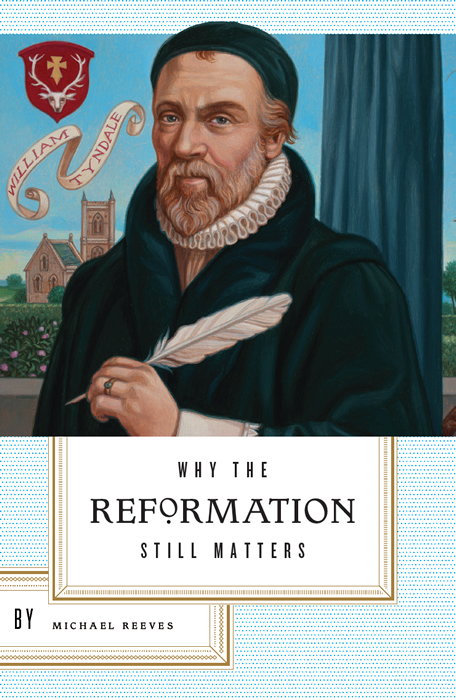
Why the Reformation Still Matters

Dr. Michael Reeves is president and professor of theology at Union School of Theology. He is author of many books, including Delighting in the Trinity. In an article in Tabletalk magazine (available here) he writes:

Last year, on October 31, Pope Francis announced that after five hundred years, Protestants and Catholics now “have the opportunity to mend a critical moment of our history by moving beyond the controversies and disagreements that have often prevented us from understanding one another.” From that, it sounds as if the Reformation was an unfortunate and unnecessary squabble over trifles, a childish outburst that we can all put behind us now that we have grown up.

But tell that to Martin Luther, who felt such liberation and joy at his rediscovery of justification by faith alone that he wrote, “I felt that I was altogether born again and had entered paradise itself through open gates.” Tell that to William Tyndale, who found it such “merry, glad and joyful tidings” that it made him “sing, dance, and leap for joy.” Tell it to Thomas Bilney, who found it gave him “a marvellous comfort and quietness, insomuch that my bruised bones leaped for joy.” Clearly, those first Reformers didn’t think they were picking a juvenile fight; as they saw it, they had discovered glad tidings of great joy.

GOOD NEWS IN 1517
At the beginning of the sixteenth century, Europe had been without a Bible the people could read for something like a thousand years. Thomas Bilney had thus never encountered the words “Christ Jesus came into the world to save sinners” (1 Tim. 1:15). Instead of the Word of God, they were left to the understanding that God is a God who enables people to earn their own salvation. As one of the teachers of the day liked to put it, “God will not deny grace to those who do their best.” Yet what were meant as cheering words left a very sour taste for everyone who took them seriously. How could you be sure you really had done your best? How could you tell if you had become the sort of just person who merited salvation?

Martin Luther certainly tried. “I was a good monk,” he wrote, “and kept my order so strictly that I could say that if ever a monk could get to heaven through monastic discipline, I should have entered in.” And yet, he found:

My conscience would not give me certainty, but I always doubted and said, “You didn’t do that right. You weren’t contrite enough. You left that out of your confession.” The more I tried to remedy an uncertain, weak and troubled conscience with human traditions, the more daily I found it more uncertain, weaker and more troubled.

According to Roman Catholicism, Luther was quite right to be unsure of heaven. Confidence of a place in heaven was considered errant presumption and was one of the charges made against Joan of Arc at her trial in 1431. There, the judges proclaimed, Continue reading

Justification According to Rome

This excerpt is adapted from Are We Together? A Protestant Analyzes Roman Catholicism by R.C. Sproul.

The gospel of Jesus Christ is always at risk of distortion. It became distorted in the centuries leading up to the Protestant Reformation of the sixteenth century. It became distorted at innumerable other points of church history, and it is often distorted today. This is why Martin Luther said the gospel must be defended in every generation. It is the center point of attack by the forces of evil. They know that if they can get rid of the gospel, they can get rid of Christianity.

There are two sides to the gospel, the good news of the New Testament: an objective side and a subjective side. The objective content of the gospel is the person and work of Jesus—who He is and what He accomplished in His life. The subjective side is the question of how the benefits of Christ’s work are appropriated to the believer. There the doctrine of justification comes to the fore.

Many issues were involved in the Reformation, but the core matter, the material issue of the Reformation, was the gospel, especially the doctrine of justification. There was no great disagreement between the Roman Catholic Church authorities and the Protestant Reformers about the objective side. All the parties agreed that Jesus was divine, the Son of God and of the Virgin Mary, and that He lived a life of perfect obedience, died on the cross in an atoning death, and was raised from the grave. The battle was over the second part of the gospel, the subjective side, the question of how the benefits of Christ are applied to the believer.

The Reformers believed and taught that we are justified by faith alone. Faith, they said, is the sole instrumental cause for our justification. By this they meant that we receive all the benefits of Jesus’ work through putting our trust in Him alone.

The Roman communion also taught that faith is a necessary condition for salvation. At the seminal Council of Trent (1545–1563), which formulated Rome’s response to the Reformation, the Roman Catholic authorities declared that faith affords three things: the initium, the fundamentum, and the radix. That is, faith is the beginning of justification, the foundation for justification, and the root of justification. But Rome held that a person can have true faith and still not be justified, because there was much more to the Roman system.

In reality, the Roman view of the gospel, as expressed at Trent, was that justification is accomplished through the sacraments. Initially, the recipient must accept and cooperate in baptism, by which he receives justifying grace. He retains that grace until he commits a mortal sin. Mortal sin is called “mortal” because it kills the grace of justification. The sinner then must be justified a second time. That happens through the sacrament of penance, which the Council of Trent defined as “a second plank” of justification for those who have made shipwreck of their souls.

The fundamental difference was this. Trent said that God does not justify anyone until real righteousness inheres within the person. In other words, God does not declare a person righteous unless he or she is righteous. So, according to Roman Catholic doctrine, justification depends on a person’s sanctification. By contrast, the Reformers said justification is based on the imputation of the righteousness of Jesus. The only ground by which a person can be saved is Jesus’ righteousness, which is reckoned to him when he believes.

There were radically different views of salvation. They could not be reconciled. One of them was the gospel. One of them was not. Thus, what was at stake in the Reformation was the gospel of Jesus Christ. Though the Council of Trent made many fine affirmations of traditional truths of the Christian faith, it declared justification by faith alone to be anathema, ignoring many plain teachings of Scripture, such as Romans 3:28: “For we hold that one is justified by faith apart from works of the law.”