
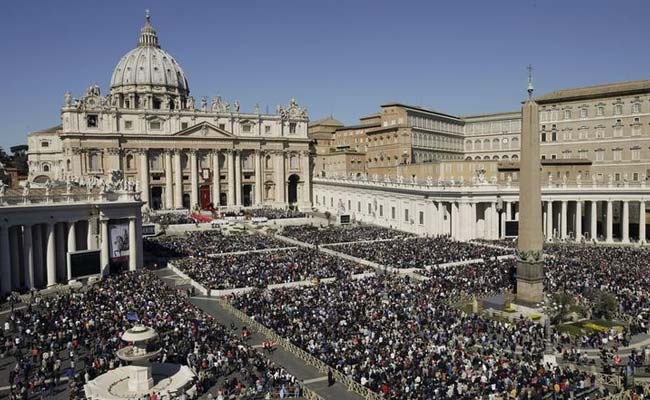
Can Roman Catholicism be Considered Christianity?

Article: Reformation 500: Can Roman Catholicism be Considered Christianity? by Eric Davis (original source here)

It’s that time of year again when we remember the Protestant Reformation. But this year, it’s really something special: 500 years have passed since the greatest movement of God in church history next to the birth of the church at Pentecost.

But was the Reformation really necessary? Were the Reformers merely a pack of spiritual naysayers looking to rain on Rome’s innocent parade? Were they not looking to take their ball and mitt to start their own game?

The Reformers were not moved by preferences to seek and start another denomination. They were moved by Scripture to break from something that could not be considered Christian. Five centuries have not improved Rome’s doctrine. The need for her reform could not be greater.

Tragically, several reasons remain why Roman Catholicism still is not Christian. At this 500th year anniversary, it’s worth taking a thorough look at ten doctrines which render Rome outside of Christ. Many of these are sufficient on their own.

1. Rome’s teaching on justification differs from biblical Christianity.
The issue of justification pertains to the most important question facing humanity: how can unrighteous people stand righteous before a righteous and holy God? It’s the question of questions; the crux of the human race. Answer this correctly, and all is well. Answer it otherwise, and face eternal condemnation.

What does Rome teach on the issue?

From the Council of Trent, 6th session, Canon 30:

If anyone says that after the reception of the grace of justification the guilt is so remitted and the debt of eternal punishment so blotted out to every repentant sinner, that no debt of temporary punishment remains to be discharged either in this world or in purgatory before the gates of heaven can be opened, let him be anathema.

Put another way, if you believe that, by faith alone in Christ alone, all of your sin—past, present, future—is completely forgiven, with no guilt or punishment from God remaining, with the result that you stand satisfactorily righteous before God, then you are damned.

However, Scripture teaches precisely what Rome condemns:
“For we maintain that a man is justified by faith apart from works of the Law” (Rom. 3:28 ).

“Therefore, having been justified by faith, we have peace with God through our Lord Jesus Christ” (Rom. 5:1 ).

Right standing with God is a gift granted on the basis of faith alone in Jesus Christ. His life really was that righteous. His death really that propitiatory. His resurrection really that vindicating. Sinners stand permanently righteous before holy God as a gift of his grace, not works, and by faith alone in Jesus Christ, not grace-infused works. To assume that our works could contribute to a fraction of our justification is nothing short of monstrous pride.

While addressing the works-based gospel of the Judaizers several centuries prior to the Reformation, the apostle declared that a gospel which differs from that of Scripture is a damning system (Gal. 1:8-9 ). Consequently, Rome’s teaching on justification itself renders it something other than Christianity.

2. Rome’s teaching on the papacy differs from biblical Christianity.
Rome asserts that the pope (derived from a Latin word for “father”) is a position of succession from the apostle Peter. The title refers to the Bishop of Rome exclusively as the universal bishop. Other titles for the pope include “Vicar of Christ,” “Pontiff,” “Holy Father,” and “His Holiness.” He is considered the head of the Church, who possesses power to pull from the treasury of merit to grant indulgences. When he speaks ex cathedra, he is considered to speak infallibly. For a time, there were three simultaneous popes and the papal seat was in Avignon, France. Continue reading

Reformation T-Shirts

A FRIEND OF MINE, STEVEN BANCARZ HAS PRODUCED SOME GREAT (non-cheesy conversation starters) T-SHIRTS TO COMMEMORATE THE PROTESTANT REFORMATION:

25% of any profits go to Corpus Christi Food Bank helping with relief from hurricane Harvey in Texas.

“For I am not ashamed of the gospel, for it is the power of God for salvation to everyone who believes, to the Jew first and also to the Greek.” – Romans 1:16

500 years ago this month, the Protestant Reformation took place, changing the direction of Christianity away from Roman Catholicism and back to what Scripture actually teaches. The 5 solas are the principles on which the reformation was grounded.

Black shirts at this link:

White shirts at this link:

A Word from the KJV Translators

Article: THE EMBARRASSING PREFACE TO THE KING JAMES VERSION Posted By Bill Combs (original source here)

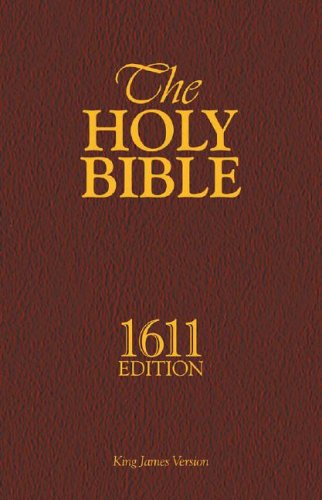
When the King James Version of the Bible came off the press of Robert Barker in 1611, it contained an eleven-page preface titled “The Translators to the Reader.” This preface is primarily a defense of the new translation, but it also provides important information about the translators’ views on the subject of Bible translation. It is an embarrassment (or should be) to King James-only advocates because it contains statements from the translators that are in direct opposition to the KJV-only position. It is most unfortunate that this pref­ace is no longer included in modern copies of the KJV. This post is the beginning of a series that will examine the actual words of the preface in order to refute the erroneous ideas of KJV-only movement with the words of the translators themselves. But before beginning that examination, I will summarize the contents of the preface.

The preface begins by noting, along with examples, that all new en­deavors of whatever kind will commonly face opposition. This is also true for persons who attempt to change and improve anything, even if they are important people like kings. However, the greatest opposition and severest vilification is reserved for those who modify or change the current translation of the Bible, even if that translation is known to have defects.

Next there follows a long section praising Scripture, noting its great value and divine origin. But the perfections of Scripture can never be appreciated unless it is understood, and it cannot be understood until it is translated into the common tongue.

Translation is therefore a good thing. Thus, God in his providence raised up individuals to translate the Old Testament into Greek. The Septuagint, though far from perfect, was still sufficient as the Word of God, such that the apostles quoted it in the NT. And even thought the Septuagint was the Word of God, scholars believed it could be improved, which led to the Greek versions of Aquila, Theodotion, and Symmachus, as well as the Hexapla of Origen. Both testaments were then translated into Latin, culminating in Jerome’s Vulgate. Finally, the Scriptures were translated into many tongues, in­cluding English.

However, the preface observes, the Roman Catholic Church has generally not allowed the Scriptures to be rendered into the common tongues. Recently, they have produced their own translation of the Bible into English though they seem to have been forced to do it against their better judgment due to the number of Protestant English Bibles available.

The preface then returns to the problem of opposition to the new translation, and translations in general, by answering several objections. The main argument against the new translation questions the need for it, that is, since there had already been a number of English translation of the Bible, why is there need for another? If previous translations were good, there should be no need for another; if they were defective, why were they ever offered in the first place?

The answer is, of course, that “nothing is begun and perfected at the same time.” While the efforts of previous English translators are to be commended, nevertheless, they themselves, if they were alive, would thank the translators of this new translation. The previous English Bibles were basically sound, but this new translation affords an opportunity to make improvements and cor­rections.

The translators argue that all previous English translations can rightly be called the Word of God, even though they may contain some “imperfections and blemishes.” Just as the King’s speech which he utters in Parliament is still the King’s speech, though it may be imperfectly trans­lated into French, Dutch, Italian, and Latin; so also in the case of the translation of the Word of God. For translations will never be infal­lible since they are not like the original manuscripts, which were pro­duced by the apostles and their associates under the influence of inspira­tion.

However, even an imperfect translation like the Septuagint can surely be called the Word of God since it was approved and used by the apostles themselves. But since all translations are imperfect, the Church of Rome should not object to the continual process of correcting and improving English translations of the Bible. Even their own Vulgate has gone through many revisions since the day of Jerome.

Finally, the translators state the purpose and plan of the present translation. They have not intended to make a new translation, but to make the best possible translation by improving upon previous ones. To do so they have, of course, carefully examined the original Hebrew and Greek since translation should only be done from the original tongues.

Also, they did not work hastily, as did the translators of the Septuagint, who, according to legend, finished their work in only seventy-two days. The translators also availed themselves of commentaries and translations of the Scriptures in other languages.

In their work they felt it was essen­tial to include marginal notes, despite the fact that some might feel such notes tend to undermine the authority of the Scriptures. These notes are essential since the translators confess that oftentimes they were unsure how a word or phrase should be translated. This is especially true in Hebrew, where there are a number of words which only occur once in Scripture, and even the Jews themselves are uncertain about their trans­lation.

And so, as Augustine notes, a “variety of translations is profitable for finding out of the sense of the Scriptures.” Lastly, the translators ob­serve that, in spite of criticism from some quarters, they decided not to always translate the same Hebrew or Greek word with the same English word and have retained, over the objections of the Puritans, the old ec­clesiastical words like “baptism” instead of “washings.”