1. One woman was converted through reading a single page of one of Spurgeon’s sermons wrapped around some butter she had bought.
2. Spurgeon read The Pilgrim’s Progress at age 6 and went on to read it over 100 times.
3. The New Park Street Pulpit and The Metropolitan Tabernacle Pulpit—the collected sermons of Spurgeon during his ministry with that congregation—fill 63 volumes. The sermons’ 20-25 million words are equivalent to the 27 volumes of the ninth edition of the Encyclopedia Britannica. The series stands as the largest set of books by a single author in the history of Christianity.
4. Spurgeon’s mother had 17 children, nine of whom died in infancy.
5. When Charles Spurgeon was only 10 years old, a visiting missionary, Richard Knill, said that the young Spurgeon would one day preach the gospel to thousands and would preach in Rowland Hill’s chapel, the largest Dissenting church in London. His words were fulfilled.
6. Spurgeon missed being admitted to college because a servant girl inadvertently showed him into a different room than that of the principal who was waiting to interview him. (Later, he determined not to reapply for admission when he believed God spoke to him, “Seekest thou great things for thyself? Seek them not!”)
7. Spurgeon’s personal library contained 12,000 volumes—1,000 printed before 1700. (The library, 5,103 volumes at the time of its auction, is now housed at Midwestern Baptist Theological Seminary.)
8. Before he was 20, Spurgeon had preached over 600 times.
9. Spurgeon drew to his services Prime Minister W. E. Gladstone, members of the royal family, Members of Parliament, as well as author John Ruskin, Florence Nightingale, and General James Garfield, later president of the United States.
10. The New Park Street Church invited Spurgeon to come for a 6-month trial period, but Spurgeon asked to come for only 3 months because “the congregation might not want me, and I do not wish to be a hindrance.”
11. When Spurgeon arrived at The New Park Street Church, in 1854, the congregation had 232 members. By the end of his pastorate, 38 years later, that number had increased to 5,311. (Altogether, 14,460 people were added to the church during Spurgeon’s tenure.) The church was the largest independent congregation in the world.
12. Spurgeon typically read 6 books per week and could remember what he had read—and where—even years later.
Continue reading →

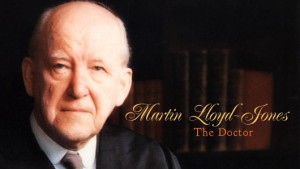 “[The] term ‘decide’ has always seemed to me to be quite wrong. A sinner does not ‘decide’ for Christ; the sinner ‘flies’ to Christ in utter helplessness and despair saying — Foul, I to the fountain fly, Wash me, Saviour, or I die. No man truly comes to Christ unless he flies to Him as his only refuge and hope, his only way of escape from the accusations of conscience and the condemnation of God’s holy law. Nothing else is satisfactory. If a man says that having thought about the matter and having considered all sides he has on the whole decided for Christ, and if he has done so without any emotion or feeling, I cannot regard him as a man who has been regenerated. The convicted sinner no more ‘decides’ for Christ than the poor drowning man ‘decides’ to take hold of that rope that is thrown to him and suddenly provides him with the only means of escape. The term is entirely inappropriate.”
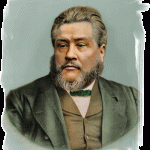 2013 it will have been 121 years since the great preacher, Charles Haddon Spurgeon passed away. In memory of him I bring to you 32 things you might not know about Charles Spurgeon.
 Visitor to Monergism.com: You are a nasty spirited site to have a topic labeled “bad theology”. Who made you God?