
The Meaning of “Gospel”

The following excerpt is taken from R.C. Sproul’s commentary on Romans, published by Crossway.

Sproul_blog2The gospel is the possession of Jesus, but, even more, Jesus is the heart of the content of the gospel.

We use it so glibly in the church today. Preachers say they preach the gospel, but if we listen to them preach Sunday after Sunday, we hear very little gospel in what they are preaching. The term gospel has become a nickname for preaching anything rather than something with definitive content. The word for “gospel” is the word euangelion. It has that prefix eu-, which comes into English in a variety of words. We talk about euphonics or euphonious music, which refers to something that sounds good. We talk about a eulogy, which is a good word pronounced about someone at his funeral service. The prefix eu- refers to something good or pleasant. The word angelos or angelion is the word for “message.” Angels are messengers, and an angelos is one who delivers a message.

This word euangelion, which means “good message” or “good news,” has a rich background in the Old Testament. There, the basic meaning of the term gospel was simply an announcement of a good message. If a doctor came to examine a sick person and afterward declared that the problem was nothing serious, that was gospel or good news. In ancient days when soldiers went out to battle, people waited breathlessly for a report from the battlefield about the outcome. Once the outcome was known, marathon runners dashed back to give the report. That is why Isaiah wrote, “How beautiful upon the mountains are the feet of him who brings good news” (Isa. 52:7). The watchman in the watchtower would look as far as the eye could see into the distance. Finally, he would see the dust moving as the runner sped back to the city to give the report of the battle. The watchmen were trained to tell by the way the runner’s legs were churning whether the news was good or bad. If the runner was doing the survival shuffle, it indicated a grim report, but if his legs were flying and the dust was kicking up, that meant good news. That is the concept of gospel in its most rudimentary sense.

When we come to the New Testament, we find three distinct ways in which the term gospel is used. First, we have four books in the New Testament that we call Gospels: Matthew, Mark, Luke, and John. These books are biographical portraits of Jesus. Gospel in this sense describes a particular form of literature. During the earthly ministry of Jesus, the term gospel was linked not particularly with the person of Jesus but with the kingdom of God. John the Baptist is introduced as one who comes preaching the gospel, and his message is “repent, for the kingdom of heaven is at hand!” (Matt. 3:2).

Jesus did the same in his parables, proclaiming, “the kingdom of God is like . . .” On the lips of Jesus, the gospel was about the dramatic moment in history when, through the long-awaited Messiah, the kingdom of God had broken through in time and space. The good news was the good news of the kingdom. By the time the epistles were written, particularly the Pauline epistles, the term gospel had taken on a new shade of understanding. It had become the gospel of Jesus Christ. Gospel had a clear content to it. At the heart of this gospel was the announcement of who Jesus was and what he had accomplished in his lifetime.

If we give our testimony to our neighbors, saying, “I became a Christian last year. I gave my heart to Jesus,” we are bearing witness about Jesus, but we are not telling them the gospel, because the gospel is not about us. The gospel is about Jesus—what he did, his life of perfect obedience, his atoning death on the cross, his resurrection from the dead, his ascension into heaven, and his outpouring of the Holy Spirit upon the church. We call those crucial elements the objective aspects of the New Testament gospel of Christ.

In addition to the person and work of Jesus, there is also in the New Testament use of the term gospel the question of how the benefits accomplished by the objective work of Jesus are subjectively appropriated to the believer. First, there is the question of who Jesus was and what he did. Second is the question of how that benefits you and me. That is why Paul conjoins the objective account of the person and work of Jesus (particularly to the Galatians) with the doctrine of justification by faith alone, which is essential to the gospel. In preaching the gospel we preach about Jesus, and we preach about how we are brought into a saving relationship with him.

The gospel is under attack in the church today. I cannot stress enough how important it is to get the gospel right and to understand both the objective aspect of the person and work of Jesus and the subjective dimension of how we benefit from that by faith alone.

Recently, a Protestant seminary professor, supposedly evangelical, was quoted to me as having said that the doctrine of imputation—by which our sins are transferred to Christ on the cross and his righteousness is transferred to us by faith—is of human invention and has nothing to do with the gospel. I wanted to weep when I heard that. It just underscored how delicate the preservation of the gospel is in our day and how careful the church has to be in every age to guard that precious good news that comes to us from God.
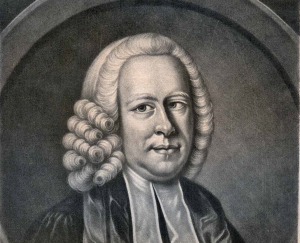
Exposing Sin (Whitefield)

Whitefield-300x243The following excerpt is taken from The Evangelistic Zeal of George Whitefield by Steven Lawson.

Whitefield was convinced that any presentation of the gospel must begin by exposing the listener’s sin and his dire need for salvation. This necessitated the preacher’s confronting his hearers’ rebellion against God and warning of the eternal consequences of their rejection. Whitefield plainly understood that none rightly desire the gospel of Christ until they know of their own condemnation before God. Whitefield preached those truths that reveal sin, namely, the holiness of God, the fall of Adam, the demands of the law, the curse of disobedience, the certainty of death, the reality of the final judgment, and the eternality of punishment in hell.

When addressing the unregenerate masses, Whitefield sought to ensure that their depravity was fully laid bare. Martyn Lloyd-Jones aptly stated, “No man could expose the condition of the natural unregenerate heart more powerfully than George Whitefield.” Only when confronted with their sinfulness, Whitefield insisted, would unbelievers seek to embrace Christ as their Savior and Lord. He peeled back the outer layers of people’s self-righteousness in order to bring about self-awareness of their sinful hearts.

The work of evangelism mandated that he address the eternally devastating effects of sin in his preaching. Whitefield, like a watchman on the tower, warned of sin, death, and judgment. He sought to disturb his listeners with their lost condition before a righteous Judge in heaven. “The sin of your nature, your original sin, is sufficient to sink you into torments, of which there will be no end,” he preached. “Therefore unless you receive the Spirit of Christ, you are reprobates, and you cannot be saved.” He believed the lost must be driven to the brink of utter desperation before they will come to faith in Christ.

Whitefield was a master at sweeping away all useless rhetoric in order that the unconverted would recognize their desperate need to repent. He implored them, “You are lost, undone, without Him; and if He is not glorified in your salvation, He will be glorified in your destruction; if He does not come and make His abode in your hearts, you must take up an eternal abode with the devil and his angels.” None who heard Whitefield were put to sleep with a false sense of security.

Pointing back to Adam’s transgression, Whitefield emphasized that all are born with an inherited sin nature from the first man. He declared, “We all stand in need of being justified, on account of the sin of our natures: for we are all chargeable with original sin, or the sin of our first parents.” It was this strong belief in original sin and total depravity that caused his every sermon to drive his listeners to grasp a sense of their desperate condition in sin. All humanity is born spiritually dead, he believed:

Can you deny that you are fallen creatures? Do not you find that you are full of disorders, and that these disorders make you unhappy? Do not you find that you cannot change your own hearts? Have you not resolved many and many a time, and have not your corruptions yet dominion over you? Are you not bondslaves to your lusts, and led captive by the devil at his will?

Whitefield’s sermons were filled with vivid warnings of the horrific dangers of remaining in a state of sin. In his sermon “Walking with God,” he warned that hell may be but one step away for them: “For how knowest thou, O man, but the next step thou takest may be into hell? Death may seize thee, judgment find thee, and then the great gulf will be fixed between thee and endless glory for ever and ever. O think of these things, all yet that are unwilling to walk with God. Lay them to heart.” Whitefield understood that gospel preaching must include the threat of hell, which is intended to drive men to flee to Christ and escape His terrors.

By such strong statements, Whitefield shined a sin-exposing spotlight into the dark crevasses of depraved hearts. Only then would sinners flee to the foot of the cross of the Lord Jesus Christ to hear about a Savior who died for their guilty souls.

Martin Luther and Romans 1:17

In this excerpt from Luther and the Reformation, R.C. Sproul describes the moment of awakening Martin Luther had as he read Romans 1:17, “For in it the righteousness of God is revealed from faith for faith, as it is written, ‘The righteous shall live by faith.’”

Transcript

He says, “Here in it,” in the gospel, “the righteousness of God is revealed from faith to faith, as it is written, ‘the just shall live by faith.’” A verse taken from the book of Habakkuk in the Old Testament that is cited three times in the New Testament. As Luther would stop short and say, “What does this mean, that there’s this righteousness that is by faith, and from faith to faith? What does it mean that the righteous shall live by faith?” Which again as I said was the thematic verse for the whole exposition of the gospel that Paul sets forth here in the book of Romans. And so, the lights came on for Luther. And he began to understand that what Paul was speaking of here was a righteousness that God in His grace was making available to those who would receive it passively, not those who would achieve it actively, but that would receive it by faith, and by which a person could be reconciled to a holy and righteous God.

Now there was a linguistic trick that was going on here too. And it was this, that the Latin word for justification that was used at this time in church history was—and it’s the word from which we get the English word justification—the Latin word justificare. And it came from the Roman judicial system. And the term justificare is made up of the word justus, which is justice or righteousness, and the verb, the infinitive facare, which means to make. And so, the Latin fathers understood the doctrine of justification is what happens when God, through the sacraments of the church and elsewhere, make unrighteous people righteous.

But Luther was looking now at the Greek word that was in the New Testament, not the Latin word. The word dikaios, dikaiosune, which didn’t mean to make righteous, but rather to regard as righteous, to count as righteous, to declare as righteous. And this was the moment of awakening for Luther. He said, “You mean, here Paul is not talking about the righteousness by which God Himself is righteous, but a righteousness that God gives freely by His grace to people who don’t have righteousness of their own.”

And so Luther said, “Woa, you mean the righteousness by which I will be saved, is not mine?” It’s what he called a justitia alienum, an alien righteousness; a righteousness that belongs properly to somebody else. It’s a righteousness that is extra nos, outside of us. Namely, the righteousness of Christ. And Luther said, “When I discovered that, I was born again of the Holy Ghost. And the doors of paradise swung open, and I walked through.”