
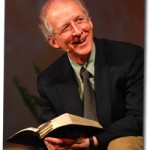
 Dr. John Piper:
I am often asked, present, and future is infallible, then what is the point of praying that anything happen?” Usually this question is asked in relation to human decision: “If God has predestined some to be his sons and chosen them before the foundation of the world (Ephesians 1:4,5), then what’s the point in praying for anyone’s conversion?”
The implicit argument here is that if prayer is to be possible at all man must have the power of self-determination. That is, all man’s decisions must ultimately belong to himself, not God. For otherwise he is determined by God and all his decisions are really fixed in God’s eternal counsel. Let’s examine the reasonableness of this argument by reflecting on the example cited above.
1. “Why pray for anyone’s conversion if God has chosen before the foundation of the world who will be his sons?” A person in need of conversion is “dead in trespasses and sins” (Ephesians 2:1); he is “enslaved to sin” (Romans 6:17; John 8:34); “the god of this world has blinded his mind that he might not see the light of the gospel of the glory of Christ” (II Corinthians. 4:4); his heart is hardened against God (Ephesians 4:18) so that he is hostile to God and in rebellion against God’s will (Romans 8:7).
Now I would like to turn the question back to my questioner: If you insist that this man must have the power of ultimate self-determination, what is the point of praying for him? What do you want God to do for Him? You can’t ask that God overcome the man’s rebellion, for rebellion is precisely what the man is now choosing, so that would mean God overcame his choice and took away his power of self-determination. But how can God save this man unless he act so as to change the man’s heart from hard hostility to tender trust?
Will you pray that God enlighten his mind so that he truly see the beauty of Christ and believe? If you pray this, you are in effect asking God no longer to leave the determination of the man’s will in his own power. You are asking God to do something within the man’s mind (or heart) so that he will surely see and believe. That is, you are conceding that the ultimate determination of the man’s decision to trust Christ is God’s, not merely his. Continue reading
 Perhaps you can relate to this – Divine election does indeed seem to be clearly taught in the Bible. Passages such as Romans 8 and 9, Ephesians 1 and 2, John 3, John 6, John 10, John 17, and many others, make a convincing case. However, certain verses, at least at first glance, seem to present a different picture.
 I read this short article by Dr. John Piper today and thought it was well worth passing on: