 Matthew 24:36 says, “But concerning that day and hour no one knows, not even the angels of heaven, nor the Son, but the Father only.”
This seems to be problematic, for if there is something the Son does not know, would this not indicate to us that he is not omniscient (all knowing)? God is all knowing and yet this tells us that there is something Christ did not know. Pastor John, how do we reconcile this verse with the Christian concept of the Deity of Christ?
Thank you for your question. The verse is often raised by those in the cults who openly deny Christ’s Deity. However, a very satisfactory biblical answer to the question emerges when we understand and embrace some good theology.
The Council of Chalcedon (in 451 AD) outlined what theologians refer to as “the doctrine of the Hypostatic Union.” This Council is one of the great Ecumenical Councils accepted by Eastern Orthodox, Roman Catholic, and most Protestant Christian churches. It provides a clear statement as to what orthodox Christians believe concerning the Person of Christ, drawn of course, from the Biblical text. Translated into English it reads:
Therefore, following the holy fathers, we all with one accord teach men to acknowledge one and the same Son, our Lord Jesus Christ, at once complete in Godhead and complete in manhood, truly God and truly man, consisting also of a reasonable soul and body; of one substance with the Father as regards his Godhead, and at the same time of one substance with us as regards his manhood; like us in all respects, apart from sin; as regards his Godhead, begotten of the Father before the ages, but yet as regards his manhood begotten, for us men and for our salvation, of Mary the Virgin, the God-bearer; one and the same Christ, Son, Lord, Only-begotten, recognized in two natures, without confusion, without change, without division, without separation; the distinction of natures being in no way annulled by the union, but rather the characteristics of each nature being preserved and coming together to form one person and subsistence, not as parted or separated into two persons, but one and the same Son and Only-begotten God the Word, Lord Jesus Christ; even as the prophets from earliest times spoke of him, and our Lord Jesus Christ himself taught us, and the creed of the fathers has handed down to us.
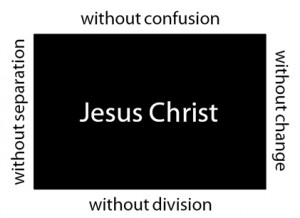
These are intentionally very precise theological statements. It is vitally important we get this right. Heresy awaits all who would veer from this safe biblical position. At Chalcedon it was affirmed that Christ was “perfect/complete in Godhood also perfect/complete in manhood, truly God and truly man.”
Christ is one Person with two natures, a human nature and a Divine nature. The full attributes of deity and the full attributes of humanity were both preserved without mixture or confusion. Christ does not have one nature which is a mixture of divine and human. No, He is truly God and truly man – one Person, with two natures. The human nature remains human with all the attributes of human-ness. The Divine nature remains divine and possesses and maintains all of the attributes of divinity.
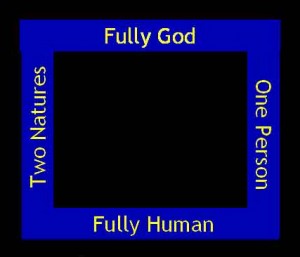
In the Incarnation, the second person of the Godhead became a man. Colossians 2:9 says, “For in him the whole fullness of deity dwells bodily.”
Regarding his humanity, Jesus learned about the world around him just as other children would do. Scripture tells us that he grew and became strong (Luke 3:23); there were times when he was thirsty (John 19:28), hungry (Matt 4:2) and was weary (John 4:6). These things show the humanity of Christ rather than His deity. God is never weary, thirsty or hungry. On the other hand, Jesus was also fully God, and, as God, he had infinite knowledge (cf. John 2:25; 16:30; 21:17).
Continue reading →

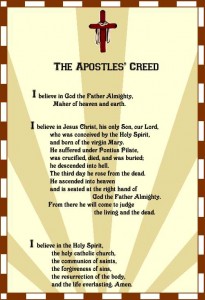
 There are a couple of complicating factors. The first is how we use the English word, ‘hell’ to translate various Hebrew and Greek words. The second is the history and meaning of the phrase in the Apostles’ Creed, “he descended into hell”. Let me now try and unpack these issues in turn.