
Why Topical Preaching Can Never Build A Healthy Church

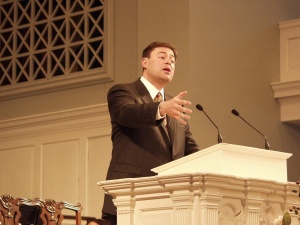
EXPOSITORY PREACHING IS CENTRAL TO GOD’S PLAN FOR BUILDING HEALTHY CHURCHES. By Dr. Mark Dever (original source here)

This sermon transcript originally appeared in The Southern Baptist Journal of Theology, Volume 3, issue 2 in the summer of 1999.

In my study, I have shelves and stacks of books that deal with the topic: What makes a good church? The answers range from friendliness to financial planning to being sensitive to visitors to vibrant music to pleasant surroundings to pristine bathrooms to plentiful parking to exciting children’s programs to elaborate Sunday School options.

You need to know the marks of a healthy church, especially if you are a visitor looking for a church. Even those who are members need to consider the marks of a good church, for we live in a transient age. Regardless of how happy you may be living here, you, too, might move, and perhaps sooner than you think. You need to know what your goal is in looking for a church, and you need to identify the right foundation. Even if you stay, you need to know what makes a good church. For you will have a role in building and shaping it. “Experts” will tell you it is everything from how religion-free your language is to how invisible your membership requirements are. Are secure nurseries and sparkling bathrooms really the way to church growth and church health?

EXPOSITIONAL PREACHING
The most important distinguishing mark of a healthy church is expositional preaching. It is the most important because careful and thorough preaching of God’s Word will bring many other blessings to a church. Without expository preaching, other signs of health may be accidental. They may be discarded or distorted all too easily because they did not spring from the Word, nor are they continually being reshaped and refreshed by it. But if you establish the priority of the Word, then you have in place the single most important aspect of the church’s life. With the Word established, a church may experience growing health; without the Word, a church’s health is imperiled.

What is this essential mark that is called “expositional preaching”? Expository preaching is usually contrasted to “topical preaching,” which is the kind of preaching in this sermon, when I take a subject and talk about it, rather than a text from the Bible and spend the whole sermon explaining it.

The topical sermon begins with a particular topic on which the preacher wants to preach and then assembles truth from various texts of the Bible. Stories and anecdotes are combined, and all are woven together around one theme rather than around one text of Scripture.

A topical sermon may also be expositional, insofar as it uses texts carefully and well, but the point of the sermon was already determined before the preparation for the sermon had begun. I already knew what I wanted to say when I set out to prepare this sermon, as opposed to what is usually the case when I preach expositionally. In the latter instance I may be surprised by the message of the text.

If expositional preaching is so important, it needs to be defined. Expositional preaching is not simply producing a verse by verse commentary from the pulpit. Rather, expositional preaching is that preaching which takes for the point of a sermon the point of a particular passage of Scripture. This is clearly not what I am doing in this sermon. But it is what I have intended to do every other time I have entered the pulpit to preach.

Expositional preaching is preaching in service to the Word. It presumes a belief in the authority of Scripture, but it is something more: A commitment to expositional preaching is a commitment to hear God’s Word.

Even as Old Testament prophets and New Testament apostles were given not just a commission to go and speak, but a particular message to deliver, so Christian preachers today have authority to speak from God only so long as they speak His words. Preachers are not merely commanded to preach, but they are commanded specifically to preach the Word.

“Practical” Preaching

Dr. John MacArthur (source):

More than once I have been asked why my sermons focus so much on biblical interpretation and not as much on personal application. In a similar vein, verse-by-verse Bible teaching and an emphasis on doctrine are sometimes criticized as being irrelevant and impractical.

My response to that is simple—and may sound familiar to you because I communicate the principle at every opportunity. The meaning of Scripture is the Scripture. If you don’t have the true meaning of the text, you don’t have the Word of God. That’s why exegesis (a linguistically and historically sound interpretation of the text) is the absolute and primary essential in every sermon.

So my priority and driving passion is to make the truth of Scripture known. I want to help people know what God’s Word says. I’m confident that if I can help men and women understand the implications of the Bible―to feel the full weight and meaning of divine truth―the Holy Spirit will guide them in the application of that truth to their individual lives and circumstances.

Yes, some biblical principles may seem more practical or more immediately applicable than others. But all Scripture is profitable for teaching, reproof, correction, and training in righteousness (2 Timothy 3:16). Teaching people what the Bible means is inherently practical. In fact, until a person understands the implications of a verse or passage, no sound application can be made.

It is the work of the Holy Spirit to make the most personal, individual applications of the truth of Scripture in the heart of the hearer—and He does that infallibly, in a way that I as a preacher cannot. He instructs and directs us in how to put God’s Word to work in our lives.

We see the evidence of that in the responses we receive from the people Grace to You is reaching. Every day we hear from men and women around the world, describing how the Lord is working in their lives through His Word and thanking us for our doctrinally focused resources. They bear witness to the practical value and universal relevance of the doctrine we teach. In fact, not long ago we received a long letter from a woman named Sandra. Here’s a portion of what she had to say:

I grew up in a home with loving Christian parents, but I rebelled against Christ during my teenage years. I took pride in my academic accomplishments and was generally a very proud individual. I was confident that I would become a successful attorney someday and live a life of affluence. My childhood upbringing kept me from rejecting God’s existence, but although I knew He existed, I did not have a relationship with Him.

God’s mercy and grace were poured on me one day as I drove from school to my afternoon job during the first year of my undergraduate studies. I switched my car radio from one station to another, searching for something fun, when I tuned in to a Christian station my father had preset. I had made a habit to simply skip over that station, but on this particular day I heard your familiar voice before I had the chance to change it. You were teaching on the subject of predestination. I continued listening with the sole intent of finding weaknesses in the argument, but the Lord used that message to bring me to repentance. That message was not sugarcoated. You did not mince words—you did not make me feel good. No, instead your message brought me to tears. The Lord used you through your faithful teaching of the Word of God to humble an angry, ungrateful, and proud sinner and to bring me to repentance and eternal life.

While I know that your service is not for the praise of anyone, I simply hope you are encouraged in knowing that the Lord has used you, through the teaching of His Word, to save souls and minister to people you were not even aware existed.

Every day, people like Sandra are tuning in on radio or looking to our website and finding biblical truth that speaks directly to their spiritual needs and circumstances. The Lord puts the teaching of His Word in a position to convict, rebuke, instruct, comfort, and encourage His people when and where He chooses.

And while we affirm God’s sovereignty over whom He reaches and how He works in lives, there is still a significant, human component. You and I have roles to fulfill, responsibilities to discharge, and blessings of a spiritual harvest in which to share.

A Slander on the Oyster

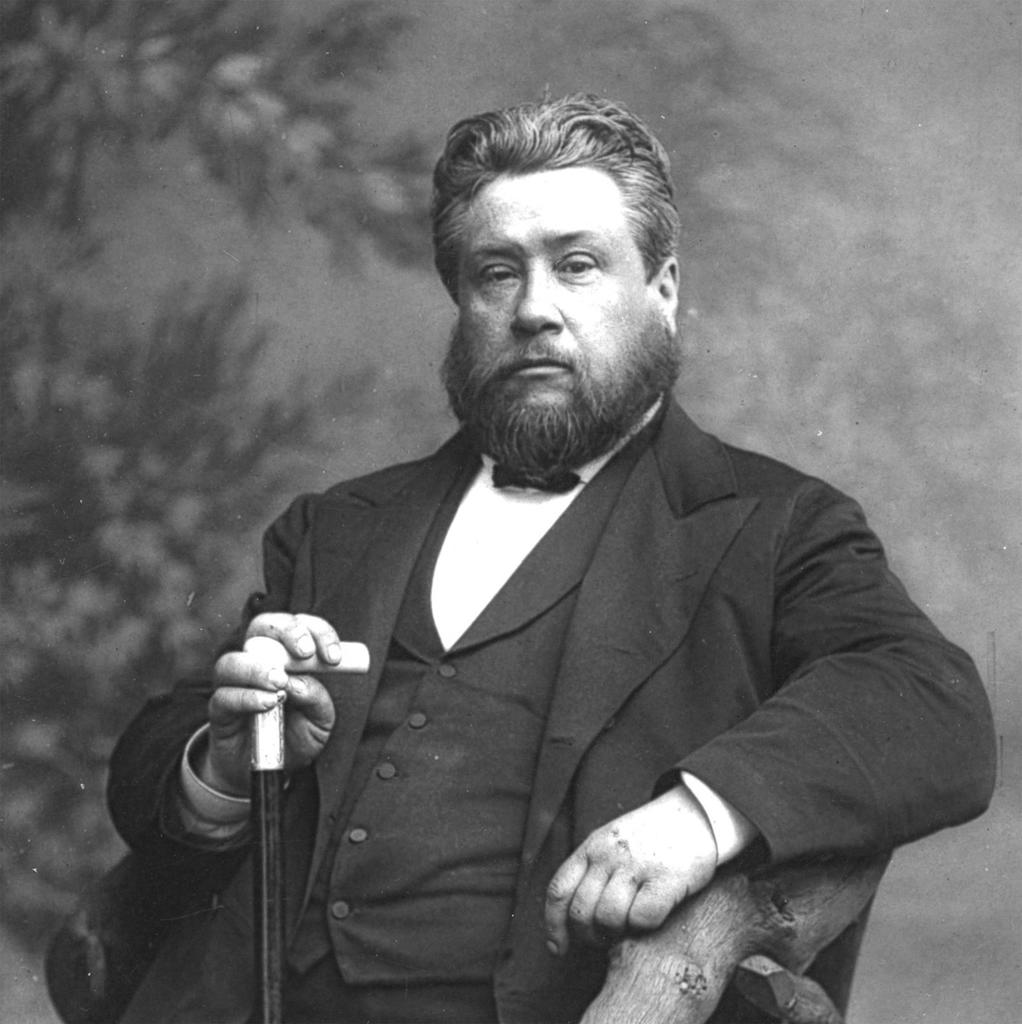
“You cannot be truly efficient ministers if you are not ‘apt to teach.’ You know ministers who have mistaken their calling, and evidently have no gifts for it: make sure that none think the same of you. There are brethren in the ministry whose speech is intolerable; either they rouse you to wrath, or else they send you to sleep. No chloral can ever equal some discourses in sleep-giving properties; no human being, unless gifted with infinite patience, could long endure to listen to them, and nature does well to give the victim deliverance through sleep. I heard one say the other day that a certain preacher had no more gifts for the ministry than an oyster, and in my own judgment this was a slander on the oyster, for that worthy bivalve shows great discretion in his openings, and knows when to close. If some men were sentenced to hear their own sermons, it would be a righteous judgement upon them, and they would soon cry out with Cain, ‘My punishment is greater than I can bear.’ Let us not fall under the same condemnation.”

– C. H. Spurgeon