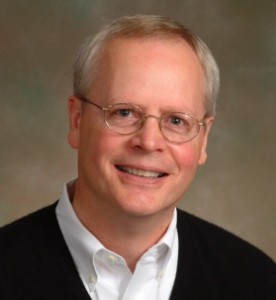
Jeramie Rinne is an author and the senior pastor of South Shore Baptist Church in Hingham, Massachusetts. In an article entitled “A Job Description for Lay Elders” at 9marks ministries he talked to your wife, and got the input of a few trusted church members. With a mixture of trepidation and excitement you accepted the nomination, and a few weeks later you were voted into office.
Now you sit at your first elders’ meeting, waiting for things to start. And a nagging thought arises: “Okay, I am an elder. Now what do I do?”
WELL-INTENTIONED BUT ILL-INFORMED
Lay elders are often godly, well-intentioned men who love the Lord and serve the church faithfully. But they sometimes lack a well-rounded understanding of the biblical job description for elders. Unfortunately, we paid pastors often share in their confusion!
As a result, lay elders sometimes fill the gaps of their understanding with their own life experiences. They assume being an elder is roughly equivalent to serving on a board of trustees for a non-profit organization, or leading a company, or managing a project, or commanding a warship, or supervising sub-contractors. While aspects of those skills and experiences will prove useful, none of them adequately approximates the elder task.
So what is a lay elder’s job description? What are they supposed to do? Attend meetings? Approve budgets? Distribute communion?
SHEPHERD GOD’S FLOCK
Here’s the short answer from the apostle Peter: “I exhort the elders among you: shepherd God’s flock” (1 Pet. 5:2; see also Jn. 21:15-16 and Acts 20:28). Elders serve the Good Shepherd by providing his local flocks with spiritual oversight. Elders feed, lead, protect, and nurture church members like shepherds do with sheep.
Let’s get even more specific. While shepherding is a powerful metaphor for framing an elder’s job description, our new elder needs concrete instructions. He needs an answer to his question, “Now what do I do?” Fortunately, God’s Word lists very specific duties that help elders put the shepherding imagery to work.
FOUR PRIMARY DUTIES
Here are four duties that are central to the elder’s job description. While this list is not exhaustive, I believe if lay elders devoted themselves to these four things, they would excel as shepherds.
1. Teach
An elder must be “an able teacher” (1 Tim. 3:2; see 5:17). He must hold “to the faithful message as taught, so that he will be able both to encourage with sound teaching and refute those who contradict it” (Tit. 1:9). Jesus’ under-shepherds feed Jesus’ sheep with Jesus’ word.
If you’re an elder, find venues for teaching the Bible regularly. Teach a Sunday school class, lead a home group, give a lesson to the youth group, or study Scripture with a member over coffee. And if you’re offered a chance to preach, take it.
Further, tune in to the church’s overall teaching ministry. Keep a finger on the pulse of what’s being taught through congregational singing or in the Sunday school curriculum. Listen closely when members talk about what they’re reading and be alert for rotten food in their spiritual diet.
Finally, remember that teaching includes training others to perpetuate the church’s teaching ministry. As Paul said to Timothy, “What you have heard from me in the presence of many witnesses, commit to faithful men who will be able to teach others also” (2 Tim. 2:2). So bring along an apprentice teacher whenever you can.
2. Lead
Just as shepherds lead their flocks, so elders lead local congregations. The biblical writers also call elders “overseers,” a title that highlights their role as leaders (Acts 20:28; 1 Tim. 3:1; Tit. 1:5, 7). Hebrews instructs Christians to “obey your leaders and submit to them, for they keep watch over your souls as those who will give an account” (Heb. 13:17).
Elders, be brave and lead your church. Don’t hide among the baggage like King Saul. When you see challenges in your church, face them proactively and plot a course forward.
Courageous leadership might involve reaching out to a frustrated member who’s stopped attending, or confronting an unrepentant member through church discipline. Or it could mean wrestling through staffing strategies, budget challenges, or important policies that affect the spiritual identity of the congregation.
As you lead, don’t lose sight of the destination. The goal isn’t to lead a church to become an efficient organization, as important as that may be. Rather, elders should lead church members toward maturity in Christ. Jesus gave teaching shepherds to the church “to build up the body of Christ until we all reach unity in the faith and in the knowledge of the Son of God, growing into a mature man with a stature measured by Christ’s fullness” (Eph. 4:12-13).
Elders bring the flock to green pastures and still waters when they help members know Jesus more and increasingly reflect his glory together.
3. Model
Most importantly, elders lead by example. Shepherd the church “not [by] lording it over those entrusted to you, but being examples to the flock” (1 Pet. 5:3). Not surprisingly, the New Testament lists of elder qualifications focus predominantly on character (1 Tim. 3:1-7, Tit. 1:5-9; 1 Pet. 5:1-4). An elder’s most basic job is to say “Imitate me as I also imitate Christ” (1 Cor. 11:1).
The mandate to model maturity carries two critical implications. First, modeling means you must guard your godliness: “Pay close attention to your life and your teaching” (1 Tim. 4:16). Continue to live close to the Lord, nurture your wife and children well, resist sin, and love people. Open your life to the loving accountability of the other elders. Modeling maturity is a team project.
That leads to a second implication: modeling requires elders to be among the people. It only works if people see you up close. So open your life to church members. Invite them into your home, your hobbies, and your ministry. People need a firsthand experience of how you handle stress, relate to your wife, respond to difficult people, and humbly admit when you blow it.
4. Pray
Finally, elders should take up the apostolic shepherding mantle and say, “we will devote ourselves to prayer and to the preaching ministry” (Acts 6:4). Ultimately elders are powerless in themselves to mature anyone in Christ; only the Holy Spirit can do that through God’s Word. The sooner an elder realizes this, the sooner he will hit his knees and plead for a continual work of grace among church members, as well as in his own life.
So if you’re a lay elder (or a paid elder!), strive to be a man of prayer. Build regular prayer into your daily rhythms. Pray over your church’s membership rolls during the commute or while you’re walking the dog. Carve out time as an elder board for concerted prayer. And when you’re talking to a church member, be sure to stop and pray for her right then and there.
SHEPHERD LIKE JESUS
Maybe we could sum up an elder’s job description this way: shepherd the church members like Jesus shepherds his disciples.
Like Jesus, make teaching central to your ministry, and make Jesus and the gospel the primary content of your teaching. In every decision, lead your people toward knowing and trusting Jesus. Let them see the character of Jesus exemplified in your life. And just as Jesus often turned aside to pray, so you as an elder should join Jesus in interceding for his people.
The under-shepherds of Jesus are at their best when they reflect Jesus, the Chief Shepherd.