Voting in the Church?

at base, three forms of government. The first is rule by one. The second is rule by a few, the third rule by all. In civil government this would essentially be monarchy, republic and democracy, broadly speaking. In church government it would be episcopacy, presbyterianism, and congregationalism, broadly speaking. Rightly understood then the church, whatever denomination, if it is indeed a part of the church, is an episcopacy. Just as Jesus reigns over the nations, so He reigns over the church. His vicar, however, is not the bishop of Rome, but the Holy Spirit.

The Holy Spirit has given us the Word of God. That Word, true in all that it teaches, does not come equipped with a Book of Church Order. Good men, good Reformed men, over the course of church history have argued that under Christ’s reign the church should function as an episcopacy. Other good Reformed men argue for presbyterianism, and finally good Reformed men have spoken in defense of congregationalism.

The Rule of Elders
This Reformed man, while acknowledging that this isn’t the clearest thing in the Bible, sides with the presbyterians. The church should be ruled by a plurality of elders. Even if I am right, however, this doesn’t settle fully the question of whether or not we should vote in church. It does, however, set some boundaries.

First, if the church is to be ruled by elders it cannot simultaneously be ruled by the congregation. Congregational votes at the very least cannot overrule the will of the session, at least without devolving down to congregationalism. This still, however, doesn’t outlaw all votes by the congregation. One might, for instance, take a poll of the congregation. Insofar as such a poll would be non-binding, it is no denial of Presbyterian church government. Suppose the elders are curious to know how many of its member families would be interested in a mid-week Bible study, or even if Tuesday or Wednesday would be a better evening for such a study. By all means take a poll. The elders, however, would have to decide.

Congregational Voting on Elders
Second, there is value in having the congregation “vote” on who should be their elders. Here again I would argue we have to be careful not to let the congregation wrest rule for the session. That is, I don’t believe the congregation can impose an elder on the session. I argue that the approval of elders should be two-fold. Certainly the session needs to approve potential session members. But when the congregation votes on potential elders they are doing something other than ruling in the church. They are acknowledging the rule over them. That is, they are agreeing to have the elders be in authority over them.

Typically these issues do not become difficult in themselves. That is, it is rare for a church to find itself in trouble, or in battle mode, over competing classes of members. That said, there are often subtle dangers in not thinking through these issues well. To say, for instance, that the elders rule in the church is not to suggest that the members are just spectators, that they are not full members of the body. Much less should it communicate differing levels of spiritual standing. Elders are sinners saved by grace. Laymen are sinners saved by grace. We are all called to do the work of the ministry. On the other side of the coin, when congregations do vote, or even meet together in discussion, it is important to not import the wrong categories into the meeting. The church is not a business, and the members are not stockholders. And it most certainly is not a democracy.

Sin & Church Rule
There is no church government that will eliminate sin. Things go wrong in all kinds of churches. It is tempting in the midst of dealing with sin to think the grass must be greener on the other side. It is especially tempting to believe, “Things would be so much better if only I had more power to bring it to pass.” But we all bring sin with us wherever we go. One man ruling is dangerous. All men ruling is dangerous. A few men ruling is dangerous, but, I would argue, less dangerous than the first two. Which is why God gives us elders and gives elders the authority to rule in the church.

This post was first published on: rcsprouljr.com.

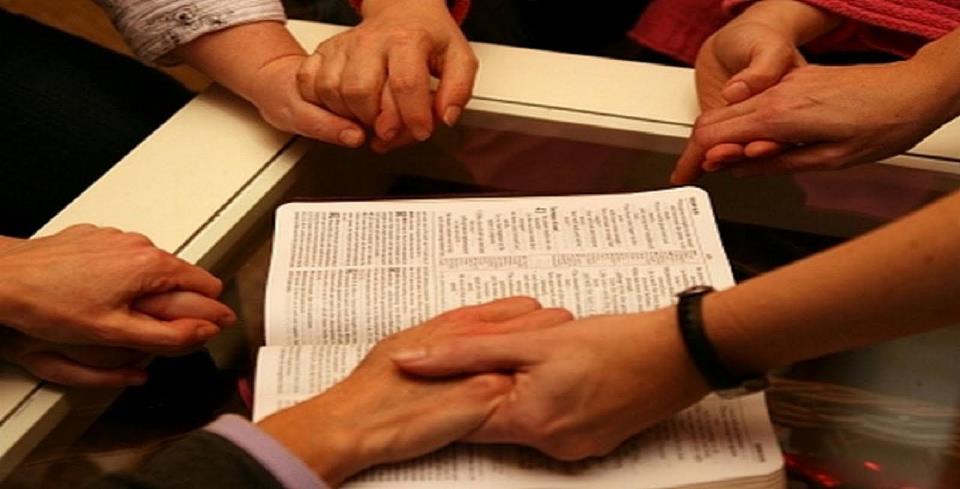
Praying for Churches and Pastors

prayer39 Ways to Pray for Churches and Pastors, found in the 9Marks 2013 report:

1. Expositional Preaching: pray that more pastors will commit to preaching the whole counsel of God, making the point of the passage the point of their sermons.

2. Biblical Theology: pray that more pastors will preach about the big God from the big Story of the Bible, protecting the church from false teaching.

3. The Gospel: pray that pastors will faithfully proclaim the gospel every chance they have. Pray their churches will ask for nothing more than the good news of salvation through Jesus Christ.

4. Conversion: pray that more churches would grasp the doctrine of conversion rightly, and shape their practices to promote born-again believers, not nominal believers.

5. Evangelism: pray that churches will be bold and faithful in proclaiming the Good News of Jesus.

6. Church Membership: pray that churches will take the biblical call to church membership seriously, and encourage the whole body of Christ toward holiness and active participation.

7. Church Discipline: pray that churches will grow in purity and holiness as they seek to warn, rebuke, and admonish lost sheep.

8. Discipleship and Growth: pray that Christians will grow in their knowledge of the Word, and their commitment to discipling one another.

9. Biblical Leadership: pray that God will raise up many faithful shepherds to guard, teach, and encourage his flock.

A Church Without Masks

he asked his disciples, “Who do people say that the Son of Man is?”14 And they said, “Some say John the Baptist, others say Elijah, and others Jeremiah or one of the prophets.” 15 He said to them, “But who do you say that I am?” 16 Simon Peter replied, “You are the Christ, the Son of the living God.” 17 And Jesus answered him, “Blessed are you, Simon Bar-Jonah! For flesh and blood has not revealed this to you, but my Father who is in heaven. 18 And I tell you, you are Peter, and on this rock I will build my church, and the gates of hell shall not prevail against it.

2 Cor 1: 8 For we do not want you to be unaware, brothers, of the affliction we experienced in Asia. For we were so utterly burdened beyond our strength that we despaired of life itself. 9 Indeed, we felt that we had received the sentence of death. But that was to make us rely not on ourselves but on God who raises the dead. 10 He delivered us from such a deadly peril, and he will deliver us. On him we have set our hope that he will deliver us again. 11 You also must help us by prayer, so that many will give thanks on our behalf for the blessing granted us through the prayers of many.

2 Cor 4:7 But we have this treasure in jars of clay, to show that the surpassing power belongs to God and not to us. 8 We are afflicted in every way, but not crushed; perplexed, but not driven to despair; 9 persecuted, but not forsaken; struck down, but not destroyed;10 always carrying in the body the death of Jesus, so that the life of Jesus may also be manifested in our bodies. 11 For we who live are always being given over to death for Jesus’ sake, so that the life of Jesus also may be manifested in our mortal flesh. 12 So death is at work in us, but life in you.

I think it might be safe to say that these three passages would rarely have been put together in a sermon, but I hope you will see there is some sort of method in my madness today. I want to talk about three things. Three facts.. Three things we know:

1. JESUS IS BUILDING HIS CHURCH
2. IT IS A CHURCH BUILT ON GRACE
3. THIS GRACE IS FOR SINNERS

These facts are so well known that we think we know them. I am suggesting that the Church at large has rarely known them, except in a superficial way, or if these things have been known, they have been rarely applied in the life of the Church.

Often when a person encounters Christ and begins his trek through this world as a follower of Him.. as he enters the Church, he is handed a mask, which he is expected to wear to each service.

If he forgets to wear it for the first few services, allowances are made. “He’s new, its ok” someone might say.. Quickly though he learns the rhetoric, the jargon, the lingo… when asked how he is doing, he learns to say “I’m blessed” “it is well with my soul…” “God is good, all the time…” and over time, he understands that talking like this is what will allow him to be accepted by the group…

How this must grieve the Lord.. Jesus is building His Church with real people who are often hurting and in pain… and His Church is supposed to be the one place where sinners can own their sin and still be loved, a place where we can be imperfect and flawed, while at the same time exalting in the perfect Savior.

The Apostle Paul wanted his readers to know that he had experienced such a hard time that he despaired he would even come out of the experience alive. He was

1. Afflicted
2. Perplexed
3. Persecuted
4. Struck down
5. Carrying in the body the death of Jesus
6. Given over to death
7. His outward self (body) wasting away

Can one of God’s children say this kind of thing? Not only a child of God, but an Apostle! Continue reading