
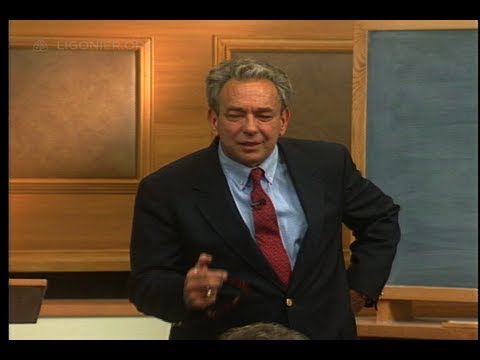
Faith has its reasons

sproul-77In an article entitled “Faith Has Its Reasons” Dr. R. C. Sproul writes:

Christians from every theological tradition have for centuries confessed their faith by reciting the Apostles’ Creed. Elsewhere I have taught on the actual content of this creed, but if there is one aspect of this confession that we often fail to reflect on, it is the creed’s opening words: I believe.

Here I want to consider faith in relation to what are often seen as its opposites—reason and sense perception. Epistemology is the division of philosophy that seeks to answer one question: How do we know what we know, or how do we know what is true? Reason, sense perception, or some combination of the two have been among the most common answers to this basic question.

Our minds function according to certain categories of rationality. We try to think in a logically coherent manner. Our judgments and deductions are not always correct and legitimate, but our minds always look for logical, intelligible patterns. Some people say that we find true knowledge exclusively within the mind. These “rationalists” stress the mind and reason as the sources of true knowledge.

The mind processes information that we acquire with our five senses. Our minds act on what we see, hear, feel, smell, and taste. Perception is the experience of being in touch with the external world, and “empiricists” emphasize sense perception as the true basis for knowledge.

The scientific method combines sense perception and reason. In scientific experiments we gather facts with our senses. Our minds then draw conclusions, reasoning through what our five senses discover. Some want to oppose this way of learning to faith, but I don’t find in Scripture the idea that faith is irrational or anti-sense perception. According to God’s Word, reason and sense perception form the foundation of knowledge. Faith rests on this foundation but takes us beyond it.

We live in the most anti-intellectual age of history, and even many Christians believe we can compartmentalize faith as a way of knowing completely separate from sense perception and reason. Yet as Augustine told us centuries ago, how could we receive knowledge from God if it were not accessible to the human mind? Could we say that “Jesus is Lord” without some understanding of what the term Lord means, what the verb is indicates, and who the name Jesus refers to? We can’t believe the gospel without our minds understanding it to a degree.

Christianity also features a book—the Bible—that is designed for our understanding. Why would God give us a written document if faith bypasses reason entirely? Moreover, sense perception is key to the biblical story. Luke wrote down those things to which he had eyewitness testimony (Luke 1:1–4). Peter said the Apostles didn’t proclaim clever myths but what they saw with their eyes and heard with their ears (2 Peter 1:16). The biblical writers tell us about actual events in history that they experienced. Christianity isn’t ahistorical. God reveals Himself with reference to history: He is “the God of Abraham, of Isaac, and of Jacob” (Ex. 3:16).

Faith never requires us to crucify our minds or deny our senses. It’s not virtuous to take a “leap of faith” if that means we plunge into irrationality. The Bible never calls us to leap into the darkness but to leap out of the darkness into the light.

The New Testament defines faith as the substance of things hoped for and the evidence of things unseen (Heb. 11:1). This doesn’t mean faith is against what we see. We are called to trust Him whom we haven’t seen—God—but He hasn’t remained wholly invisible. We have seen the Lord’s handiwork in this world, which Calvin called “a magnificent theater of natural revelation.” One day we’ll see Him directly in the beatific vision of His glory, but until then, He has not left Himself without a witness in creation.

Revelation is the third category of knowledge. Christianity is a revealed religion. The Christian God is not mute. When we talk about faith as the evidence of things not seen, we’re talking about believing the Lord who has spoken. Not just believing in God but believing God. Believing God for things we cannot see now is the essence of faith, but it’s not an irrational or unscientific faith. God makes it very rational for me to believe He’s there. He’s shown Himself in the created order. He’s broken into time and space. Jesus came in the flesh, was seen, and rose from the dead in history. The Apostles testify to these events in Scripture, recording those things they witnessed with their senses.

It’s not irrational to believe in the One who vindicated Himself as the incarnation of truth. This is not blind faith but faith that embraces testimony. The real opposites of faith are not reason and sense perception but credulity and superstition. Credulity, or naive believism, believes something that has no basis in reality. Superstition believes in magical things that have nothing to do with Scripture.

We find superstition and credulity throughout the church. That’s why we continually measure our faith by the Word of God and make sure we are assenting to the reasonable, historical testimony of the prophets and the Apostles to the triumph of Christ. Faith is not mere intellectual assent. We aren’t saved simply because we affirm the truth of certain facts but because we trust the Person whom those facts reveal. So, faith is definitely more than knowledge. But it is not less.

Question: Were Eyewitnesses Alive for Matthew, Mark, Luke, and John to Consult?

by the stories about Jesus were passed on by oral story telling (Oral History = eyewitnesses passing on the tradition; Oral Tradition = the passing on of tradition by a non-eyewitness) and dependent on the reliability of human memory to preserve these stories accurately. This meant that for 30-60 years the stories about Jesus were carried and passed on by individuals and groups from their individual and collective memories. Because of this, New Testament scholars have depended on the latest in psychology and memory studies to help shed light on the degree to which the New Testament Gospels preserve reliable memories and how these memories would have been shaped prior to their being written down.

One scholar who has studied this very thing is Robert K. McIver. I must say that one of the most rewarding books I have read in the past couple of years was McIver’s Memory, Jesus, and the Synoptic Gospels (2011). McIver’s book is well-written, erudite, immensely fair, and a pleasure to read. The book is composed of two parts. The first is focused on “Personal And Collective Memory” and the second is focused on “Jesus Traditions As Memory.”

In the first chapter of his book McIver discusses the light recent studies in psychology and human memory have shed on how effective eyewitnesses are at passing on what they have witnessed and experienced. In chapter two he discusses the effect of time on being able to recall past events. In the third chapter he narrows in on the traumatic or highly sensory type of memories known as ‘flashbulb’ memories (i.e. WW2 vets), and how reliably these types of memories are remembered by those who have experienced them, and how effective individuals are at passing these on after the fact; even decades later. The fourth chapter fascinatingly reveals the latest research in regards to what extent our memories are changed and re-constructed because of suggestions from outside agents (other people). In the fifth and final chapter of the book’s first part McIver gives an overview of various studies conducted on “Collective Memory,” which is the opposite of the phone-game (Europeans: “Chinese Whispers”) where individuals pass on a funny phrase down a long line of recipients only to be completely butchered by the other end of the line. Collective Memory is when groups of people carry on a mutually shared story (net-transmission rather than chain-transmission).

As mentioned, the second part of the book revolves around “Jesus Traditions As Memory.” In the sixth chapter McIver provides a wonderful description of the various theories of “Collective Memory” from the past few decades. Should we understand the passing on of oral tradition in oral societies to be better understood as something done with more control or less? Was tradition passed on in a formal setting of informal? Could anyone pass on communal stories authoritatively? Or were there designated “authorities” who were responsible for doing this on behalf of the group? (i.e. eyewitnesses or community leaders).

In chapter seven McIver attempts to locate traces of eyewitness testimony in the Gospels. He provides a detailed discussion of how ancient teachers would purposely pass on important sayings (the apophthegmata, or “Chreiai”) in a memorable way. McIver writes, “The Apophthegm is a form found outside of the Gospels. The term Chreia or apophthegm was used by Greek authors of the Roman period to describe a brief anecdote from famous personages and thinkers that usually climaxed in a memorable utterance.” (1) McIver locates numerous examples of “Chreiai” in the Gospels. In the eighth chapter McIver discusses the impact of memory frailty on the Gospels and supplies a number of examples to show that the Gospels do contain some traces of poor memory recall as there are a few discrepit accounts in the Synoptic Gospels (Matt, Mark, Luke) of the same story. McIver reminds the reader of some studies he noted earlier in the book concerning the reliability of eyewitnesses who experienced flashbulb-like events take place before them (one of them was a horrible shooting). McIver writes,

“Their memories were discovered to be substantially correct – the eyewitnesses to the shooting in Burnaby remembered up to 80 percent of details accurately…While this is not 100 percent accuracy, and it can be very difficult to determine which parts of eyewitness testimony belong to the 80 percent that is accurate as opposed to the 20 percent that is not, it does not mean that eyewitness testimony can be considered to have general reliability. It is particularly good at the level of gist rather than detail…. By preserving the gist of events, human memory demonstrates a “first-order” faithfulness to the past. If this is true of eyewitness testimony in general, it is therefore true of the contributions that the individual eyewitnesses would have made to the formation of the traditions found in the Synoptic Gospels.” (2)
The ninth chapter is where McIver begins to pull everything together. Because of the fact Jesus was a teacher who gathered disciples around him to ‘learn,’ there would have been a foundation in place for groups of people (i.e. his disciples) to pass on the Jesus tradition in a collective manner rather than simply as individuals. This means the disciples would have been able to aid one another in recalling Jesus’ teachings. As well, if he did teach them in the common form of “Chreiai” which were to be remembered sayings in a catchy and memorable form, we should have confidence that the Gospels do contain actual teachings of Jesus of Nazareth remembered with a “first-order” faithfulness (at least 80% reliable). In chapter ten he wraps up the book with a nice conclusion:

“So it can be concluded that, like most products of human memory and despite all the frailties of such memory, the Gospels should be considered to be generally reliable. If the evidence presented thus far may be relied on, then–at least for the apophthegmata, the parables, and the aphorisms–the burden of proof should lie with those who wish to claim that a saying found in the Gospels is not from Jesus or that an incident reported about him did not happen, not with those who assume its authenticity. Human memory is a remarkable facility, and the traditions found in the Synoptic Gospels may be considered to be a product of its effectiveness.” (3)

The Potential Pool of Eyewitnesses at the Time The Gospels Were Written

After finishing this wonderful volume I was startled to discover what may in fact be the most important and original contribution to the entire book in an appendix at the back! Boy am I glad McIver included this appendix because it answers a question I’ve wondered about for a number of years. Here is the question: Assuming the Gospel of Mark (our earliest Gospel) was composed around thirty years or so after Jesus’ life and ministry (ca. AD 65), how many eyewitnesses would have been alive to consult during the research and writing process? And beyond this, how many would have been alive when the last Gospel (John=AD 90?) was written? McIver brilliantly looked at the latest research in population size around Galilee, Jerusalem, and the other villages and cities Jesus visited during his ministry in antiquity, and what life expectancy was in the first century in Roman-Palestine. He concluded there would have been approximately 60,000 potential eyewitnesses who saw or experienced Jesus in person. McIver claims that “[o]f the 60,000 or so potential eyewitnesses, between 18,000 and 20,000 would be still alive after thirty years, and between 600 and 1,100 after sixty years.” (4) He concludes the book by stating that “…as is evident from the life tables, some surviving eyewitnesses would have been available to the Evangelists to consult had they so wished.” (5) This is very important information for anyone interested in the possibility that the Gospels were either composed by eyewitnesses or depended on the tradition of eyewitnesses to Jesus’ life and ministry. Assuming the standard dating for the composition of the Gospels (Mark=AD 65, John=AD 90) it would appear there were in fact many eyewitnesses of Jesus’ ministry to consult if the Gospel writers desired.

I’m sure scholars involved in the field of Oral Tradition and Social Memory Theory will find many points of difference with McIver’s volume, but it has certainly given us much to chew on. For that, we are in McIver’s debt.

*** We actually have a quotation from the work of an early Christian apologist named Quadratus (ca. 70-130 AD) (6) who claimed that eyewitnesses of Jesus’ ministry (people who were healed by Jesus) actually lived well into the later part of the first century:

“But the works of our Savior were always present, for they were true; those who were healed and those who rose from the dead were seen not only when they were healed and when they were raised, but were constantly present, and not only while the Savior was living, but even after he had gone they were alive for a long time, so that some of them survived to our own time.” (7)

——————-

(1) Robert K. McIver, Memory, Jesus, and the Synoptic Gospels (Atlanta: SBL, 2011), 132.
(2) Ibid., 160-61.
(3) Ibid., 187.
(4) Ibid., 208.
(5) Ibid., 209.
(6) The dating of ca. 70-130 AD is from Craig A. Evans, Jesus and His World: The Archaeological Evidence (Louisville, KY: WJK Press, 2012), 7.
(7) Translation by Michael W. Holmes, The Apostolic Fathers: Greek Texts and English Translations, 3rd Edition (Grand Rapids, MI: Baker Academic, 2007), 721.