
 (1) For those who disdain the use of any theological labels but who say “I follow no man but Christ” you might find or 3) causing division. Rather, there is a flurry of naked assertions that assume the moral, theological, and biblical high ground without a shred of evidence. What’s worse, their position is actually an untenable one. Shunning labels like Calvinist and Arminian under the guise of “refusing to follow a man” is at best naive, and at worst flat out dishonest.”
(2) Do you know anyone who needs to grow in Christian maturity? Do you see this person in the mirror every day? Yes, the fact is that all of us need to grow in becoming more like Christ.
The Word of God makes it clear that consistent and progressive spiritual growth is to be the goal of every Christian. As we practice the spiritual disciplines described in the Word of God, the Holy Spirit moves us to submit to God’s will. However, growth is not automatic. It comes as we participate in the spiritual disciplines of the Christian life. There are things we can do that will aid our growth. That is why we are told, “But grow in the grace and knowledge of our Lord and Savior Jesus Christ.” 2 Peter 3:18.
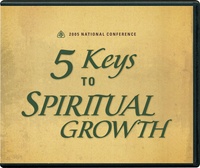 In light of this, I wish to make a strong recommendation. Its a series of messages designed to help each of us grow in the things of God and there happens to be a VERY special offer on this today. In these lectures from Ligonier Ministries’ 2005 National Conference, Drs. Mark Dever, J. Ligon Duncan III, John MacArthur, R.C. Sproul, and Derek Thomas discuss the five key disciplines of Bible study, prayer, stewardship, service, and worship.
Normally $65 this CD series is only $5 right now in the Friday Ligonier online sale. With practical sensitivity and concern for biblical fidelity, these messages explain how each of these disciplines contributes to our spiritual growth. Check out the “5 Keys to Spiritual Growth” series and other items in the $5 Ligonier sale here.
 (3) Another recommendation: Dr. R. Albert Mohler Jr., serves as president of The Southern Baptist Theological Seminary – the flagship school of the Southern Baptist Convention and one of the largest seminaries in the world. His weekday “briefings” allow us to catch major news headlines that are often missed or overlooked by the mainstream media and to interpret them through a biblical filter. As his website states, “The Briefing enables Christians to think biblically by providing daily worldview analysis about the leading news headlines and cultural conversations.”
Each weekday podcast is both fast paced and informative and typically lasts around 10 minutes. I highly recommend it for any Christian who wishes to be informed about what is going on in America and our world. I am now in the habit of listening in each weekday morning and find it to be an outstanding resource.
You can listen to (and subscribe to) his “briefings” podcast here.
(4) APOSTASY ALERT: Carlton Pearson (Carman’s former pastor) left the Christian faith some years ago becoming a Universalist. Here he is marrying a gay couple, one of whom happens to be Oral Roberts’ grandson.
 Seven Fatal Flaws of Moral Relativism