
Ulrich Zwingli, the Swiss Reformer

Heinrich Bullinger, and John Calvin, the most important early Reformer was Ulrich Zwingli. A first-generation Reformer, he is regarded as the founder of Swiss Protestantism. Furthermore, history remembers him as the first Reformed theologian. Though Calvin would later surpass Zwingli as a theologian, he would stand squarely on Zwingli’s broad shoulders.

Less than two months after Luther came into the world, Zwingli was born on January 1, 1484, in Wildhaus, a small village in the eastern part of modern-day Switzerland, forty miles from Zurich. His father, Ulrich Sr., had risen from peasant stock to become an upper-middle-class man of means, a successful farmer and shepherd, as well as the chief magistrate for the district. This prosperity allowed him to provide his son with an excellent education. He presided over a home where typical Swiss values were inculcated in young Ulrich: sturdy independence, strong patriotism, zeal for religion, and real interest in scholarship.

The elder Ulrich early recognized the intellectual abilities of his son and sent him to his uncle, a former priest, to learn reading and writing. Thanks to his prosperity, Zwingli’s father was able to provide his son with further education. In 1494, he sent the ten-year-old Ulrich to the equivalent of high school at Basel, where he studied Latin, dialectic, and music. He made such rapid progress that his father transferred him to Berne in 1496 or 1497, where he continued his studies under a noted humanist, Heinrich Woeflin. Here Zwingli was given significant exposure to the ideas and Scholastic methods of the Renaissance. His talents were noted by the Dominican monks, who tried to recruit him to their order, but Zwingli’s father did not want his son to become a friar.

Universities of Vienna and Basel

In 1498, Zwingli’s father sent him to the University of Vienna, which had become a center of classical learning as Scholasticism was displaced by humanist studies. There he studied philosophy, astronomy, physics, and ancient classics. In 1502, he enrolled at the University of Basel and received a fine humanist education. In class, he came under the influence of Thomas Wyttenbach, professor of theology, and began to be aware of abuses in the church. He also taught Latin as he pursued further classical studies. He received his bachelor’s (1504) and master’s (1506) degrees from the school. Continue reading
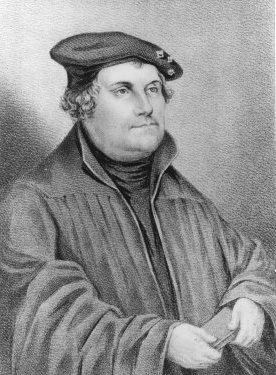
Luther, A Fortress for Truth

Luther02At the Ligonier blog, Steven Lawson the one God first used to spark a transformation of Christianity and the Western world. He was the undisputed leader of the German Reformation. In a day of ecclesiastical corruptions and apostasies, he was a valiant champion of the truth; his powerful preaching and pen helped to restore the pure gospel. More books have been written about him than any other man of history except Jesus Christ and possibly Augustine.

Luther came from hard-working stock. He was born in the little town of Eisleben, Germany, on November 10, 1483. His father, Hans, was a copper miner who eventually gained some wealth from a shared interest in mines, smelters, and other business ventures. His mother was pious but religiously superstitious. Luther was raised under the strict disciplines of the Roman Catholic Church and was groomed by his industrious father to be a successful lawyer. To this end, he pursued an education at Eisenach (1498–1501) and then at the University of Erfurt in philosophy. At the latter, he received a bachelor of arts degree in 1502 and a master of arts degree in 1505.

Luther’s life took an unexpected turn in July 1505, when he was twenty-one. He was caught in a severe thunderstorm and knocked to the ground by a nearby lightning strike. Terrified, he cried out to the Catholic patroness of miners, “Help me, St. Anna, and I will become a monk.” Luther survived the storm and made good on his dramatic vow. Two weeks later, he entered the Augustinian monastery in Erfurt. His father was furious over Luther’s apparent wasted education, but Luther was determined to follow through on his vow.

Lost in Self-Righteousness

In the monastery, Luther was driven to find acceptance with God through works. He wrote: “I tortured myself with prayer, fasting, vigils and freezing; the frost alone might have killed me… . What else did I seek by doing this but God, who was supposed to note my strict observance of the monastic order and my austere life? I constantly walked in a dream and lived in real idolatry, for I did not believe in Christ: I regarded Him only as a severe and terrible Judge portrayed as seated on a rainbow” (Luther’s Works, Vol. 24, eds. Jaroslav Jan Pelikan, Hilton C. Oswald, and Helmut T. Lehmann [St. Louis: Concordia, 2002], 62). Elsewhere he recalled: “When I was a monk, I wearied myself greatly for almost fifteen years with the daily sacrifice, tortured myself with fastings, vigils, prayers, and other very rigorous works. I earnestly thought to acquire righteousness by my works” (Luther’s Works, Vol. 12, 273).

In 1507, Luther was ordained to the priesthood. When he celebrated his first Mass, as he held the bread and cup for the first time, he was so awestruck at the thought of transubstantiation that he almost fainted. “I was utterly stupefied and terror-stricken,” he confessed. “I thought to myself, “Who am I that I should lift up mine eyes or raise my hands to the divine majesty? For I am dust and ashes and full of sin, and I am speaking to the living, eternal and true God’” (Luther, cited in Bruce Shelley, Church History in Plain Language [Nashville: Thomas Nelson, 1995], 238). Fear only compounded his personal struggle for acceptance with God. Continue reading