
The Doctrine of Divine Impassibility

A Brief Statement on Divine Impassibility by then He is impassible. If God did in fact experience inner emotional changes, He would be mutable. To suggest otherwise would be to affirm that God was less than perfect to begin with: if He changes it is either for the better or for the worse, neither of which is consistent with the biblical data concerning God.

What the Doctrine Does Not Mean

The doctrine of divine impassibility does not mean that God is without affections. The Bible is clear: God is love (1 John 4:8, 16). The Bible consistently teaches that God does relate to His creatures in terms of love, goodness, mercy, kindness, justice and wrath. An affirmation of divine impassibility does not mean a denial of true affections in God. However, these descriptions of God’s character are not to be understood as changing or fluctuating things. For example, the 2 London Confession of Faith of 1677/1689 affirms impassibility (God is “without passions”) and then goes on to describe God as “most holy, most wise, most free, most absolute…most loving, gracious, merciful, long-suffering, abundant in goodness and truth…” The affirmation of impassibility does not result in removing affections from God; rather, the affirmation of impassibility upholds the fact that God is most loving because He cannot decrease nor increase; He is love! The doctrine of divine impassibility actually stresses the absolute-ness of affections in God.

Objections to the Doctrine

Some modern authors have challenged the classical doctrine of impassibility. While there are several reasons for this, two of the most persuasive ones seem to be (1) the biblical descriptions of change occurring in God and (2) the fact that Jesus Christ suffered.

In the first place, when Scripture speaks of change occurring in God, these passages do not describe actual inner emotional changes in God, but rather these passages are a means whereby God communicates “in the manner of men” so that He can effectively reveal His unchanging character to man. For instance, when Scripture speaks of God “repenting” (Genesis 6:6; Judges 2:18; 10:16; etc.), these are called anthropopathic statements. An anthropopathism is when the biblical author ascribes human emotion to God. While this may be a new word to many, most Christians are familiar with the word anthropomorphism. An anthropomorphism is used by the biblical authors when they ascribe human characteristics to God; i.e. when the Scripture says God has eyes, or a mighty right arm, or that He comes down to dwell on Mount Sinai (2 Chronicles 16:9; Isaiah 62:8; Exodus 19:20). Such descriptions are accommodations to man that are designed to communicate certain truths to man. In the same way, anthropopathisms are not descriptions of actual change in God, but are a means to communicate something concerning the character of the infinite God to man in language designed to be comprehended by man who is limited by his finite capacities.

Secondly, the sufferings that Jesus Christ went through were real. He was despised and rejected by men, He was betrayed by Judas, delivered into the hands of the Romans, and at the request of the unbelieving Jews, He was crucified. It is important to remember that Jesus Christ was unique: He is one glorious Person with two natures, human and divine. Christianity from the New Testament period on always predicated the suffering of Christ to His human nature. In other words, Christ as God did not suffer and die, but Christ as Man. There are not two Christs, but one Christ who has two natures. To confine the suffering and death of Christ to His humanity protects divine impassibility. Conversely, impassibility protects from the notion of a God who suffers and dies.

Conclusion

In conclusion, there is much more that can be said. The goal with this post is simply to provide a basic definition, explanation, and to highlight why the doctrine is essential. It is crucial to understand that it is the doctrine of impassibility that secures God’s relational character to His creatures; it alone provides the foundation for the confession’s declaration that God is “most holy, most wise, most free, most absolute…most loving, gracious, merciful, long-suffering, abundant in goodness and truth…”
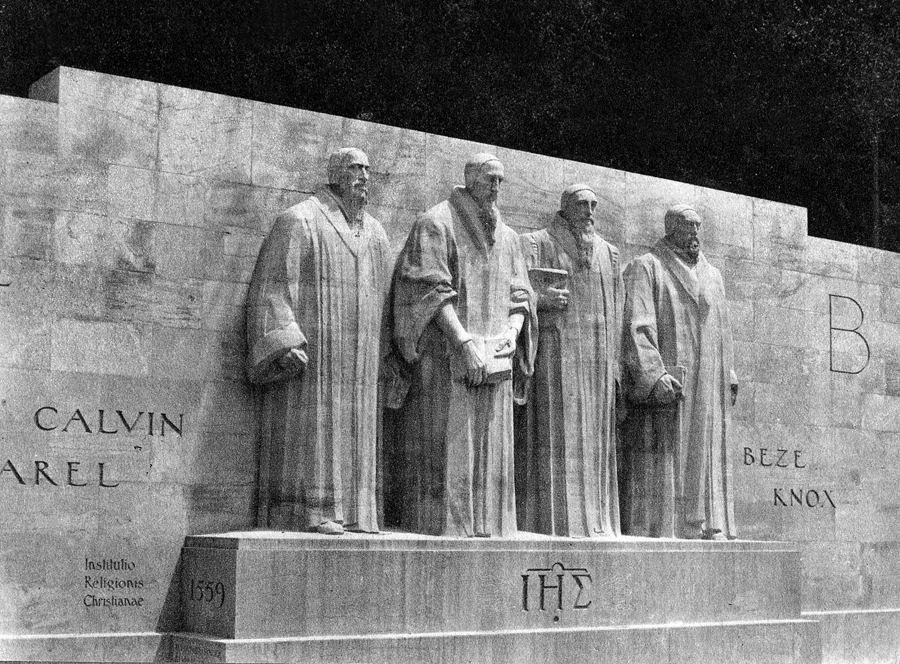
What does it mean to be “Reformed”?

reformationwallSpeaking theologically, what does it mean to be “Reformed”?

I came across this list which was put together by Brandon Solberg, and believe it to be a very helpful, useful guide:

Historically Reformed

Affirm the great “sola’s” (Latin for “only”) of the Reformation.

Sola Gratia…Grace Alone
Sola Fide…Faith Alone
Solus Christus…Christ Alone
Sola Scriptura…Scripture Alone
Soli Deo Gloria…To the Glory of God Alone

To summarize, salvation by Grace Alone, through Faith Alone, in Christ Alone, according to the Scriptures Alone, to the Glory of God Alone.

Affirm and promote a profoundly high view of the supremacy and sovereignty of God in all things and sees God as actively involved in His creation, governing and overseeing all the affairs of men. cf. Psalm 115:3; Job 34:14-15; 37:6-13; Daniel 4:35.

Affirm the utter dependence of sinful man upon God in all things, especially concerning salvation.

Affirm the Doctrines of Grace (commonly referred to as Calvinism), which display God as the author of salvation from beginning to end.

The acrostic TULIP (which is a summation of the Canons of Dort) is the most familiar way of delineating the doctrines of Grace. TULIP is made up of 5 points, which are:

* T – Total Depravity
* U – Unconditional Election
* L – Limited Atonement
* I – Irresistible Grace
* P – Perseverance, and Preservation, of the Saints

Creedal – To affirm the great creeds of the historic, orthodox church.

The Apostles’ Creed
The Nicene Creed
The Definition of Chalcedon

Confessional – To affirm AT LEAST ONE of the great confessions of the historic orthodox church.

* The Westminster Standards
– The Westminster Confession of Faith
– The Westminster Longer Catechism
– The Westminster Shorter Catechism

* Reformed Baptist Standards
– 1689 London Baptist Confession of Faith
– The Baptist Catechism
– Orthodox Catechism

* The Three Forms of Unity
– The Belgic Confession of Faith
– The Heidelberg Catechism
– The Canons of Dortrecht

Covenantal – To affirm the great covenants of Scripture and see those covenants as the means by which God interacts with and accomplishes His purposes in His creation, with mankind. The Scriptures contain numerous examples of God “covenanting” with man, establishing and ordaining a variety of covenants.

A high view of Scripture, in it’s necessity, infallibility, sufficiency and internal consistency, and our dependence upon it to learn what God has revealed about Himself, His commands, and His way of salvation.

A high view of the church in preaching (the exposition and application of God’s Word), the ordinances, discipline, prayer, worship (Regulative Principal), fellowship, and evangelism, all encompassed in the keeping of the Christian Sabbath, commonly called the Lord’s Day.

A distinctly Biblical, Christian worldview that permeates all of life, a life lived in the world, but at the same time, a life not oriented to the world and it’s standards, but oriented to God’s Word.

– A clear understanding of the distinction between, and relationship of, Law and Gospel.

The Law has Three Uses:

1) The civil use. The law serves the commonwealth or body politic as a force to restrain sin. The law restrains evil through punishment. Though the law cannot change the heart, it can inhibit sin by threats of judgment, especially when backed by a civil code that administers punishment for proven offences.

2) The pedagogical use. The law also shows people the perfect righteousness of God, and their sinfulness which deserves punishment, and points them to mercy and grace outside of themselves, found in the Gospel alone.

3) The moral, normative, sanctifying use. The moral standards of the law provide guidance for believers as they seek to live in humble gratitude for the grace God has shown us. This use of the law is for those who trust in Christ and have been justified by grace alone, through faith alone, apart from works.

The 2nd use of the Law and its perfect requirement points us to the Gospel (good news) of the purchased redemption and free grace of the Son, for God’s people, and the Gospel, once applied by the Holy Spirit, then points us back to the third use of the Law in delight to obey its commands to the glory of God as a new creation in Christ Jesus.