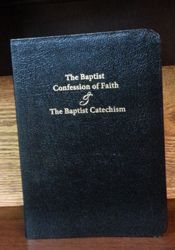
 The 1689 London Baptist Confession sets forth a three-fold division of the Law
Moral
19.2. The same Law that was first written in the heart of man, (Rom. 2:14-15) continued to be a perfect rule of Righteousness after the fall; & was delivered by God upon Mount Sinai, in (Deut. 10.4) Ten Commandments and written in two Tables; the four first containing our duty towards God, and the other six our duty to man.
19.5. The moral Law doth for ever bind all, (Rom. 13:8-10; James 2:8, 10-12) as well justified persons as others, to the obedience thereof, and that not only in regard of the matter contained in it, but also in respect of the (James 2:10-11) authority of God the Creator; who gave it: Neither doth Christ in the Gospel any way dissolve, (Matt. 5:17-19; Rom. 3:31) but much strengthen this obligation.
Ceremonial
19.3. Besides this Law commonly called moral, God was pleased to give to the people of Israel Ceremonial Laws, containing several typical ordinances, partly of worship, (Heb. 10.1; Col. 2:17) prefiguring Christ, his graces, actions, sufferings, and benefits; and partly holding forth divers instructions (1 Cor. 5:7) of moral duties, all which Ceremonial Laws being appointed only to the time of reformation, are by Jesus Christ the true Messiah and only Law-giver who was furnished with power from the Father, for that end, (Col. 2:14, 16-17; Eph. 2:14, 16) abrogated and taken away.
Judicial
19.4. To them also he gave sundry judicial Laws, which expired together with the state of that people, not obliging any now by vertue of that institution; their general (1 Cor. 9:8-10) equity onely, being of moral use.
Theonomists acknowledge only a two-fold division of the Law. See Sam Waldron’s “Theonomy: A Reformed Baptist Assessment“ [3 hour 12 minute readout] . Here is a snippet:
Is the Theonomic view of the Mosaic “Judicial Law” consistent with the Reformed tradition?
This is a pressing question for Theonomists. On the one hand, in asserting “the abiding validity of the law in exhaustive detail” they appear to teach the binding obligation of the “judicial law” of Moses on society today. On the other hand, the divines of the Westminster Assembly and Calvin, their mentor, clearly teach the “expiration” of the judicial law of Moses and deny that it is as such binding on nations today. The critical statement in the Westminster Confession of Faith is found in 19:4. Having clearly distinguished the moral, ceremonial, and judicial law, the Confession states, “To them also, as a body politic, He gave sundry judicial laws, which expired together with the State of that people; not obliging any other now, further than the general equity thereof may require.” Calvin elaborates on this very point in his Institutes. His statements are so similar to that of the Confession that it is probable that here as in so many other places he had a formative impact on the Confession.
“I will briefly remark, however, by the way, what laws it may piously use before God, and be rightly governed by among men. And even this I would have preferred passing over in silence, if I did not know that it is a point on which many persons run into dangerous errors. For some deny that a state is well constituted, which neglects the polity of Moses, and is governed by the common laws of the nations. the dangerous and seditious nature of this opinion I leave to the examination of others; it will be sufficient for me to have evinced it to be false and foolish. Now, it is necessary to observe that common distinction, which distributes all the laws of God promulgated by Moses into moral, ceremonial, and judicial; and these different kinds of laws are to be distinctly examined, that we may ascertain what belongs to us, and what does not. . . .
What I have said will be more clearly understood, if in all laws we properly consider these two things-the constitution of the law and its equity, on the reason of which the constitution itself is founded and rests. Equity, being natural, is the same to all mankind; and consequently all laws, on every subject ought to have the same equity for their end. Particular enactments and regulations being connected with circumstances, and partly dependent upon them, may be different in different cases without any impropriety, provided they are all equally directed to the same object of equity. . . . Whatever laws shall be framed according to that rule, directed to that object, and limited to that end, there is no reason why we should censure them, however, they may differ from the Jewish law or from each other. The law of god forbids theft. What punishment was enacted for thieves, among the Jews, may be seen in the book of Exodus. The most ancient laws of other nations punished by theft by requiring a compensation of double the value. Subsequent laws made a distinction between open and secret theft. Some proceeded to banishment, some to flagellation, and some to the punishment of death. False witness was punished, among the Jews, with the same punishment as such testimony would have caused to be inflicted on the person against whom it was given; in some countries it was punished with infamy, in others with hanging, in others with crucifixion. All laws agree in punishing murder with death, though in several different forms. The punishment of adulterers in different countries have been attended with different degrees of severity. Yet we see how, amidst this diversity, they are all directed to the same end. For they all agree in denouncing punishment against those crimes which are condemned by the eternal law of God; such as murderers, thefts, adulteries, false testimonies, though there is not a uniformity in the mode of punishment; and, indeed, this is neither necessary, nor even expedient. . . . For the objection made by some, that it is an insult to the law of God given by Moses, when it is abrogated, and other laws preferred to it, is without any foundation; for neither are other laws preferred to it, when they are more approved, not on a simple comparison, but on account of the circumstances of time, place, and nation; nor do we abrogate that which was never given to us. For the Lord gave not that law by the hand of Moses to be promulgated among all nations, and to be universally binding; but after having taken the Jewish nation into his special charge, patronage, and protection, he was pleased to become, in peculiar manner, their legislator, and, as became a wise legislator, in all the laws which he gave them, he had a special regard to their peculiar circumstances.”
Also see Dr. Waldron’s three-part lecture series “Theonomy: A Reformed Baptist Assessment”
I. Introductory Considerations
II. A Critique of Theonomic Eschatology
III. A Critique of Theonomic Ethics
Dr. Sam Waldron has also put together a lengthy discourse on the subject “Theonomy, A Reformed Baptist Perspective.” He writes:
Section 1: Introductory Considerations
I. A General Description of “Theonomy”
A. Major Sources
1. Rousas J. Rushdoony
Theonomy, or as it is also called, Christian Reconstruction, has for its father R. J. Rushdoony and his prolific pen. Among his many books the ones which are most important here are first and foremost, The Institutes of Biblical Law, and his brief treatment entitled, The Meaning of Postmillennialism: God’s Plan for Victory. Rushdoony ascribes to Cornelius Van Til the greatest influence by far upon his thinking.(1) Rushdoony is the master influence in three Theonomic organs: The Chalcedon Foundation, “The Journal of Reconstruction,” and a newsletter entitled “The Chalcedon Report.”
2. Greg Bahnsen
It is probably due to Mr. Bahnsen that Christian Reconstructionism owes the name, Theonomy. His Theonomy in Christian Ethics with a foreword by Rushdoony is perhaps the single most influential and controversial of the Theonomic literature. He is also well-known for his book, Homosexuality: A Biblical View. This book illustrates what is best in the Theonomic perspective. Mr. Bahnsen is now an Orthodox Presbyterian Church minister in California. He is a graduate of Westminster Theological Seminary and formerly the Professor of Apologetics at Reformed Theological Seminary (RTS) in Jackson, Mississippi. Though a fine apologete in the presuppositional school of thought, he was dismissed from RTS in a dispute over Theonomy. The Covenant Tape Ministry distributes tapes of his teaching.
3. Gary North
Gary North was formerly editor of the “Journal of Christian Reconstruction.” He is the editor of numerous works including, The Theology of Christian Resistance, The Tactics of Christian Resistance. He is the author of a popularization of Christian Reconstruction entitled, Unconditional Surrender: God’s Program for Victory, as well as Backward Christian Soldiersand volume 1 of an economic commentary on the Bible entitled The Dominion Covenant: Genesis. He also contributed to The Failure of the American Baptist Culture edited by James B. Jordan.
Section 1: Introductory Considerations
I. A General Description of “Theonomy”
A. Major Sources
1. Rousas J. Rushdoony
Theonomy, or as it is also called, Christian Reconstruction, has for its father R. J. Rushdoony and his prolific pen. Among his many books the ones which are most important here are first and foremost, The Institutes of Biblical Law, and his brief treatment entitled, The Meaning of Postmillennialism: God’s Plan for Victory. Rushdoony ascribes to Cornelius Van Til the greatest influence by far upon his thinking.(1) Rushdoony is the master influence in three Theonomic organs: The Chalcedon Foundation, “The Journal of Reconstruction,” and a newsletter entitled “The Chalcedon Report.”
2. Greg Bahnsen
It is probably due to Mr. Bahnsen that Christian Reconstructionism owes the name, Theonomy. His Theonomy in Christian Ethics with a foreword by Rushdoony is perhaps the single most influential and controversial of the Theonomic literature. He is also well-known for his book, Homosexuality: A Biblical View. This book illustrates what is best in the Theonomic perspective. Mr. Bahnsen is now an Orthodox Presbyterian Church minister in California. He is a graduate of Westminster Theological Seminary and formerly the Professor of Apologetics at Reformed Theological Seminary (RTS) in Jackson, Mississippi. Though a fine apologete in the presuppositional school of thought, he was dismissed from RTS in a dispute over Theonomy. The Covenant Tape Ministry distributes tapes of his teaching.
3. Gary North
Gary North was formerly editor of the “Journal of Christian Reconstruction.” He is the editor of numerous works including, The Theology of Christian Resistance, The Tactics of Christian Resistance. He is the author of a popularization of Christian Reconstruction entitled, Unconditional Surrender: God’s Program for Victory, as well as Backward Christian Soldiersand volume 1 of an economic commentary on the Bible entitled The Dominion Covenant: Genesis. He also contributed to The Failure of the American Baptist Culture edited by James B. Jordan
B. Major Tenets
The Christian Reconstructionists have themselves defined the major tenets of their system. They are presuppositional apologetics, predestination, their view of the abiding validity of the law in exhaustive detail, and postmillennialism. North writes,
Mr. Clapp lists three key doctrines of the Reconstructionists: presuppositional apologetics, biblical law, and postmillennialism. He left out one crucial doctrine: predestination. These were the four that David Chilton and I listed in our essay. “Apologetics and Strategy” in Christianity and Civilization 3 (1983).(2)
As we come to a preliminary assessment of Theonomy, we will comment further on these self-confessed distinctives of Christian Reconstruction. Continue reading →
