Many experienced technical difficulties with the internet feed from yesterday’s first session at the Inerrancy summit, but thankfully, the message is now available to watch online. Here then is the opening session by Dr. John MacArthur.
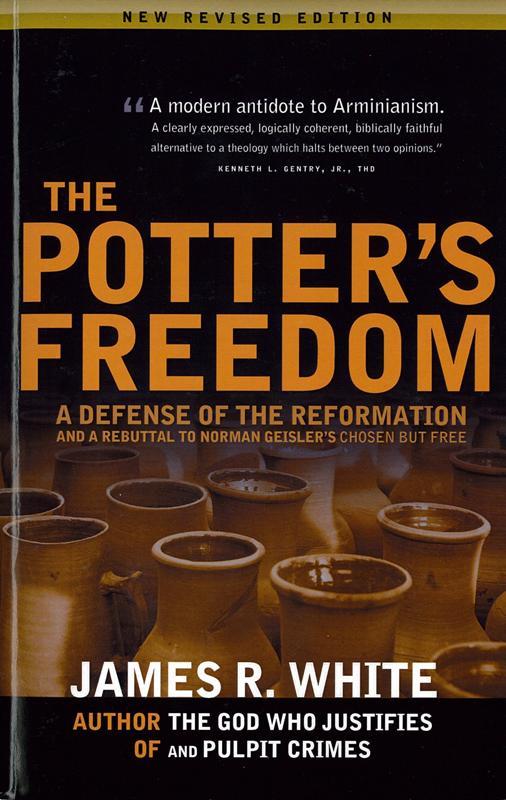
It was the visit to Scottsdale of Dr. Sproul in the year 2000 and Dr. James White’s book “The Potter’s Freedom” that were the two major means God used to turn me from a word of faith pastor into…. slowly but surely… over time… a Reformed Baptist pastor subscribing to the 1689 London Baptist Confession. A third means would be the vast theological resources of sermons and essays at monergism.com, a site hosted by John Hendryx.
Concerning ‘The Potter’s Freedom’ book, Dr. White writes:
I am certain Norman Geisler had no intentions, upon completing Chosen But Free, of seeing entire churches founded upon the Reformed faith as a result of his book. In fact, just the opposite was his desire. We had discussed his forthcoming book on a ride to the airport in Indianapolis in 1999. As I listened to him discuss “extreme Calvinism” I immediately recognized he was simply talking about Calvinism itself. I offered to send him my book, naively. He had just explained to me that he did not think anyone less than 65 should write a Systematic Theology, and to this day, as those who know him know, he does not believe he can learn from anyone younger than himself (a sort of reverse age-discrimination thing). I did send my books (at that time I had two little books on Calvinism out, God’s Sovereign Grace, and Drawn by the Father), but I know they were never read.
Like many of my books back then, TPF was written in a relatively short amount of time. These days it takes me forever, but back then I wasn’t traveling globally, so I had more time to write, and more focus as well. One of the real issues in dealing with the book was that the first edition did not have a meaningful Scripture index. One of the editors (it was published by my own publisher, Bethany House, so I had some inside insight into it) told me that they wanted a complete index, but it ran into a page limit issue, so the original Scripture index was extremely meagre. As a result, I used the ?#?prosapologian? chat channel to help. I would pay guys, like MarkE22, in Amazon gift cards of $10 or $15 to scan through the entire book and provide a page list of every reference to John 6:37, for example.
I look back now and smile at what I was thinking at the time. “Geisler’s book will create such confusion in people’s minds! He has amazingly chosen to redefine all the classic terminology, which will cripple people in their understanding of the historic discussion of this vital issue.” It really was my entire intention to address that problem, showing all due respect to Dr. Geisler. And though he has been anything but kind to me in the years since that book came out (I was informed only two days ago about a letter he wrote ripping into me, all in defense of—guess who? Yeah, Ergun Caner), I am very thankful that any semi-fair reader will be able to verify the respectfulness of the book with reference to Geisler.
As I said above, I doubt Geisler realized how wide the impact of his book would be—in the reverse direction of his intentions. I know of one church that was founded because of TPF—have lost count of the number of people who have found places of ministry, or even entered into the ministry, at least partly due to that work. I surely had no idea how the book would be received or how widely it would be read.
Pastor Rick Phillips with Harry Reeder: Union with Christ and the Gospel
From the being totally depraved, is unable to obey or please God unto salvation.
We deny that the believer, being regenerated by the Holy Spirit, remains unable to obey and please God, by grace and in Christ.
Article III – The Gospel Includes Sanctification
We affirm that the gospel provides salvation for the whole man, including man’s need for both imputed and imparted righteousness.
We deny that the gospel provides freedom from the guilt of sin in justification without deliverance from the power of sin in regeneration and liberation from the practice of sin in sanctification.
Article IV – Union with Christ and Sanctification
We affirm that both justification and sanctification are distinct, necessary, inseparable and simultaneous graces of union with Christ though faith.
We deny that sanctification flows directly from justification, or that the transformative elements of salvation are mere consequences of the forensic elements.
Article V – Gratitude and Motivation
We affirm that gratitude for justification is a powerful motivation for growth in holiness.
We deny that gratitude for justification is the only valid motivation for holiness, making all other motivations illegitimate or legalistic.
Article VI-Good Works not Merit
We affirm that believers are not under the Law as a covenant of works, where the believer is required to merit his or her own righteousness before God.
We deny that Christ has freed the Christian from the moral Law as the standard of Christian living.
Article VII – Adoption and Sanctification
We affirm that through the finished work of Christ believers are adopted by God as sons and now relate to God as their loving heavenly Father.
We deny that our adoption precludes God’s fatherly displeasure when His children rebel, or that God’s Fatherly love prevents Him from disciplining Christians who stray from the path of righteousness.
Article VIII – Effort and Sanctification
We affirm that God-glorifying, Christ-centered, Holy Spirit-empowered effort to put off sin and put on righteousness is necessary for Christian growth in grace.
We deny that all practical effort in sanctification is moralistic, legalistic or that the only effort required for growth is that Christians remember, revisit, and rediscover their justification.
Article IX – Faith and Sanctification
We affirm that growth in the Christian life comes through faith, which believes and acts on the promises of God in the Scriptures.
We deny that faith is wholly passive in sanctification or separated from good works in the same sense that justification is by faith alone.
Article X – Preaching the Imperatives
We affirm that faithful preaching of the Law for use in the Christian life must always be done in the context of God’s provision through the gospel and the power of the Holy Spirit.
We deny that preaching the Scripture’s indicatives without the imperatives is a healthy model for Christian ministry because such preaching fails to conform to the pattern seen in Scripture and is dangerous to the life and ministry of the church.
Article XI – Sanctification and Assurance
We affirm that Christians gain assurance of salvation by cherishing the promise of the gospel and by the fruit of the Spirit’s work in the believer’s life.
We deny that assurance gained through growth in godliness amounts to a performance-based religion or necessitates an unwholesome spiritual pride.
Article XII – Sanctification and Victory
We affirm that Christians can and should experience victories over sin, however limited and partial, and that these victories bring glory to God and bear testimony to the power of His grace.
We deny that rejoicing in victories over sin amounts to spiritual pride or performance religion, although Christians may and sometimes do sin in this way.