 For many years I have been blessed by Jerry Bridges’ writing ministry. Here are some of his quotes I put together. Enjoy!
“Don’t believe everything you think. You cannot be trusted to tell yourself the truth. Stay in The Word.”
“My observation of Christendom is that most of us tend to base our personal relationship with God on our performance instead of on His grace. If we’ve performed well—whatever ‘well’ is in our opinion—then we expect God to bless us. If we haven’t done so well, our expectations are reduced accordingly. In this sense, we live by works rather than by grace. We are saved by grace, but we are living by the ‘sweat’ of our own performance.
Moreover, we are always challenging ourselves and one another to ‘try harder’. We seem to believe success in the Christian life is basically up to us; our commitment, our discipline, and our zeal, with some help from God along the way. The realization that my daily relationship with God is based on the infinite merit of Christ instead of on my own performance is very freeing and joyous experience. But it is not meant to be a one-time experience; the truth needs to be reaffirmed daily.” – Jerry Bridges, Transforming Grace
“If God’s blessings were dependent on our performance, they would be meager indeed. Even our best works are shot through with sin – with varying degrees of impure motives and lots of imperfect performance. We’re always, to some degree, looking out for ourselves, guarding our flanks, protecting our egos. It’s because we don’t realize the utter depravity of the principle of sin remaining in us and staining everything we do that we entertain any notion of earning God’s blessings through our obedience. And because we don’t fully grasp that Jesus paid the penalty for all our sins, we despair of God’s blessing when we’ve failed to live up to even our own desires to please God.
“Your worst days are never so bad that you’re beyond the reach of God’s grace. And your best days are never so good that you’re beyond the need of God’s grace.” – Jerry Bridges, Holiness Day by Day: Transformational Thoughts for Your Spiritual Journey
“Not only has the debt (of our sins) been fully paid, there is no possibility of ever going into debt again.” Jerry Bridges
“One of the best kept secrets among Christians today is this: Jesus paid it all. I mean all. He not only purchased your forgiveness of sins and your ticket to heaven, He purchased every blessing and every answer to prayer you will ever receive. Every one of them – no exceptions.” – Jerry Bridges, Holiness Day by Day: Transformational Thoughts for Your Spiritual Journey
“Why is this such a well-kept secret? The core issue is that we don’t believe we’re still spiritually ‘bankrupt.’ Having come into God’s kingdom by grace alone solely on the merit of Another, we’re now trying to pay our own way by our performance. We declared only temporary bankruptcy; we’re now trying to live by good works rather than by grace.” – Jerry Bridges, Holiness Day by Day: Transformational Thoughts for Your Spiritual Journey
“The atonement was God’s extending favor to people who deserved not favor but wrath. The atonement was God’s bridging the awful ‘Grand Canyon’ of sin to reach people who were in rebellion against Him. And He did this at infinite cost to Himself by sending Jesus to die in our place.” – Jerry Bridges, Transforming Grace: Living Confidently in God’s Unfailing Love
“Our good works are not truly good unless they’re motivated by a love for God and a desire to glorify Him. But we cannot have such a Godward motivation if we think we must earn God’s favor by our obedience or if we fear we may forfeit His favor by disobedience. Such a works-oriented motivation is essentially self-serving, prompted more by what we think we gain or lose than by a grateful response to the grace He has already given us through Jesus Christ.” – Jerry Bridges, Holiness Day by Day: Transformational Thoughts for Your Spiritual Journey
“Most of us probably entertain either of these attitudes on different days. On a good day (as we perceive it), we tend toward self-righteous Pharisaism. On a not-so-good day, we allow ourselves to wallow in a sense of failure and guilt. Either way we’ve moved away from the gospel of God’s grace, trying to relate to God directly on the basis of our performance rather than through Christ.” – Jerry Bridges, Holiness Day by Day: Transformational Thoughts for Your Spiritual Journey
“Have you ever thought about the wonderful truth that Christ lived His perfect life in your place and on your behalf? Has it yet gripped you that when God looks at you today He sees you clothed in the perfect, sinless obedience of His Son? And that when He says, ‘This is my beloved Son, with whom I am well pleased’ (Matthew 3:17; 17:5), He includes you in that warm embrace? The extent to which we truly understand this is the extent to which we will begin to enjoy those unsearchable riches that are found in Christ.” – Jerry Bridges, Holiness Day by Day: Transformational Thoughts for Your Spiritual Journey
“Reflect on these words from John Brown, a nineteenth-century Scottish pastor and theologian: Nothing is so well fitted to put the fear of God, which will preserve men from offending him, into the heart, as an enlightened view of the cross of Christ. There shine spotless holiness, inflexible justice, incomprehensible wisdom, omnipotent power, holy love. None of these excellencies darken or eclipse the other, but every one of them rather gives a lustre to the rest. They mingle their beams, and shine with united eternal splendour: the just Judge, the merciful Father, the wise Governor. Nowhere does justice appear so awful, mercy so amiable, or wisdom so profound.” – Jerry Bridges, The Joy of Fearing God
“Because we have a natural tendency to look within ourselves for the basis of God’s approval or disapproval, we must make a conscious daily effort to look outside ourselves to the righteousness of Christ, then to stand in the present reality of our justification.” – Jerry Bridges, The Bookends of the Christian Life
“All of us have a natural drift toward a performance-based relationship with God. We know we’re saved by grace through faith – not by works (Ephesians 2:8-9), but we somehow get the idea that we earn blessings by our works. After throwing overboard our works as a means to salvation, we want to drag them back on board as a means of maintaining favor with God. Instead of seeing our own righteousness as table scraps to be dumped, we see it as leftovers to be used later to earn answers to prayer. We need to remind ourselves every day that God’s blessings and answers to prayer come to us not on the basis of our works, but on the basis of the infinite merit of Jesus Christ.” – Jerry Bridges, Holiness Day by Day: Transformational Thoughts for Your Spiritual Journey
“C. Samuel Storms has so aptly written, Grace ceases to be grace if God is compelled to bestow it in the presence of human merit. . . . Grace ceases to be grace if God is compelled to withdraw it in the presence of human demerit. . . . [Grace] is treating a person without the slightest reference to desert whatsoever, but solely according to the infinite goodness and sovereign purpose of God.” – Jerry Bridges, Transforming Grace: Living Confidently in God’s Unfailing Love
“In the person of Christ God beholds a holiness which abides His closest scrutiny, yea, which rejoices and satisfies His heart; and whatever Christ is before God, He is for His people.” – Jerry Bridges, Holiness Day by Day: Transformational Thoughts for Your Spiritual Journey
“Jesus paid it all. I mean all. He not only purchased your forgiveness of sins and your ticket to heaven, He purchased every blessing and every answer to prayer you will ever receive.” – Jerry Bridges, Transforming Grace: Living Confidently in God’s Unfailing Love
“The realization that my daily relationship with God is based on the infinite merit of Christ instead of on my own performance is a very freeing and joyous experience. But it is not meant to be a one-time experience; the truth needs to be reaffirmed daily.” – Jerry Bridges, Transforming Grace: Living Confidently in God’s Unfailing Love
“The problem with self righteousness is that it seems almost impossible to recognize in ourselves. We will own up to almost any other sin. but not the sin of self-righteousness. When we have this attitude, though, we deprive ourselves of the joy of living in the grace of God. Because you see, grace is only for sinners.” – Jerry Bridges
“In a sermon entitled “God’s Providence,” C. H. Spurgeon said, “Napoleon once heard it said, that man proposes and God disposes. ‘Ah,’ said Napoleon, ‘but I propose and dispose too.’ How do you think he proposed and disposed? He proposed to go and take Russia; he proposed to make all Europe his. He proposed to destroy that power, and how did he come back again? How had he disposed it? He came back solitary and alone, his mighty army perished and wasted, having well-nigh eaten and devoured one another through hunger. Man proposes and God disposes.” – Jerry Bridges, Trusting God: Even When Life Hurts
“All my labors are marred by sin and imperfection. As I think of every act I have ever done for God, I can only cry out, ‘Oh, God, forgive the iniquity of my holy things.’” – Jerry Bridges, The Transforming Power Of The Gospel
“God does not believe for us, but through His Spirit He creates spiritual life in us so that we can believe. Faith is the gift of God. It’s part of the whole salvation package that God gives to us through the work of Christ for us and the work of the Holy Spirit in us. It’s not our contribution, so to speak, to God’s great plan of salvation. God does it all. It’s part of the unsearchable riches of Christ.” – Jerry Bridges, Holiness Day by Day: Transformational Thoughts for Your Spiritual Journey
“The solution to staying on the right side of the fine line between using and abusing grace is repentance. The road to repentance is godly sorrow (2 Corinthians 7:10). Godly sorrow is developed when we focus on the true nature of sin as an offense against God rather than something that makes us feel guilty.” – Jerry Bridges
“The sin of worldliness is a preoccupation with the things of this temporal life. It’s accepting and going along with the views and practices of society around us without discerning if they are biblical. I believe that the key to our tendencies toward worldliness lies primarily in the two words ‘going along’. We simply go along with the values and practices of society.” – Jerry Bridges, Respectable Sins: Confronting the Sins We Tolerate
“W. S. Plumer said, “We never see sin aright until we see it as against God…All sin is against God in this sense: that it is His law that is broken, His authority that is despised, His government that is set at naught…Pharaoh and Balaam, Saul and Judas each said, ‘I have sinned’; but the returning prodigal said, ‘I have sinned against heaven and before thee’; and David said, ‘Against Thee, Thee only have I sinned.” – Jerry Bridges, The Pursuit of Holiness

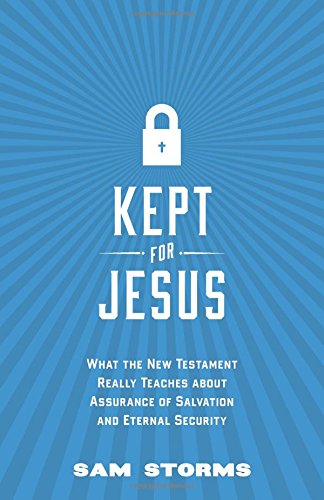 Dr. Sam Storms has written a new book called “Kept for Jesus: What the New Testament Really Teaches about Assurance of Salvation and Eternal Security” (Crossway, 2015), where he looks at every passage in the New Testament that addresses assurance, security, and perseverance. I highly recommend it. He has also written a bonus chapter, available as a pdf here, where he answers a number of questions including these two: