Are the Quran/Bible Books of Peace? (Debates)

Debate: Is the Quran a Book of Peace? Shabir Ally (Muslim) vs. David Wood (Christian)

Is the Quran a book of peace? Is Islam a religion of peace? Did Muhammad preach a message of peace and tolerance? In this debate, Shabir Ally (Muslim) and David Wood (Christian) scrutinize a variety of Quran verses to determine whether the Islam commands Muslims to live in peace with unbelievers.

Is the Bible a book of peace? Christians point to Jesus’ commands to “Love your neighbor as yourself” and “Love your enemies and pray for those who persecute you” to prove that Christianity is a religion of peace. However, the Bible also contains reports of Joshua invading the land of Canaan, Saul fighting the Amalekites, etc. So what’s the Biblical position on peace and violence? In this debate, David Wood and Shabir Ally go through the text to get to the truth.

Clearer Than Saying “Calvinist”

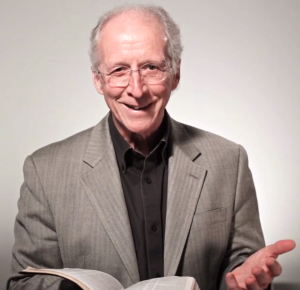
john-piperDr. John Piper in an article entitled “Saying What You Believe Is Clearer Than Saying “Calvinist”” writes:

We are Christians. Radical, Bible-saturated, Christ-exalting, God-centered, mission-advancing, soul-winning, church-loving, holiness-pursing, sovereignty-savoring, grace-besotted, broken-hearted, happy followers of the omnipotent, crucified Christ. At least that’s our imperfect commitment.

In other words, we are Calvinists. But that label is not nearly as useful as telling people what you actually believe! So forget the label, if it helps, and tell them clearly, without evasion or ambiguity, what you believe about salvation.

If they say, “Are you a Calvinist?” say, “You decide. Here is what I believe . . .”

I believe I am so spiritually corrupt and prideful and rebellious that I would never have come to faith in Jesus without God’s merciful, sovereign victory over the last vestiges of my rebellion. (1 Corinthians 2:14; Ephesians 2:1–4; Romans 8:7).

I believe that God chose me to be his child before the foundation of the world, on the basis of nothing in me, foreknown or otherwise. (Ephesians 1:4–6; Acts 13:48; Romans 8:29–30; 11:5–7)

I believe Christ died as a substitute for sinners to provide a bona fide offer of salvation to all people, and that he had an invincible design in his death to obtain his chosen bride, namely, the assembly of all believers, whose names were eternally written in the book of life of the Lamb that was slain. (John 3:16; John 10:15; Ephesians 5:25; Revelation 13:8)

When I was dead in my trespasses, and blind to the beauty of Christ, God made me alive, opened the eyes of my heart, granted me to believe, and united me to Jesus, with all the benefits of forgiveness and justification and eternal life. (Ephesians 2:4–5; 2 Corinthians 4:6; Philippians 2:29; Ephesians 2:8–9; Acts 16:14; Ephesians 1:7; Philippians 3:9)

I am eternally secure not mainly because of anything I did in the past, but decisively because God is faithful to complete the work he began—to sustain my faith, and to keep me from apostasy, and to hold me back from sin that leads to death. (1 Corinthians 1:8–9; 1 Thessalonians 5:23–24; Philippians 1:6; 1 Peter 1:5; Jude 1:25; John 10:28–29; 1 John 5:16)
Call it what you will, this is my life. I believe it because I see it in the Bible. And because I have experienced it. Everlasting praise to the greatness of the glory of the grace of God!

Under Authority?

6 “Lord, my servant is lying paralyzed at home, suffering terribly.” 7 And he said to him, “I will come and heal him.” 8 But the centurion replied, “Lord, I am not worthy to have you come under my roof, but only say the word, and my servant will be healed. 9 For I too am a man under authority, with soldiers under me. And I say to one, ‘Go,’ and he goes, and to another, ‘Come,’ and he comes, and to my servant, ‘Do this,’ and he does it.” 10 When Jesus heard this, he marveled and said to those who followed him, “Truly, I tell you, with no one in Israel have I found such faith. 11 I tell you, many will come from east and west and recline at table with Abraham, Isaac, and Jacob in the kingdom of heaven, 12 while the sons of the kingdom will be thrown into the outer darkness. In that place there will be weeping and gnashing of teeth.” 13 And to the centurion Jesus said, “Go; let it be done for you as you have believed.” And the servant was healed at that very moment.

The centurion’s words reveal much concerning his view of authority.

1. He recognized Jesus had authority. That is very clear. The centurion knew that Jesus did not even need to come to his home to heal his paralyzed servant. Travel was unnecessary. All Jesus needed to do was speak a work – to give a command.

2. He recognized that Jesus’ authority, like his own, was delegated authority.

In ancient Rome, to disobey the centurion’s authority would have FAR reaching consequences. Rome stood behind the centurion. The centurion wore the uniform of Rome, having obtained Rome’s endorsement and backing. To disobey him would mean disobedience to Rome. To take on the authority of the centurion would have meant taking on all the power of the Emperor himself. The consequence of disobedience could be death. Continue reading