
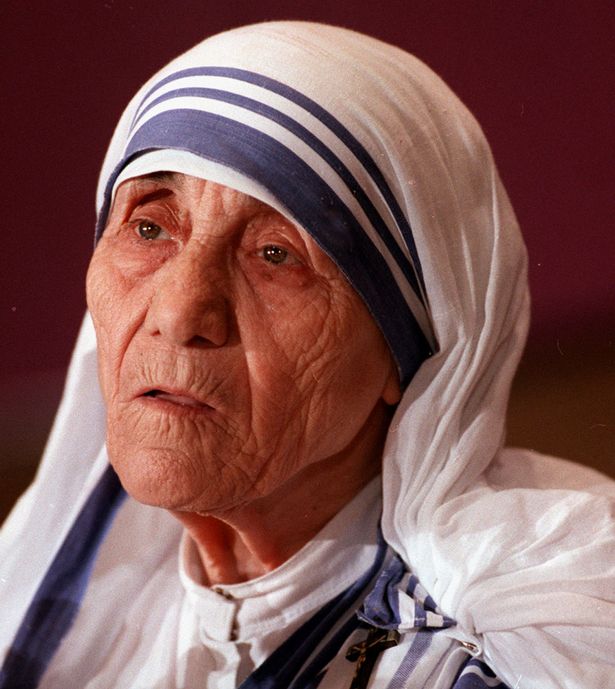
 Tim Challies, back in 2003 wrote this article:
Mother Teresa (known also as Mother Teresa of Calcutta) was born in what is now called Yugoslavia/Bosnia in 1910. Born to Albanian parents she was at that time known as Agnes Gonxha Bojaxhiu. The labor for which she became renowned began on January 6, 1929 when she arrived in Calcutta, India to work with the poor and needy. When she died in September of 1997 she was the director of a worldwide missions organization known as the “Missionaries of Charity.” There are currently over 500 missions in more than 100 countries around the world. She was the recipient of numerous awards including the most prestigious of all awards, the Nobel Peace Prize. She was revered around the world as an example of Christian love and charity and as someone who dedicated her life to the noble cause of advancing the gospel to the poor and needy of the world while caring for their physical needs. Her legacy will doubtless be as one of history’s great humanitarians.
Upon examination, though, the Mother Teresa portrayed by the media and popularized in our culture is glorified (soon to be beatified) and almost deified. A close examination of her beliefs and the work she did shows that her legacy may be little more than fiction.
Mother Teresa, as goes without saying, was a devout Roman Catholic. As such, some of her beliefs would necessarily have to stand at odds with core Christian beliefs. This has not appeared to trouble many Christians who continue today, even in Protestant churches, to uphold her as a prime example of Christian virtue, love and self-sacrifice. Her devotion to Catholic theology is obvious in her speeches and writing. In a speech she delivered to the Worldwide Retreat For Priests in October of 1984 she made the following quotes:
a) “At the word of a priest, that little piece of bread becomes the body of Christ, the Bread of Life.”
b) “Without a priest, without Jesus going with them, our sisters couldn’t go anywhere.”
c) “When the priest is there, then can we have our altar and our tabernacle and our Jesus. Only the priests put Jesus there for us. … Jesus wants to go there, but we cannot bring him unless you first give him to us. This is why I love priests so much. We could never be what we are and do the things we do without you priests who first bring Jesus to us.”
d) “Mary … is our patroness and our Mother, and she is always leading us to Jesus.”
In just these four quotes we get a glimpse of beliefs that contradict so many gospel truths. We see a belief in transubstantiation (that the bread of communion actually becomes the body of Christ) and her belief that Christ is present in this bread. We also see her belief that Mary, the mother of Jesus, is a mediator between God and ourselves (see Catholic Catechism, paragraph #969, #1172 and#494) and as such, plays a role in our salvation.
While she worked with the poor, Mother Teresa was adamant that any type of evangelism was unnecessary. In her book, Life in the Spirit: Reflections, Meditations and Prayers, she says:
“We never try to convert those who receive [aid from Missionaries of Charity] to Christianity but in our work we bear witness to the love of God’s presence and if Catholics, Protestants, Buddhists, or agnostics become for this better men — simply better — we will be satisfied. It matters to the individual what church he belongs to. If that individual thinks and believes that this is the only way to God for her or him, this is the way God comes into their life — his life. If he does not know any other way and if he has no doubt so that he does not need to search then this is his way to salvation.” (Pages 81-82) Continue reading