
A Brief Review of Seventh Day Adventism

Nathan Busenitz has written a brief review of Seventh Day Adventism “What is Seventh-day Adventism?” and “How should evangelicals evaluate the SDA movement?”

A seminary student recently asked me to address those questions. Today’s post gives me an opportunity to do just that.

What Is Seventh-day Adventism?

The Seventh-day Adventist church began as a distinctive movement with the teachings of a lay preacher named William Miller (1782–1849). Miller embarked on a personal study of Scripture (and particularly Daniel 8:14) which convinced him that Christ would return between March 21, 1843 and March 21, 1844. When that prediction failed, Miller and his followers adjusted the date, determining that October 22, 1844 would be the day of Jesus’ second advent.

But the Lord did not return on October 22, 1844, and Miller’s followers (known as Millerites) experienced what they called ‘the Great Disappointment.’ Most of Miller’s followers realized his predictions had been wholly mistaken. But a small group of Millerites (from whom the Seventh-day Adventists emerged) insisted that the date he identified could not have been wrong. They claimed Miller’s error was not in his mathematical calculations, but rather in what he expected to take place on that date. Consequently, they concluded something significant occurred in 1844, even if it was not Christ’s second coming.

Phil Johnson points out the irony of establishing a religious movement on the basis of a failed prophetic prediction:

By the early 1840s, the Millerite movement had expanded into a huge international phenomenon. In one five-month span in 1843, 600,000 copies of Millerite literature were distributed in New York alone. People sold their homes, gave away their possessions, and gave up their livelihoods in order to demonstrate their faith in William Miller’s predictions.

Of course, Christ did not return—not in Miller’s lifetime; not even in that century. Miller tried adjusting his dates a time or two, but he himself gave up hope of finding a way to adjust his calculations to keep the expectation alive. He died baffled and disillusioned. He never joined the Seventh-day Adventists himself.

To this day, Adventists refer to Miller’s failed prediction of the second coming as “The Great Disappointment.” That would seem a pretty shaky foundation on which to found [a new religious movement]—a false prophecy that culminated in disappointment and worldwide embarrassment.

(Online source)

But out of ‘the Great Disappointment,’ the Seventh-day Adventist movement was born. Continue reading

Calvinist Tweets

wordsThough Justin Edwards and I have never yet met in person, I consider him a friend (through the internet) and very much enjoyed reading some of his tweets, do follow Him, & won’t cease from following their Good Shepherd, Jesus. ?

# God’s love is such that He elects those who won’t nor can choose Him; He causes them to be born again so they can and will.

# God’s electing love is such that He gives faith to those who have none. ?

# God glorifies Himself through calling, justifying, sanctifying, & glorifying sinners He elected before time. He won’t forsake His glory.

# Gods love isn’t conditional upon faith, repentance, obedience, perseverance, or love for Him. He loves us 1st & gifts what we have not

# Every single sinner Jesus died for inherits eternal life in heaven.

# Jesus’ death reconciled sinners to God. There are no reconciled sinners in hell.

# Jesus purchased with His blood a people for Himself from every tribe, language, people & nation. Not one will perish in hell.

# Jesus did not redeem the world; He redeemed a people out of the world.

# There’s a cup of Gods wrath for sinners to drink, except sinners for whom Jesus drank the cup in their place. The rest drink to the dregs

# Our God is in the heavens & does whatever He pleases. The Lord works ALL things according to the counsel of His will, not ours.

# Nothing in all creation can separate us from the love of God in Christ Jesus. We cant even snatch ourselves out of His hand.

# Ever read how dead Lazarus was, Christian? That was you until Jesus made you alive. Dead men don’t believe anything, they’re D.E.A.D.

# The Slain Lamb guarantees salvation for His elect from every people group. Jesus won their freedom; they will reign with Him forever

# God created. Lucifer fell. Adam sinned. Jesus redeemed. Demons & sinners perish. Elect saints & angels worship. All Plan A. ?

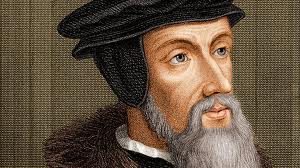
The Evangelistic Heart of John Calvin

Calvin05This article was first published in the Reformed Quarterly Magazine Fall 2001.

Calvin the Evangelist. Original source here:

There are many popular misconceptions about John Calvin. Who is the true Calvin behind the image?

Will Durant, the famous author of the eleven-volume series on the History of Western Civilization, said of Calvin: “We shall always find it hard to love the man, John Calvin, who darkened the human soul with the most absurd and blasphemous conception of God in all the long and honored history of nonsense.” Even the defrocked TV evangelist, Jimmy Swaggart, has something to say about Calvin. “Calvin,” said Swaggart,” has caused untold millions of souls to be damned.” Such judgments, besides being uncharitable, fail to get at the real John Calvin – a man with a strong evangelical heart.

One of the most pervasive criticisms of Calvin is that he had no interest in missions. The well-known Protestant missiologist, Gustav Warneck, portrayed the Reformers, including Calvin, as missiologically challenged merely because they believed in predestination. “We miss in the Reformers, not only missionary action, but even the idea of missions… because fundamental theological views hindered them from giving their activity and even their thoughts a missionary direction.”

But history tells another story.

The city of Geneva, long associated with Calvin, was also an important refugee center in the Reformer’s day. Throughout sixteenth century Europe, persecuted Protestants fled their homelands, many of whom found their way to Geneva. In the 1550s, the population of Geneva literally doubled.

One of those refugees who came to Geneva was the Englishman John Bale, who wrote: “Geneva seems to me to be the wonderful miracle of the whole world. For so many from all countries come here, as it were, to a sanctuary. Is it not wonderful that Spaniards, Italians, Scots, Englishmen, Frenchmen, Germans, disagreeing in manners, speech, and apparel, should live so lovingly and friendly, and dwell together like a … Christian congregation?”

Since Geneva was French-speaking, the vast majority of refugees came from France. As they sat under Calvin’s teaching in the Cathedral of St. Pierre, the French refugees’ hearts stirred for their homeland. Many of them felt compelled to return to France with the Protestant gospel.

Calvin, however, did not want to send uneducated missionaries back to the dangers of Catholic France. He believed that a good missionary had to be a good theologian first. And so he inspired and educated them. He trained them theologically, tested their preaching ability, and carefully scrutinized their moral character. Calvin and the Genevan Consistory sent properly trained missionaries back to France to share the Gospel.

Calvin did not just educate them and send men back to France. These missionaries did not just become photographic memories on Calvin’s refrigerator door. On the contrary; Calvin remained intimately involved in all that they were doing.

The Genevan archives hold hundreds of letters containing Calvin’s pastoral and practical advice on establishing underground churches. He did not just send missionaries; he invested himself in long-term relationships with them.

Concrete information exists from the year 1555 onwards. The data indicate that by 1555, there were five underground Protestant churches in France. By 1559, the number of these Protestant churches jumped to more than one hundred. And scholars estimate that by 1562 there were more than 2,150 churches established in France with approximately three-million Protestant souls in attendance.

This can only be described as an explosion of missionary activity; detonated in large part by the Genevan Consistory and other Swiss Protestant cities. Far from being disinterested in missions, history shows that Calvin was enraptured by it. Continue reading