
The Sovereignty of God

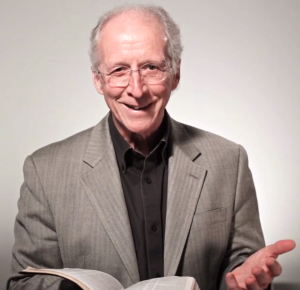
john-piperIn an article entitled “Plunge Your Mind into the Ocean of God’s Sovereignty” Dr. John Piper writes:

Sometimes we need to plunge our minds into the ocean of God’s sovereignty. We need to feel the weight of it, like deep and heavy water pressing in against every pore, the deeper we go. A billion rivers of providence pour into this ocean. And God himself gathers up all his countless deeds — from eternity to eternity — and pours them into the currents of his infallible revelation. He speaks, and explains, and promises, and makes his awesome, sovereign providence the place we feel most reverent, most secure, most free.

Sometimes we need to be reminded by God himself that there are no limits to his rule. We need to hear from him that he is sovereign over the whole world, and everything that happens in it. We need his own reminder that he is never helpless, never frustrated, never at a loss. We need his assurance that he reigns over ISIS, terrorism, Syria, Russia, China, India, Nigeria, France, Myanmar, Saudi Arabia, and the United States of America — every nation, every people, every language, every tribe, every chief, president, king, premier, prime minister, politician, great or small.

Sometimes we need to hear specific statements from God himself about his own authority. We need God’s own words. It is the very words of God that have unusual power to settle our nerves, and make us stable, wise, and courageous.

On the one hand hearing the voice of God is like a frightened child who hears the voice downstairs, and realizes that daddy’s home. Whatever those other sounds were, it’s okay. Daddy’s home.

On the other hand it feels like the seasoned troops, dug in at the front line of battle, and about to be overrun by the enemy. But then they get word that a thousand impenetrable tanks are rushing to their aid. They are only one mile away. You will be saved and the enemy will not stand.

Vague generalizations about the power of God do not have the same effect as the very voice of God telling us specifically how strong he is, how pervasive his power, how universal his authority, how unlimited his sovereignty. And that our times are in his hands.

So let’s listen. Let’s treat the Bible as the voice of God. Let’s turn what the Bible says about God into what God says about God — which is what the Bible really is — God speaking about God.

And as we listen, let us praise him. There is no other fitting way to listen to God’s exaltation of God. This is what happens to the human soul when we plunge into the ocean of God’s sovereignty.

We praise you, O God, that all authority in the universe belongs to you.

“There is no authority except from me, and those that exist have been instituted by me.” (Romans 13:1)

“You, Pilate, would have no authority over my Son at all unless it had been given you from me.” (John 19:11)

We stand in awe, O God, that in your freedom you do all that you please and all that you plan.

“Whatever I please, I do, in heaven and on earth, in the seas and all deeps.” (Psalm 135:6)

“I work all things according to the counsel of my will.” (Ephesians 1:11)

“I am God, and there is no other; I am God, and there is none like me, declaring the end from the beginning and from ancient times things not yet done, saying, ‘My counsel shall stand, and I will accomplish all my purpose.’” (Isaiah 46:9–10)

We marvel, O God, that you share this total authority and rule completely with your Son.

“I have given all authority in heaven and on earth to my Son, Jesus.” (Matthew 28:18) Continue reading
What Was God’s Purpose in the Cross?

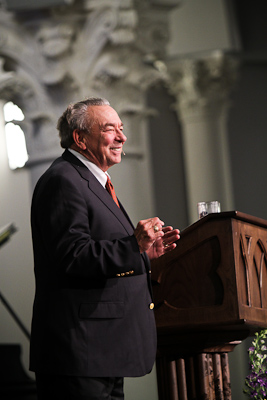
sproul-r-c-The following excerpt is taken from R.C. Sproul’s commentary on John.

The doctrine of limited atonement (also known as “definite atonement” or “particular redemption”) says that the atonement of Christ was limited (in its scope and aim) to the elect; Jesus did not atone for the sins of everybody in the world. In my denomination, we examine young men going into the ministry, and invariably somebody will ask a student, “Do you believe in limited atonement?” The student will respond by saying, “Yes, I believe that the atonement of Christ is sufficient for all and efficient for some,” meaning the value of Christ’s death on the cross was great enough to cover all of the sins of every person that ever lived, but that it applies only to those who put their faith in Christ. However, that statement doesn’t get at the real heart of the controversy, which has to do with God’s purpose in the cross.

There are basically two ways in which to understand God’s eternal plan. One understanding is that, from all eternity, God had a desire to save as many people as possible out of the fallen human race, so He conceived a plan of redemption by which He would send His Son into the world as the sin-bearer for fallen people. Jesus would go to the cross and die for all who would at some point put their trust in him. So the plan was provisional—God provided atonement for all who take advantage of it, for all who believe. The idea is that Jesus died potentially for everybody, but that it is theoretically possible that the whole thing was in vain because every last person in the world might reject the work of Jesus and choose to remain dead in their trespasses and sins. Thus, God’s plan could be frustrated because nobody might take advantage of it. This is the prevailing view in the church today—that Jesus died for everybody provisionally. In the final analysis, whether salvation happens depends on each individual person.

The Reformed view understands God’s plan differently. It says that God, from all eternity, devised a plan that was not provisional. It was a plan “A” with no plan “B” to follow if it didn’t work. Under this plan, God decreed that He would save a certain number of people out of fallen humanity, people whom the Bible calls the elect. In order for that plan of election to work out in history, He sent His Son into the world with the specific aim and design to accomplish redemption for the elect. This was accomplished perfectly, without a drop of the blood of Christ being wasted. Everyone whom the Father chose for salvation will be saved through the atonement.

The implication of the non-Reformed view is that God doesn’t know in advance who is going to be saved. For this reason, there are theologians today saying, “God saves as many people as He possibly can.” How many people can God save? How many people does He have the power to save? If He is really God, He has the power to save all of them. How many people does He have the authority to save? Cannot God intervene in anyone’s life, just as He did in Moses’ life, Abraham’s life, or the apostle Paul’s life, to bring them into a saving relationship with Him? He certainly has the right to do that.

We cannot deny that the Bible speaks about Jesus dying for “the world.” John 3:16 is the premier example of a verse that uses this language. But there is a counterbalancing perspective in the New Testament, including John’s Gospel, that tells us Jesus laid down His life not for everyone but for His sheep. Here in John’s Gospel, Jesus speaks about His sheep as those whom the Father has given Him.

In John 6, we see that Jesus said, “No one can come to Me unless the Father who sent Me draws him” (v. 44a), and the word translated as “draws” properly means “compels.” Jesus also said in that chapter, “All that the Father gives Me will come to Me” (v. 37a). His point was that everyone whom the Father designed to come to His Son would come, and no one else. Thus, your salvation, from start to finish, rests on the sovereign decree of God, who decided, in His grace, to have mercy on you, not because of anything He saw in you that demanded it, but for the love of the Son. The only reason I can give under heaven why I’m a Christian is because I’m a gift of the Father to the Son, not because of anything I’ve ever done or could do.

Slavery – Does the Bible Support it?

Justin Taylor writes:

What do you think is wrong with the following argument?

Bible translations talk of “slaves.”
In the OT no objection is made to having slaves.
In the NT Christians are not commanded to free their slaves but are told to submit.
Therefore, biblical texts approve of slavery.
We know that slavery is wrong.
Therefore, biblical texts approve of something that is wrong.

Remember that when evaluating an argument

terms are either clear or unclear
propositions are either true or false,
arguments are either valid or invalid.

So if you disagree with argument above, you’d have to show that there is

an ambiguous term,
a false premise, or
a logical fallacy (the conclusion does not follow from the premises).

In the lecture below, delivered on October 30, 2015, at Lanier Theological Library, Peter Williams gave a fascinating lecture responding to this argument. Dr. Williams (PhD, University of Cambridge) presides over Tyndale House in Cambridge (one of the finest theological libraries in the world for biblical scholarship) and is an affiliated lecturer at Cambridge University.

His thesis is that using the most common definition of slavery, the Bible does not support slavery.

To make his argument, he examines the key Old Testament and New Testament texts said to support slavery. Along the way, he looks at the biblical words commonly associated with slavery and how their translation has changed over time. He also looks at the logic of the Old Testament world and the way ancient societies were structured quite differently from ours.

The lecture below is under an hour, and then he takes Q&A for around 20 minutes: