May 20, 2016: Dr. Michael Brown lays out the basic reasons why he is not a Calvinist:
May 21, 2016: Dr. James White responds – why I am a Calvinist:

Article: Luther, God’s Law and Uncle Rico Syndrome by Aaron Denlinger (original source who until then had proven reluctant to challenge Martin Luther publically, finally caved to pressure from Rome to employ his literary talent against the impudent German Reformer who had caused, and was still causing, the institutional church of his day such problems. Erasmus chose to attack Luther where he believed the Reformer to be most vulnerable; he chose, that is, to challenge Luther’s assertion that sinful man was wholly unable to contribute anything to his own salvation, and for such required not only Christ’s atoning work on his behalf, but also the Holy Spirit’s work of enabling him to believe in Christ and so appropriate Christ and his benefits.
Erasmus’s defense of human free will — his defense, that is, of man’s innate ability to cooperate with God in his own salvation — employed a well-worn Pelagian argument. The humanist scholar argued that biblical commandments imply an ability on (sinful) man’s part to actually fulfill said commandments. So, for instance, appealing to Gen. 30:19 (“I have set before you life and death, blessing and curse. Therefore choose life, that you and your offspring may live”), Erasmus commented: “What could be put more plainly? God shows what is good, [and] what is evil, shows the different rewards of life and death, [and] leaves man free to choose. It would be ridiculous to say, ‘Choose,’ if the power of turning one way or the other were not present, as though one should say to a man standing at a crossroad: ‘You see these two roads, take which you like’ … when only one was open to him!”
To be sure, Erasmus’s argument has a certain logic to it. One would hardly excuse me as a parent if I ordered my three year old daughter Geneva to change the oil in the family car and then punished her when she failed to fulfill the required task(s). Commandments to fulfill impossible tasks, and subsequent consequences for failure to deliver, do seem cruel. Surely, then, God would not order man to “choose life” if such a choice genuinely lay beyond man’s ability.
Luther’s response in his 1525 Bondage of the Will takes cognizance of how high Scripture actually sets the bar for man’s moral conduct (“You must be perfect, as your Heavenly Father is perfect,” Matt. 5.48) as well as rather clear biblical statements that reflect man’s spiritual depravity and (hence) inability to clear that bar (“Everyone who practices sin is a slave to sin,” John 8.34). The Reformer’s response also, however, employs a very careful explanation for why God apparently commands sinful man to do things that sinful man has no ability to do.
That explanation begins with recognition that one critical component of natural man’s perverse disposition and enslavement to sin is natural man’s deluded perception of his own freedom and, if not moral achievements, at least ability to produce such achievements should he put his mind and energies to the task. “Man,” Luther notes, “is not only bound, wretched, captive, sick, and dead, but in addition to his other miseries is afflicted, through the agency of Satan his prince, with this misery of blindness, so that he believes himself to be free, happy, unfettered, able, well, and alive. […] Accordingly, it is Satan’s work to prevent men from recognizing their plight and to keep them presuming that they can do everything they are told.”
In Luther’s estimation man suffers from a spiritual version of Uncle Rico Syndrome. Uncle Rico, a character in the 2004 film Napoleon Dynamite, is a man utterly convinced of both his past and present abilities on the football field. In one memorable speech delivered in the film, Uncle Rico affirms his ability in earlier days to “throw a pigskin a quarter mile.” After subsequently demonstrating his skills by hurling an overcooked steak at his bike-riding nephew Napoleon’s head, Uncle Rico looks wistfully at the mountain range several miles distant and asks: “How much you wanna make a bet I can throw a football over them mountains?”
Rico is seriously deluded about his own abilities. But how might one best go about disabusing Rico of his delusion? One could, of course, reason with him about the actual distance of those mountains, the average distance that even professional quarterbacks can throw a ball, etc. A much quicker solution, however, would be to simply hand Rico a football and issue him a command: “Do it.”
This, according to Luther, is essentially how God deals with natural man’s delusion regarding his freedom and abilities in Scripture. Faced with sinful man’s persuasion that he can, at any time he chooses, perform the works necessary to merit eternal life, God essentially tells man: “Do it.” Luther explains: “Human nature is so blind that it does not know its own powers, or rather diseases, and so proud as to imagine that it knows and can do everything; and for this pride and blindness God has no readier remedy than the propounding of his law.” God’s command to “choose life,” then, implies no ability to do so. “By this and similar expressions man is warned of his impotence, which in his ignorance and pride, without these divine warnings, he would neither acknowledge nor be aware of.”
Thus Luther undermines Erasmus’s claim that commandments are somehow cruel if issued to persons incapable of fulfilling them. A commandment to Geneva to change the oil in the car, for instance, assumes a different character when one knows my daughter, a three year old possessed of more than her share of self-confidence. Geneva’s favorite words at present are “I can do it myself.” I have more than once in the last several weeks invited Geneva to do exactly what she claims herself capable of purely in the interest of disabusing her of her inflated confidence and guiding her towards the humble art of asking for (daddy’s) help. I’ve not, to be sure, asked her to change the oil in the car. But on the off chance she tells me tomorrow that she’s capable of doing so, I may very well invite her to do so, simply to rein in her perspective on her own innate abilities.
Similarly, divine commandments that are not actually matched by (fallen) man’s ability reflect no cruelty on God’s part. They are, rather, instances of divine kindness. It would be cruel for God to leave man in his state of delusion regarding his own freedom and abilities. It is kindness to lead man experientially to a knowledge of his inability and (hence) dire state, and so ultimately to lead man to seek salvation not in himself but in the work of Christ on his behalf. In Luther’s words: “The work of Moses or a lawgiver is … to make man’s plight plain to him by means of the law and thus to break and confound him by self-knowledge, so as to prepare him for grace and send him to Christ that he may be saved.” We’re all born with spiritual Uncle Rico syndrome, and to varying degrees we suffer from it until the day we die. One function of God’s law is to (kindly) disabuse us of our confidence in our ability to throw moral footballs over metaphorical mountains, and so to lead us to place our confidence and hope wholly in him who not only could but did
This post was originally published in Tabletalk magazine.
The Precious Gift of Baby Talk by John Piper
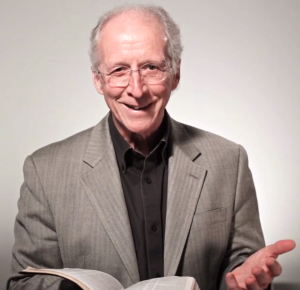 Human language is precious. It sets us off from the animals. It makes our most sophisticated scientific discoveries and our deepest emotions sharable. Above all, God chose to reveal Himself to us through human language in the Bible. In the fullness of time, He spoke to us by His Son (Heb. 1:1–2), and that Son spoke human language. In like manner, He sent His Spirit to lead His apostles into all truth so that they could tell the story of the Son in human language. Without this story in human language, we would not know the Son. Therefore, human language is immeasurably precious.
But it is also imperfect for capturing the fullness of God. In 1 Corinthians 13, there are four comparisons between this present time and the age to come after Christ returns.
Love never ends. As for prophecies, they will pass away; as for tongues, they will cease; as for knowledge, it will pass away. For we know in part and we prophesy in part, but when the perfect comes, the partial will pass away. When I was a child, I spoke like a child, I thought like a child, I reasoned like a child. When I became a man, I gave up childish ways. For now we see in a mirror dimly, but then face to face. Now I know in part; then I shall know fully, even as I have been fully known. So now faith, hope, and love abide, these three; but the greatest of these is love (vv. 8–13). Note the comparisons with this age (now) and the age to come (then):
Now: We know in part.
Then: When the perfect comes, the partial will pass away (vv. 9–10).
Now: I spoke and thought and reasoned like a child.
Then: When I became a man, I gave up childish ways (v. 11).
Now: We see in a mirror dimly.
Then: We will see face to face (v. 12).
Now: I know in part.
Then: I will know fully, even as I am fully known (v. 12).
In this context, we can see what Paul means when he writes, “When I was a child, I spoke like a child, I thought like a child, I reasoned like a child.” He is saying that in this age, our human language and thought and reasoning are like baby talk compared to how we will speak, think, and reason in the age to come.
When Paul was caught up into heaven and given glimpses of heavenly realities, he said that he “heard things that cannot be told, which man may not utter” (2 Cor. 12:4). Our language is insufficient to carry the greatness of all that God is.
But what a blunder it would be to infer from this that we may despise language or treat it with contempt or carelessness. What a blunder, if we began to belittle true statements about God as cheap or unhelpful or false. What folly it would be if we scorned propositions, clauses, phrases, and words, as though they were not inexpressibly precious and essential to life.
The main reason this would be folly is that God chose to send His Son into our nursery and speak baby talk with us. Jesus Christ became a child with us. There was a time when Jesus Himself would have said, “When I was a child, I spoke like a child and thought like a child and reasoned like a child.” That is what the incarnation means. He accommodated Himself to our baby talk. He stammered with us in the nursery of human life in this age.
Jesus spoke baby talk. The Sermon on the Mount is our baby talk. His High Priestly Prayer in John 17 is baby talk. “My God, My God, why have you forsaken me?” (Mark 15:34) is baby talk—infinitely precious, true, glorious baby talk.
More than that, God inspired an entire Bible of baby talk. True baby talk. Baby talk with absolute authority and power. Baby talk that is sweeter than honey and more to be desired than gold. John Calvin said that “God, in so speaking, lisps with us as nurses are wont to do with little children” (Institutes of the Christian Religion, 1.13.1). How precious is the baby talk of God. It is not like grass that withers or flowers that fade; it abides forever (Isa. 40:8).
There will be another language and thought and reasoning in the age to come. And we will see things that could not have been expressed in our present baby talk. But when God sent His Son into our human nursery, talking baby talk and dying for the toddlers, He shut the mouths of those who ridicule the possibilities of truth and beauty in the mouth of babes.
And when God inspired a book with baby talk as the infallible interpretation of Himself, what shall we say of the children who make light of the gift of human language as the medium of knowing God? Woe to those who despise, belittle, exploit, or manipulate this gift to the children of man. It is not a toy in the nursery. It is the breath of life. “The words that I have spoken to you are spirit and life” (John 6:63).