
Why is the Reformation Still Important?

Dr. James White:

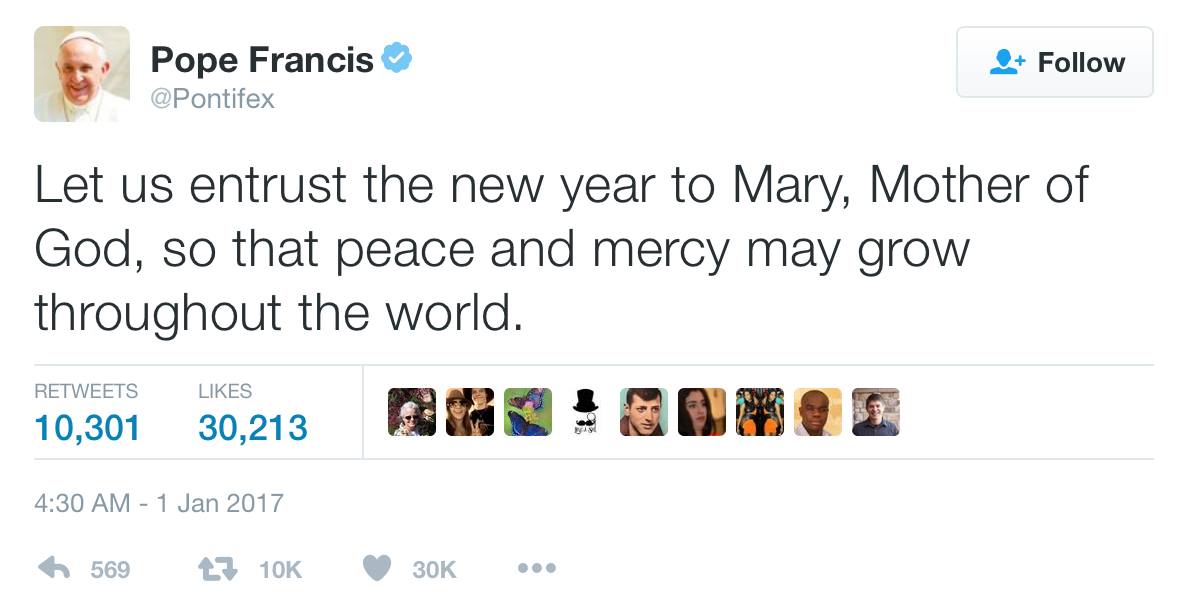
Why is the Reformation still important? Why is it proper for us to focus upon it this year in celebration of 500 years? Why do I pray that by the end of 2017 more and more of God’s people will embrace the Reformation, and Reformed theology as a whole? Well, here is a tweet from the current Pope. He encourages Roman Catholics to “entrust the new year to Mary.” Doing this, evidently, will result in “peace and mercy” growing throughout the world. And here I thought that could only happen as men and women bow the knee not to Mary, but to the Lord Jesus, in repentance and faith, trusting in His once-for-all work upon the cross as the perfect Savior. Rome’s departure from the Gospel remains complete, and defiant. She continues to blaspheme the cross every time a man-made “priest” pretends to “re-present” the once-for-all sacrifice of Calvary upon a Roman altar. And she continues to enslave men with her endless gospel of sacraments and penances, which can never bring them peace. And in this tweet the Pope demonstrates once again the grossly idolatrous nature of modern Roman teaching concerning Mary.

How many non-Roman Catholics today understand why they do not bow the knee to Rome? In what is loosely called Evangelicalism, very few. One either has the wild-eyed bigotry of the Jack Chick variety anti-Catholicism, or the luke-warm “it’s just a matter of taste” variety of synergistic Tiber-paddling that is so common today. May the number of those who knowingly, and out of a true commitment to sound biblical doctrine, reject Rome’s pretensions, grow in this the 500th anniversary of the Reformation.
pope-mary-tweet

7 Biblical Purposes for Music

California – original source here.

The music program in the local church is vital, and it’s impact—for good or bad—on a church service is immeasurable. While some may view music as simply a form of entertainment and emotional conditioning, godly music plays a much larger role in a church.

Scripture gives at least seven purposes for Christ-honoring music. Use these principles as a gauge to evaluate the biblical soundness of your music ministry:

1. The Purpose of Worship—“And all the congregation worshipped, and the singers sang, and the trumpeters sounded: and all this continued until the burnt offering was finished” (2 Chronicles 29:28).

2. The Purpose of Thanks — “Sing unto the Lord with thanksgiving; sing praise upon the harp unto our God” (Psalm 147:7).

3. The Purpose of Rejoicing — “Make a joyful noise unto the Lord, all the earth: make a loud noise, and rejoice, and sing praise. Sing unto the Lord with the harp; with the harp, and the voice of a psalm” (Psalm 98:4–5).

4. The Purpose of Consecration — “Search me, O God, and know my heart: try me, and know my thoughts” (Psalm 139:23). (Spoken in song!) “Praise ye the Lord. I will praise the Lord with my whole heart, in the assembly of the upright, and in the congregation” (Psalm 111:1).

5. The Purpose of Edification — “Let the word of Christ dwell in you richly in all wisdom; teaching and admonishing one another in psalms and hymns and spiritual songs, singing with grace in your hearts to the Lord” (Colossians 3:16).

6. The Purpose of Evangelism — “And he hath put a new song in my mouth, even praise unto our God: many shall see it, and fear, and shall trust in the Lord” (Psalm 40:3).

7. The Purpose of Preservation of Faith — “One generation shall praise thy works to another, and shall declare thy mighty acts. I will speak of the glorious honour of thy majesty, and of thy wondrous works” (Psalm 145:4–5).

May the music of our churches bring glory to the Lord and lift our hearts in His praise.