
Family Integrated Church

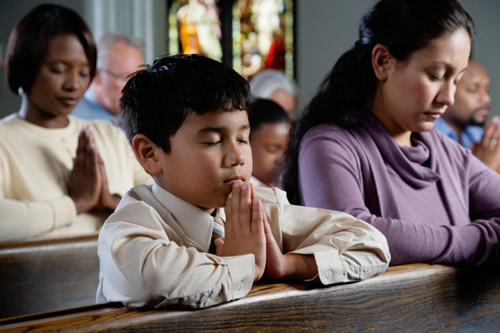
kidsinchurchJeff Durbin, Tempe writes the following:

Why does Apologia Church do ‘Family Integrated Worship’? It creates difficulties, we have lost people because of it (too hard), and it slows down church growth. Here are a few reasons:

1. We believe that God’s Word ought to be the foundation for how we worship God.

2. We don’t believe that we have the right to be creative or novel in corporate worship. God’s Word not only tells us “why” we worship God but “how” we ought to do it.

3. Throughout the Scriptures, God gives us a pattern and model in terms of gathering for worship. Children were present during the Passover meal and during various feasts (Ex. 12:1-4; 16:9-17), children were taught the Law of God and were called to keep the Sabbath holy (this included corporate worship: Exodus 20), whole families (including children) were commanded to listen to the reading of the Law (Deuteronomy 31:9-13), nursing children were a part of the called assembly (Joel 2:13), in Paul’s letters (which were read during worship) he has specific words to children (with the assumption that children were present in the corporate gathering for worship; Ephesians 6:1-3; Colossians 3:20), and children were present during Christ’s preaching and teaching (Matthew 14:13-21).

4. God created human-beings to worship Him. That’s our ultimate purpose. It is during the corporate gathering (what some call “big church”) that we sing praises to God, hear the preaching and teaching of God’s Word, and witness and participate in the ordinances of the church. The Bible gives clear instruction that we are to do these things including how we are to do them. We are convinced that it is not appropriate to create (in a novel way) a second form (little church) that functions apart from the normative instruction of how we are to worship.

5. Children witness how we are to worship God and hear the faithful proclamation of the Word during corporate worship in a way that is very, very different than the common separated model. One of the great joys of my own ministry is watching small-children holding their parent’s hand with one hand and raising the other to God as they sing together.

Objections:

1. Children are distracting.
Yes, they are. That doesn’t give us a license to ignore the clear pattern of Scripture for how corporate worship is to be done. Further, we should give grace to children and patiently instruct them on how to show reverence to the worship of God. This is an excellent opportunity to work on our own hearts and make a commitment to train children on how to worship God. It’s hard work. There’s no question about that. How we respond to this says much more about us than it does about noisy children.

God called noisy, crying, booger-picking kids into His sacred assemblies. He is apparently fine with it and wants it. We should too. Sanctification is a process in which our hearts desires are conformed to His.

2. Children are not capable of understanding.
Respectfully, this is one of the weakest arguments I have encountered. The Bible has many examples of instruction to children and Jesus called us not to forbid children from coming to Him to learn from Him. When I hear this objection, it grieves me. Many Muslim children are encouraged to memorize the entire Quran at very young ages. We need to trust the clarity of God’s Word, the power of God’s Spirit, and we should believe that God is able to communicate His truth (even the deep things) to small children. We should be allowing our children to wrestle with the deep things of God from a young age. We ought to teach our children to be rigorous in their thinking for the glory of God. That isn’t to say that we don’t bring things to their level, it’s to say that we shouldn’t be comfortable with constantly dumbing-down the faith for young children. This, I believe, will ultimately hurt them. Could it be that this is the means of how so many professing young “believers” end up abandoning the faith when challenged with some of the weakest and worst arguments when they get to college? Further, what do we think is the best model for creating a pattern of life that our children learn from infancy: seeing their parents participate in corporate worship or being separated from their parents so as to not see it?

Finally, there are lots of things that many adults don’t fully grasp from the pulpit. Do we then create new programs and church structures for all of the people who just want the “easy stuff”?

3. They disrupt the service.
Again, God is very comfortable with this. He invited these little noise-makers. If it is a severe problem, then commit to a period of time in which through love, patience, and discipline we train them to not disrupt the worship of God. This has a sanctifying effect on them and us. It takes time. Be patient with them.

Let me ask this question: If Jesus showed up for worship on a Sunday, would we separate our children from service?

4. I just need a break.
This, again, says more about our own hearts than it does about children in service. Also, what is worship about? Is it about us or God? Again, He invites them. Why don’t we?

Finally, it’s important to remember that “getting a break” so that “I” can worship means that there’s a group of people who don’t get to worship and get fed so that they can watch my kids and “I” can worship.

5. They will get bored.
Then spend time talking with them about the blessing of knowing God and hearing His Word. This is an excellent opportunity to teach our children about the blessing of God’s Word and the grace of God in giving it TO US! This is an opportunity to talk about what was taught during the message and apply it to our lives. We should model a life-long pursuit of hunger for the things of God. Teach your children to develop a taste for the things of God. Reverence for God’s Word is both taught and caught.

Worshiping God is a privilege and flows from the grace of God. Children should be taught this from a very early age.
The Fine Points of Calvinism

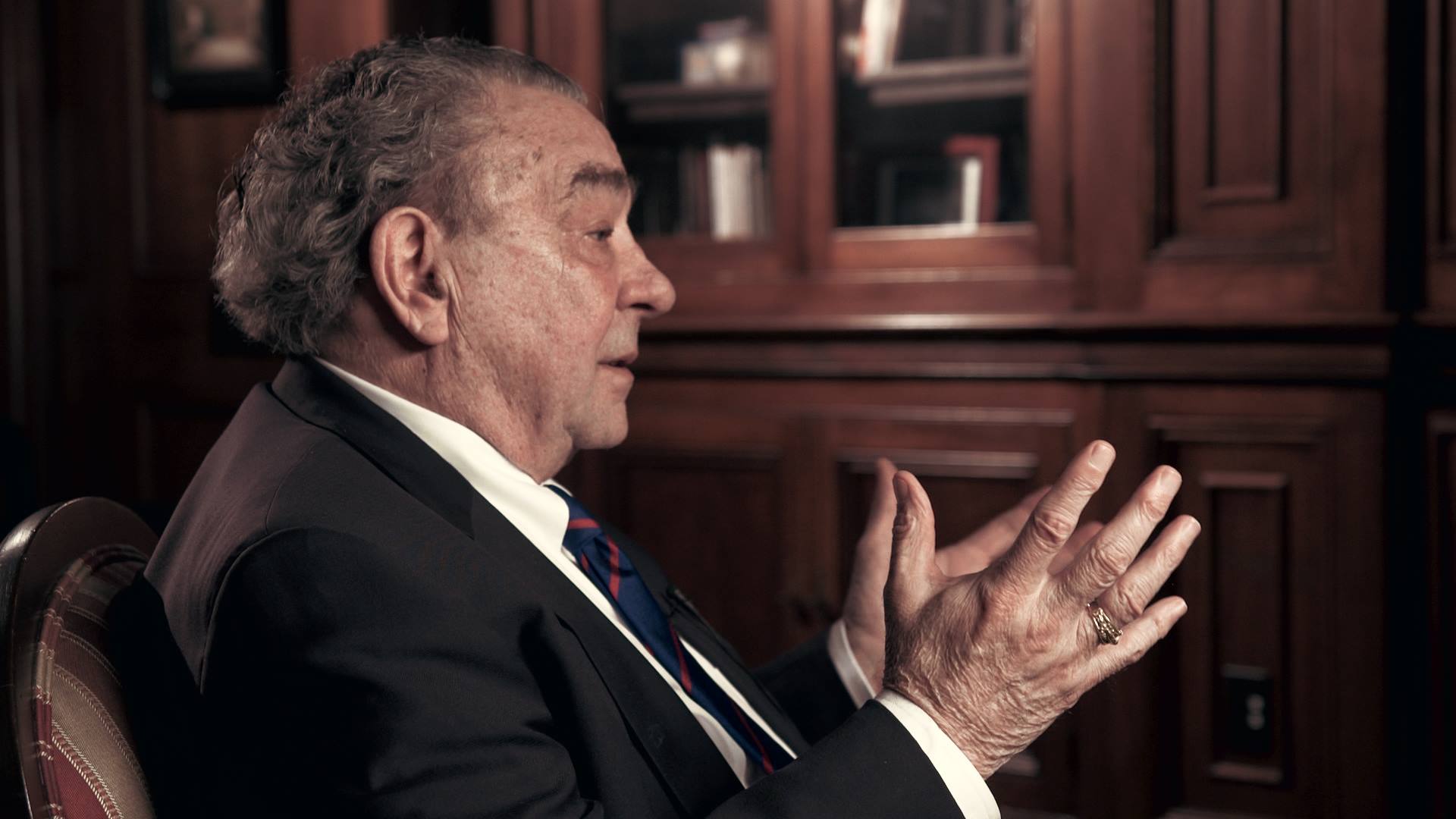
sproul78Article by Dr. R. C. Sproul – originally published in Tabletalk magazine.

The late theologian Cornelius Van Til once made the observation that Calvinism is not to be identified with the so-called five points of Calvinism. Rather, Van Til concluded that the five points function as a pathway, or a bridge, to the entire structure of Reformed theology. Likewise, Charles Spurgeon argued that Calvinism is merely a nickname for biblical theology. These titans of the past understood that the essence of Reformed theology cannot be reduced to five particular points that arose as points of controversy centuries ago in Holland with the Remonstrants, who objected to five specific points of the system of doctrine found in historic Calvinism. Those five points have become associated with the acrostic TULIP: Total depravity, Unconditional election, Limited atonement, Irresistible grace, and Perseverance of the saints.

It is the task of this article to approach the question of Reformed theology from the perspective of what is called in philosophy the via negativa. This method of approaching truth defines things in terms of what they are not; hence, it is called the “way of negation.” For example, when we speak of the nature of God, we say that He is infinite, which simply means that He is “not finite.” This is an example of the use of the way of negation. When we have a clear understanding of how to employ this method, the way of affirmation, its opposite, becomes manifest. As we look at what Reformed theology is not, it helps us to understand what it is.

We begin by saying that Reformed theology is not a chaotic set of disconnected ideas. Rather, Reformed theology is systematic. We live in a time when systems of thought are decried in a postmodern world, not only in the secular arena of ideas, but even within Christian seminaries. Historically, the principle of systematic theology has been this: The Bible, being the Word of God, reflects the coherence and unity of the God whose Word it is. To be sure, it would be a distortion to take a foreign system of thought and force it upon Scripture, making Scripture conform to it as if it were some kind of procrustean bed. That is not the goal of sound, systematic theology. Rather, true systematic theology seeks to understand the system of theology that is contained within the whole scope of sacred Scripture. It does not impose ideas upon the Bible; it listens to the ideas that are proclaimed by the Bible and understands them in a coherent way.

The next point we make by way of negation is that Reformed theology is not anthropocentric. That is to say, Reformed theology is not centered on human beings. The central focal point of Reformed theology is God, and it’s the doctrine of God that permeates the whole of the substance of Reformed thought. Thus Reformed theology, by way of affirmation, can be called theocentric.

Though it is not often helpful to speak about paradoxes in our understanding of truth, there is nevertheless one paradox I like to maintain. On the one hand, the doctrine of God proper, that is, the doctrine of the nature, attributes, and character of God, affirmed by various creeds of Reformation thought, has little that is different from other theologies and other expressions of faith found among Lutherans, Roman Catholics, Methodists, and the like. At the same time, and herein lies the paradox, the most distinctive dimension of Reformed theology is its doctrine of God. Though it sounds like I’m writing out of both sides of my pen, let me hasten to clarify this paradoxical assertion. After Reformed theology articulates its doctrine of the nature and character of God in the first principles of its system of doctrine, it does not thereafter forget its affirmations when it addresses other doctrines. Rather, our understanding of the character of God is primary and determinant with respect to our understanding of all other doctrines. That is to say, our understanding of salvation has as its control factor, right at the heart of it, our understanding of the character of God.

Reformed theology is not anti-catholic. This may seem strange since Reformed theology grows directly out of the Protestant movement of the sixteenth century, which movement was called “Protestant” because it involved a “protest” against the teaching and activity of Roman Catholicism. But the term catholic refers to catholic Christianity, the essence of which may be found in the ecumenical creeds of the first thousand years of church history, particularly the early creeds and church councils, such as the council of Nicea in the fourth century and the council of Chalcedon in the fifth century. That is to say, those creeds contain common articles of faith shared by all denominations that embrace orthodox Christianity, doctrines such as the Trinity and the atonement of Christ. The doctrines affirmed by all Christians are at the heart and core of Calvinism. Calvinism does not depart on a search for a new theology and reject the common base of theology that the whole church shares.

Reformed theology is not Roman Catholic in its understanding of justification. This is simply to say that Reformed theology is evangelical in the historical sense of the word. In this regard, Reformed theology stands strongly and firmly with Martin Luther and the magisterial Reformers in their articulation of the doctrine of justification by faith alone. It affirms the solas of the Reformation, which are the formal and material causes of the sixteenth-century Reformation. Those two principles are the doctrines of sola Scriptura and sola fide. Neither of these doctrines are explicitly declared in the five points of Calvinism; yet, in a sense, they become the foundation for the other characteristics of Reformed theology.

These introductory statements about what Reformed theology is not are given a much broader and deeper expression in my book What Is Reformed Theology?, which was written to help laypersons and Christian leaders understand the essence of Reformed theology. In this article I am giving the bare-bones approach to the doctrine, reminding readers that Reformed theology so far transcends the mere five points of Calvinism that it is an entire life and world view. It is covenantal. It is sacramental. It is committed to transforming culture. It is subordinate to the operation of God the Holy Spirit, and it has a rich framework for understanding the entirety of the council of God revealed in the Bible.

Sex, Greed and Filthy Language

Ephesians 5:3 But sexual immorality and all impurity or covetousness must not even be named among you, as is proper among saints. 4 Let there be no filthiness nor foolish talk nor crude joking, which are out of place, but instead let there be thanksgiving. 5 For you may be sure of this, that everyone who is sexually immoral or impure, or who is covetous (that is, an idolater), has no inheritance in the kingdom of Christ and God. 6 Let no one deceive you with empty words, for because of these things the wrath of God comes upon the sons of disobedience.