

Sola Scriptura: The Sufficiency of Scripture in Expository Preaching

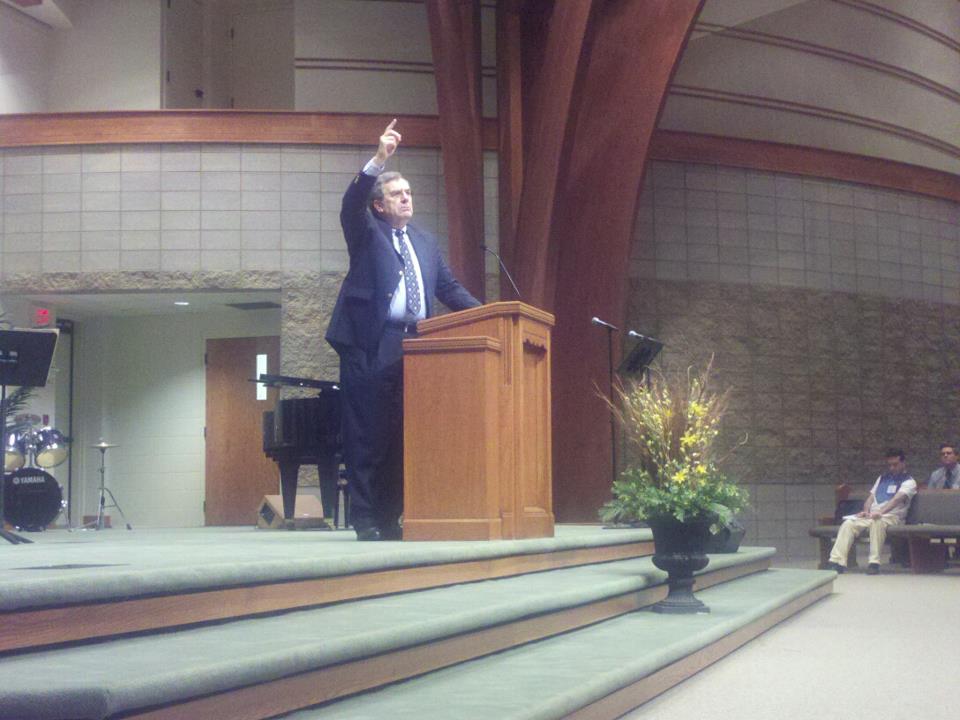
Lawson (2)Dr. Steve Lawson (original source here)

As the church of Jesus Christ enters the twenty-first century, she once again finds herself standing at a dangerous crossroad. Two roads stand before her, both of which are marked “truth.” One is paved with the lethal lies of Satan, the other with the life-giving truths of Scripture.

Confronted with these two choices, many sectors of the present day church have abandoned their once tightly-held commitment to the authority of Scripture, and the consequences have been nothing less than devastating. Choosing to follow liberal theology with its higher criticism, many have arrived at destinations previously thought to be unthinkable: inclusive universalism, radical feminism, same-sex marriages, annihilationism, and open, even worse, theism. Sad to say, this broad path has proven to be a deadly detour to the destruction of many.

Yet, in the midst of this rampant apostasy, a most amazing phenomenon has occurred, a modern Reformation of sorts. A renewed commitment to biblical inerrancy has emerged in isolated pockets of the church, a conservative resurgence that has signaled a return to a fundamental belief in the inspired, infallible Word of God. In these days, many have chosen to return to old paths, a road paved with biblical authority, and for this much thanks should be offered to God.

But having safely negotiated this crossroad, a second intersection now looms on the evangelical horizon, one equally threatening. Writing shortly before his recent death, James Montgomery Boice, pastor of the historic Tenth Presbyterian Church, Philadelphia, observed that while many churches now assert biblical authority, they equivocate on biblical sufficiency. Boice writes, “Our problem is in deciding whether the Bible is sufficient for the church’s life and work. We confess its authority, but we discount its ability to do what is necessary to draw unbelievers to Christ, enable us to grow in godliness, provide direction for our lives, and transform and revitalize society.”1

With penetrating insight, Boice then added, “In the sixteenth century, the battle was against those who wanted to add church traditions to Scripture, but in our day the battle is against those who have to use worldly means to do God’s work.”2 The sufficiency of Scripture, Boice argues, is the urgent issue of the day which must be addressed. He is correct.

The sufficiency of Scripture can best be defined as the Bible’s supernatural ability, when rightly proclaimed and properly followed, to produce any and all spiritual results intended by God. Referred to as sola Scriptura by the Reformers, this core truth does not claim that all truth of every kind is found in Scripture, nor does it imply that everything Jesus or the apostles taught is preserved in Scripture (Jn. 20:30; 21:25). Rather, the sufficiency of Scripture affirms that everything necessary for the salvation of sinners, the sanctification of believers, and the spiritual direction of ministry is provided by God’s Word. Psalm 19:7 affirms this central truth when it declares “the law of the Lord is perfect” (emphasis added), meaning it is whole, complete, lacking nothing, a comprehensive treatment of truth.3 The Scripture, Paul writes, makes the man of God “adequate, equipped for every good work” (2 Tim. 3:17). This said, the Bible claims a divine potency, for itself, a supernatural ability, if you will, to more than adequately carry out God’s work in the world.

This commitment has long been the time-tested position of most evangelical churches over the last 350 years. Written in 1647, the Westminster Confession of Faith affirmed “The whole counsel of God concerning all things necessary for his own glory, man’s salvation, faith, and life, is either expressly set down in scripture or by good and necessary consequence may be deduced from scripture: unto which nothing at any time is to be added whether by new revelations of the Spirit, or traditions of men”.4 Thus, the sufficiency of Scripture has long been a defining mark of evangelical faith and a chief cornerstone of biblical orthodoxy. Sola Scriptura was the battle cry of the Reformers and has shaped the church for the centuries that have followed.

But in this present hour, there has been a strange departure from this once firm position on the sufficiency of Scripture. Nowhere is this more clearly seen than in the shrinking power of the evangelical pulpit. Trendy worship styles, worldly entertainment, crass pragmatism, pop psychology, and the like are all competing against the centrality of biblical exposition. Throughout the evangelical world, preaching is becoming watered down with heavy doses of cultural wisdom, therapeutic advice, psycho babble, mystical intuitions, positive thinking, and political agendas, all mixed together with a barrage of personal anecdotes.

This present famine of biblical preaching is light years removed from the theologically steeped expositions of previous generations and can only be explained by a vanishing confidence in the power of Scripture itself. The crisis now confronting Bible-believing, churches, organizations and institutions, whether they realize it or not, is this matter of the ability of Scripture to accomplish God’s intended work. Continue reading
The Apostles Who Don’t Do Anything

by Cameron Buettel and Jeremiah Johnson (original source here)

It is not new, and it is not a reformation. – John MacArthur on the New Apostolic Reformation

What should we think of self-styled apostles who meet none of the biblical standards for apostleship? They make much of the gift of prophecy but lack the prophetic ability to identify charlatans and phonies in their own midst. They can’t perform apostolic-quality miracles and healings, and their message sounds nothing like what the original apostles preached. The truth is that they don’t do anything that would qualify as “apostolic” by any biblical standard.

Who are these apostles?

The New Apostolic Reformation (NAR) is a movement pioneered by C. Peter Wagner. This is what charismatic and continuationist doctrine looks like when taken to its logical conclusion. The NAR claims that not only the gifts, but also the office of apostleship still continues today. And as apostles, they pretend to speak for God and wield His divine authority—but it is all merely a pretense.

What is the rationale behind this movement? According to Wagner, God’s people can only ever return to pure Christianity, as seen in the early church, if they “recognize, accept, receive, and minister in all the spiritual gifts, including the gift of apostle.” [1]
Why do we suggest their apostleship is a sham? According to the New Testament, an apostle had to be:

* A physical eyewitness of the resurrected Christ (Acts 1:22; 1 Corinthians 9:1; 15:7–8).

* Appointed by the Lord (Mark 3:14; Luke 6:13; Acts 1:2; 10:41; Galatians 1:1).

* Able to authenticate his apostleship with miraculous signs (Matthew 10:1; Acts 2:43; 5:12; 2 Corinthians 12:12; Hebrews 2:3–4).

Undaunted by those biblical requirements, Wagner’s own apostleship was confirmed under somewhat different circumstances. In 1995 two women prophesied that he had received an apostolic anointing. A second prophecy was given in Dallas in 1998 during a bizarre ceremony that Wagner now considers his ordination. [2]

But the “proof” of Wagner’s apostleship came in 2001, in the form of an apostolic decree that God supposedly gave him to pronounce the end of mad cow disease in Europe. [3] Never mind that nearly ten years later, doctors and veterinarians were still diagnosing the disease in people and animals throughout Europe.

Wagner is unperturbed by those failures and shortcomings. Instead, he sees his ordination as the dawning of a new apostolic age. In the foreword of Ted Haggard’s The Life-Giving Church, Wagner wrote:

The New Apostolic Reformation is an extraordinary work of God that began at the close of the twentieth century and continues on. It is, to a significant extent, changing the shape of the Protestant world. [4]

Wagner even goes so far as to describe this era as “The Second Apostolic Age.” His “studies indicate that it began around the year 2001,” although he doesn’t bother to explain or define what those studies were. [5]

In this new age of apostles, several apostolic networks have been established. Wagner’s is called the International Coalition of Apostles (ICA). Its website contains a global map to help locate the apostles in your part of the world. According to the network, there are more than 150 apostles in the U.S. alone.

ICA claims the NAR is “heralding the most radical change in the way church is done since the Protestant Reformation.” On the same webpage Wagner defines an apostle as a

Christian leader who is gifted, taught, and commissioned by God with the authority to establish the foundational government of the Church within an assigned sphere of ministry by hearing what the Spirit is saying to the churches and by setting things in order accordingly for the advancement of the Kingdom of God.

But who determines when God has commissioned someone? How does one become an apostle?

Actually, it’s not too different from joining a country club. According to the ICA website, the aspiring apostle must be nominated by two existing apostles who can show that he meets the ICA’s criteria. There are some fees, too.

The pricing table for apostleship is curious. The ICA charges an annual $450 fee to be an apostle. However, Native Americans receive a $100 discount. There’s also a couple’s rate of $650, just in case your wife also happens to be an apostle. And you want to stay on top of your dues, because failure to renew your membership on time results in a “deactivated” apostleship—it’s not clear if that includes the deactivation of any spiritual gifts as well. All is not lost, however—a deactivated apostle can be reactivated for an extra $50.

Put simply, becoming an apostle with the ICA is only slightly more difficult (and expensive) than purchasing a season pass to Disneyland.

That’s a staggeringly low bar for apostolic authority—particularly when that authority includes speaking on behalf of Almighty God. People believe in Wagner’s apostleship simply because he had the temerity to claim it. But you won’t find delusions of grandeur and audacious whimsy in the list of biblical requirements for apostles.

What is truly frightening is that Wagner is not an anomaly. The charismatic movement is overrun with modern apostles like Wagner. Some of its most influential leaders have claimed similar apostolic authority for themselves, dismissing the biblical standards and usurping authority the Lord exclusively bestowed on the founders of the church. Just a simple reading of the book of Acts is enough to illustrate how impotent and unfit these modern apostles are, and how their fanciful assertions have perverted and distorted the office of apostle beyond recognition.

And they are impotent. As we’ll see next time, these modern apostles fall far short of the ministries of the New Testament apostles. Forget signs and wonders—these guys aren’t even capable of basic discernment.

For a fuller treatment of the subject, here’s an article by Bob DeWaay http://cicministry.org/commentary/issue103.htm

How to Mortify Sin

sinclair-ferguson2Article by Dr. Sinclair Ferguson

This article was originally published in Tabletalk Magazine.

The aftermath of a conversation can change the way we later think of its significance.

My friend — a younger minister — sat down with me at the end of a conference in his church and said: “Before we retire tonight, just take me through the steps that are involved in helping someone mortify sin.” We sat talking about this for a little longer and then went to bed, hopefully he was feeling as blessed as I did by our conversation. I still wonder whether he was asking his question as a pastor or simply for himself — or both.

How would you best answer his question? The first thing to do is: Turn to the Scriptures. Yes, turn to John Owen (never a bad idea!), or to some other counselor dead or alive. But remember that we have not been left only to good human resources in this area. We need to be taught from “the mouth of God” so that the principles we are learning to apply carry with them both the authority of God and the promise of God to make them work.

Several passages come to mind for study: Romans 8:13; Romans 13:8–14 (Augustine’s text); 2 Corinthians 6:14–7:1; Ephesians 4:17–5:21; Colossians 3:1–17; 1 Peter 4:1–11; 1 John 2:28–3:11. Significantly, only two of these passages contain the verb “mortify” (“put to death”). Equally significantly, the context of each of these passages is broader than the single exhortation to put sin to death. As we shall see, this is an observation that turns out to be of considerable importance.

Of these passages, Colossians 3:1–17 is probably the best place for us to begin. Continue reading