Text: 1 Cor. 15:1-7
The essentials of the Gospel are crystal clear, as is the response God requires from us. It is God’s gospel and as heralds of that good news, we have no right to change, adjust, dilute or add to it in any way at all.

 Article by Paul Rezkalla (original source here)
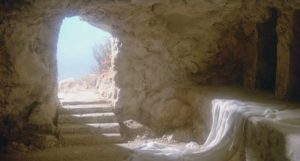
Was the tomb of Jesus of Nazareth found empty after his crucifixion? If not, then Christianity is the greatest lie in history. The apostle Paul says, “If Christ has not been raised from the dead then your faith is futile and you are still in your sins” (1 Cor. 15:17). While the historicity of the empty tomb does not by itself prove the resurrection, it plays an important role.
Where does the evidence point?
1. The belief in the empty tomb predates the Gospels and even the writings of Paul.
In 1 Corinthians 15:3-7, Paul lays down the earliest-known creed of the Christian church:
For what I received I passed on to you as of first importance: that Christ died for our sins according to the Scriptures, that he was buried, that he was raised on the third day according to the Scriptures, and that he appeared to Cephas, and then to the Twelve. After that, he appeared to more than five hundred of the brothers and sisters at the same time, most of whom are still living, though some have fallen asleep. Then he appeared to James, then to all the apostles
The language of “received” and “passed” indicates Paul was relaying an oral tradition. He wrote this letter in the mid-50s. Therefore, this creed had to date earlier. If Jesus died around 30, this creed can be dated to, at most, 25 years after Jesus’s death.
Furthermore, there are good evidences to show that Paul received this creed from the church leaders in Jerusalem in the 30s, and this exchange is recorded in Galatians 1:18-20. Many prominent New Testament historians such as Bart Ehrman, James Dunn, and Gerd Ludemann date this creed to between two and five years of Jesus’s death. Gerd Ludemann says, “[T]he elements in the tradition are to be dated to the first two years after the crucifixion of Jesus . . . not later than three years . . . the formation of the appearance traditions mentioned in 1 Cor. 15:3-8 falls into the time between 30 and 33 CE.”
Within three years of Jesus’s death, the early church was circulating a creed that affirmed Jesus’s bodily resurrection from the dead. And you can’t have a bodily resurrection without an empty tomb.
2. Jesus’s body was buried in Jerusalem.
So what? How does that point help us? Think about where Christianity started: Jerusalem.
The disciples went out and preached the message of the risen Jesus in the same city where Jesus was publicly crucified and buried. It would have been easy to crush this movement of unruly fishermen by simply going to Jesus’s tomb, pulling out the body, and exposing the followers of Jesus as liars. Both the Romans and the Jews were fed up with this new group of Jesus followers, and they could have easily produced the remains of Jesus’s body to quench the Christian movement had the tomb not been empty.
But this never happened. The body of Jesus was never produced from the tomb in an attempt to undermine the movement of Jesus followers, nor were there any counter-narratives arguing that the tomb was still occupied.
3. Jesus’s tomb was first discovered empty by women.
In order to fully appreciate this fact, let’s look at how women were viewed in first-century Palestine.
But let not the testimony of women be admitted, on account of the levity and boldness of their sex, nor let servants be admitted to give testimony on account of the ignobility of their soul; since it is probable that they may not speak truth, either out of hope of gain, or fear of punishment. — Josephus
Any evidence which a woman [gives] is not valid (to offer), also they are not valid to offer. This is equivalent to saying that one who is Rabbinically accounted a robber is qualified to give the same evidence as a woman. — Talmud (Rosh Hashannah)
Sooner let the words of the Law be burnt than delivered to women. — Talmud (Sotah)
Harsh words. They were not celebrating International Women’s Day in first-century Palestine.
Women were not considered credible witnesses. They were seen as being intellectually and morally deficient. Why, then, did the Gospel writers designate women as the first witnesses to the empty tomb and the risen Jesus? If the Gospel writers wanted to substantiate their message, they could have listed Peter and John or some other prominent disciples as the first witness. Surely any of the disciples would have been a better pick than these women! Why did they choose to include women as being the first witnesses? Because they were intent on recounting the story as truthfully as possible.
Embarrassment is one standard that historians use to gauge the historicity of a recorded event. If an author chooses to include an embarrassing fact that may hurt his/her case, then it is unlikely that he is making up his story. The fact that the Gospel writers included the “embarrassing” details of the women being the witnesses to the empty tomb shows the unlikelihood of the empty tomb narratives being fabricated.
4. The Jews were claiming that the disciples had stolen the body.
Matthew 28:11-15 says:
[S]ome of the guard went into the city and told the chief priests everything that had happened. After the priests had assembled with the elders, they devised a plan to give a large sum of money to the soldiers, telling them, “You must say, ‘His disciples came by night and stole him away while we were asleep.” If this comes to the governor’s ears, we will satisfy him and keep you out of trouble.” So they took the money and did as they were directed. And this story is still told among the Jews to this day.
Why would the Jews circulate the story of Jesus’s body being stolen by the disciples if the tomb was not empty? Why would the author of the Gospel of Matthew say that this lie was circulating if he knew that Jesus’s tomb was not empty?
In the second century, Justin Martyr recorded that this story was still being circulated in his day: “His disciples stole him by night from the tomb, where he was laid when unfastened from the cross, and now deceive men by asserting that he has risen from the dead and ascended to heaven” (Diaolgue with Trypho). Tertullian, in 200, also corroborated this idea: “This is he whom his disciples secretly stole away, that it might be said he had risen again, or the gardener abstracted, that his lettuces might come to no harm from the crowds of visitants!” (De Spectaculis).
Thus, there would be no need to propagate the idea that the disciples stole Jesus’s body from the tomb if the tomb were not empty!
It is clear from the evidence that we can establish, with relative certainty, that Jesus’s tomb was found empty three days after his crucifixion, by a group of his women followers. Again, this is not an argument for the truth of the resurrection, but it is in important link in the chain of evidences that can best be explained by the resurrection. And it should give us pause. If the Gospel writers are faithful in the details surrounding the empty tomb, maybe we should take them seriously about other matters, as well.
 Article: How Is Eastern Orthodoxy Different? by Dr. D. Trent Hyatt (original source here)
One sunny day in the late 1990s I was walking with friends near the center of Kiev, Ukraine, when I heard some chanting. I looked around and saw a small demonstration taking place. There were, perhaps, about 100 people marching in the street carrying a few placards. The man carrying the placard at the head of the marchers was dressed in the distinctive clothing of an Orthodox priest.1 On his placard was the claim that the Orthodox Church was the “one, holy, catholic, and apostolic” church. Now, I was raised a Protestant and had personally placed my faith in Christ as a result of an evangelistic message given by a Protestant on the campus of the University of California at Berkeley while I was a student there. So, upon hearing the claim of the demonstrators, I immediately sensed a challenge in their claim. How could they claim something so exclusive?
Eastern Orthodoxy is indeed present in most parts of the world today, but is to a great many in the West little known and even less understood. In fact, the Orthodox Churches found in most countries of the West are immigrant churches, that is, churches started by immigrants from the countries of Eastern Europe (Greek, Russian, Armenian, Romanian, Ukrainian, Serbian, etc.). These churches may recruit new members through conversion of Protestants or Roman Catholics, but the majority of their flocks are descended from these ethnic groups. Of course, marriage to a member of an Orthodox Church is one of the more common ways for people outside of the traditional ethnic communities to become Orthodox. This was humorously depicted in the wildly popular film My Big Fat Greek Wedding. However, since the 1980s a small but growing number of evangelicals have become Orthodox. Some of these have become part of the various national Orthodox churches, such as the Greek Orthodox or Russian Orthodox Churches, but most seem to have become part of the Evangelical Orthodox Church, which became associated with the Antiochian Orthodox Christian Archdiocese of North America. Some have also become part of the Orthodox Church in America, which began as a result of Russian Orthodox missionaries to Alaska in 1794.
How many people belong to the Orthodox Church in all its various expressions? The best estimates put the number between 200 and 300 million worldwide, depending on the way “members” is defined. In any case, the size of the Orthodox community would make it third behind the Roman Catholics and the Protestants in the Christian tradition. Among those who are active members in Orthodox Churches there are many who are sincere and devout in their Christian faith. This essay, though written from the perspective of an evangelical Protestant, is not intended to simply discredit the faith of all Orthodox believers. Yet, in the spirit of 1 Thessalonians 5:21, I want to “examine everything carefully” and “hold fast to that which is good.”2
Other than their exclusive claims to being the one true church, to which I will return later, what are the distinctive views of the Eastern Orthodox? I will attempt to survey their most important beliefs and practices by examining the following questions.
What is the highest authority in their tradition?
What is their view of creation?
What is their view of Christ?
What is their teaching on how one is saved, and what role do the “sacraments” play in their teaching on salvation?
How do they worship (including what an Orthodox Church service looks like)?
What is the justification for seeing orthodoxy as the one true church?
Authority
The Orthodox, like Protestants and Catholics, regard the Bible as the inspired Word of God. But like the Catholics, the Orthodox Bible contains a few books not found in the Hebrew Scriptures (that is, books called the Apocrypha [Maccabees, Judith, Tobit, etc.] and written between the close of the Old Testament and the writing of the New Testament). Continue reading