
Ray Ortmond: (original source here)
The Rev. William Still, a patriarch of the Church of Scotland in the twentieth century, preaching on Romans 5:5 and the love of God being poured into our hearts, said this:
“I wonder what it is about poring all over a great deal of Puritan literature that makes so many preachers of it so horribly cold. I don’t understand it, because I think it’s a wonderful literature. . . . I don’t know if you can explain this to me. I’d be very glad to know, because it worries me. But I hear over and over and over again this tremendous tendency amongst people who delve deeply into Puritan literature that a coldness, a hardness, a harshness, a ruthlessness — anything but sovereign grace — enters into their lives and into their ministries. Now, it needn’t be so. And it isn’t always so, thank God. And you see, the grace, the grace, of a true Calvinist and Puritan — that is to say, a biblical Puritan and Calvinist — is wonderful. . . . But O God, deliver us from this coldness!”
The problem is not Reformed theology per se. Inherent within that theology is a humbling and melting and softening and beautifying power. But Reformed theology is also intellectually satisfying, even captivating. Let’s realize a seductive power within ourselves at that very point. If we stop with the intellectual, if we allow our theology to remain cerebral and conceptual only, then this coldness, hardness, harshness and ruthlessness will enter in. And we will not even realize it, because our theology is objectively right and personally satisfying. It is our loss of reality with the Lord and our harshness with one another that will reveal our perverse use of our glorious theology.”
If we have become cold, hard, harsh and ruthless, then we are betraying the doctrines of grace even as we preach the doctrines of grace, and the time for repentance has come.
O God, deliver us from this coldness!
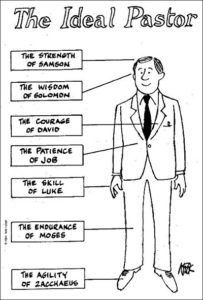 I am so blessed in getting to pastor the precious people at King’s Church. However, not every pastor’s experience mirrors mine. Here is an article about Pastors and the expectations often put upon them. (original source