Article by Lita Cosner (original source here)
I am often asked why someone specializing in the New Testament would care about the “Old Testament” issue of creation. After all, one’s view on the first chapters of Genesis seems peripheral at best when it comes to interpreting the New Testament. But I believe that one’s interpretation of Genesis has implications for many doctrines which are taught most clearly in the New Testament.
First, a New Testament scholar’s view of creation matters because Genesis was important to the New Testament authors. Every New Testament author quotes or alludes to Genesis. The New Testament has a total of 60 allusions to Genesis 1–11 specifically, and when we widen the search to include all of Genesis, the number grows to 103. For such a tiny body of literature, the New Testament has a staggering amount of references back to Genesis (see the list below).
But simply giving a list of references to Genesis proves nothing—we must look at how the New Testament authors used Genesis in order to discern their view. Overwhelmingly, it is presumed to be a historical document; the only place where it could even be argued that it is not necessarily used historically is in the borrowing of Edenic symbols in Revelation to describe the New Jerusalem (depending on one’s eschatological view1). But this is the exception, and in any case, even a symbolic use has an underlying literal reality—the figurative “strong as an ox” would mean nothing unless an ox were literally strong, and the allusion to an Edenic paradise underscores the reality of this pre-Fall world without a curse.
Jesus and the Gospels
Jesus’ use of Genesis sets the tone for how it will be used in the rest of the New Testament. He uses it both to explain doctrine and to draw historical analogies. An example of the former use is in Matthew 22:15–22 (parallels in Mark 12:13–17 and Luke 20:20–36) where the Pharisees and Herodians questioned Him about taxes. For Jesus, because the coin bears Caesar’s image, it is Caesar’s property and should be rendered to him—but He adds the command to give to God what is God’s. In the context, the image on the coin determines who owns it, so specifically what is in view here is that which is in God’s image. Jesus is referring back to Genesis 1:26–27:
“In the present, proper humility before God requires the payment of Roman taxes, but if it is true that some of one’s money should go to the Caesar, it is so much more true that all that one is needs to be handed over to the God in whose image one is made.”2
Of course, if humanity had not actually been made in the image of God like Genesis teaches, the whole precedent would fall apart.
Luke’s genealogy back to Adam, who is called a son of God (not the son of ape-like creatures or pond scum). There is absolutely no evidence that Luke takes the earliest ancestors to be less historical than the more recent ones. Continue reading →

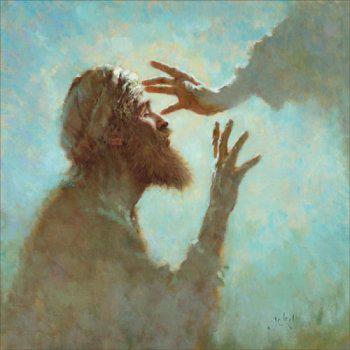 “Jesus did not go up and down Palestine healing lower back pain, heart palpitations, headaches, and other invisible ailments. He healed the most obvious kinds of organic disease – crippled legs, withered hands, blind eyes, palsy – all healings that were undeniably miraculous. Unlike healers today, Jesus did not leave long lines of disappointed people who had to return home in their wheelchairs…[Today’s] healers rarely if ever come out of their tents…[and] television studios. They always seem to exercise their gift only in a controlled environment, staged their way, run according to their schedule. Why do we seldom hear of the gift of healing being used in hospital hallways? Why aren’t more healers using their gift on the streets in India and Bangladesh? Why aren’t they in the leper colonies and AIDS hospices where masses of people are racked by disease? It’s not happening. Why? Because those who claim the gift of healing do not really have it.” (John MacArthur)