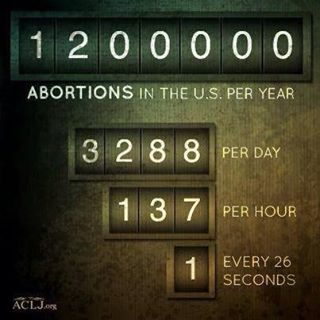
Embyos and Five Year Olds – Who Do We Rescue?

“Excellent rebuttal to the pro-abortion “unanswerable argument”. Having said that , the pro-life twitter responses are mostly pathetic and do not address the challenge. This article stays with the question and does so logically. Ben Shapiro does so too in a more popular fashion on You Tube. Read the article and learn how to answer this pseudo intellectual & his minions. Defend life.” – Joe Godal

Article by Robert P. George and Christopher O. Tollefsen (original source here)

Robert P. George is McCormick Professor of Jurisprudence at Princeton University, and Christopher O. Tollefsen is College of Arts and Sciences Distinguished Professor of Philosophy at the University of South Carolina. They are co-authors of Embryo: A Defense of Human Life, from which this essay is adapted.

Both human embryos and human five-year-olds are human beings equal in fundamental worth and dignity. But there are differences between the embryos and five-year-olds that are or can be morally relevant to the decision concerning whom to rescue.

Errors and bad arguments abound on Twitter; it is simply impossible to respond to all of them.

Yet when the errors and bad arguments concern the value of unborn human lives, and when those errors and arguments have, apparently, been so rhetorically persuasive as to generate many thousands of retweets, then perhaps they should be addressed.

This seems to be the case with a recent series of tweets by Patrick L. Tomlinson, who writes, “Whenever abortion comes up, I have a question I’ve been asking for ten years now of the ‘Life begins at Conception’ crowd. In ten years, no one has EVER answered it honestly.” He then offers a scenario, proposed earlier by Michael Sandel at a meeting of the President’s Council on Bioethics, and even earlier by George Annas. Sandel asks us to imagine that a building is on fire and Jones, who is trying to escape, can save ten frozen embryos or one five-year-old girl, but not both (Mr. Tomlinson’s example substitutes 1,000 frozen embryos, on which more later).

Now, by saving a crate of embryos, Jones would, on the “Life Begins at Conception” account, be saving many human beings (virtually every embryologist or developmental biologist would agree; this is easily verified by a look at the relevant textbooks). Yet it seems plausible that most reasonable people, among whom we will include Jones, would save the five-year-old girl. Can we agree that this choice is reasonable, given our view not just of the nature of the frozen embryos—they are human beings—but also of their value, for we hold that they are beings equal in fundamental worth and dignity to those other human beings currently reading this essay? Does our willingness to accept Jones’s choice as morally legitimate show that, in truth, we do not regard human embryos as we regard children at later stages of development, namely, as full members of the human family?

We agree that considering the case as described by Sandel, most people in Jones’s circumstances would choose to rescue the girl. However, this by no means shows that human embryos are not human beings or that they may be deliberately killed to produce stem cells, or in an abortion.

The first thing to notice is that the case as described is not, in fact, analogous to the suggestion that we should perform embryo-destructive research for the benefits it might provide us, or to the suggestion that it is permissible to abort an unborn human being. In both such cases, we are being invited to kill, or authorize the killing of, human embryos or fetuses in order to provide benefits to others. But in the fire scenario, there is no killing; the deaths of the embryos who are lost when Jones opts to save the girl are not killings—no one is acting to destroy the embryos or cause their deaths—but rather are the kind of death we accept as side effects in various cases in which, for example, acting to save one or some persons means that we are unable to save another or others. Continue reading

Calvin on Justification, Faith and Works

Article: Justification, Faith and Works: Calvin on Ezekiel 18:17
by R. B. Gaffin, Jr., Professor of Biblical and Systematic Theology, Emeritus at Westminster Theological Seminary (original source here).

A passage from Calvin’s commentary on Ezekiel 18:14-17 has the distinction of being among the last, perhaps the last, of his comments on the relationship among justification, faith and works. Apparently written shortly before his death in 1564, it is perhaps as pointed as any of his comments on their interrelationship and so, highly instructive concerning his matured understanding. An excerpt of some length from his comments on verse 17 is provided here, because, seen in its immediate context, it needs to be read carefully and digested (bolding added). Note that when Calvin speaks here of “works” he clearly has in view, as the plural shows, the believer’s good works or obedience done over time, in other words, seen in terms of God’s work in the believer, sanctification as ongoing or progressive, what he regularly includes elsewhere with “regeneration,” a word he uses in a broader sense than later Reformed theology.

When therefore, we say that the faithful are esteemed just even in their deeds this is not stated as a cause of their salvation, and we must diligently notice that the cause of salvation is excluded from this doctrine; for, when we discuss the cause, we must look nowhere else but to the mercy of God, and there we must stop. But although works tend in no way to the cause of justification, yet, when the elect sons of God were justified freely by faith, at the same time their works are esteemed righteous by the same gratuitous liberality. Thus it still remains true, that faith without works justifies, although this needs prudence and a sound interpretation; for this proposition, that faith without works justifies is true and yet false, according to the different senses which it bears. The proposition, that faith without works justifies by itself, is false, because faith without works is void. But if the clause “without works” is joined with the word “justifies,” the proposition will be true. Therefore faith cannot justify when it is without works, because it is dead, and a mere fiction. He who is born of God is just, as John says (1 John v. 18). Thus faith can be no more separated from works than the sun from his heat: yet faith justifies without works, because works form no reason for our justification; but faith alone reconciles us to God, and causes him to love us, not in ourselves, but in his only-begotten Son.

Taken by itself, Calvin considers the statement “faith without works justifies” to be ambiguous. It “needs prudence and sound interpretation”; it is “true yet false,” depending on the way it is read. Pinpointed grammatically, Calvin is saying:

When the prepositional phrase “without works” is taken adverbially, that is, as modifying the verb “justifies,” then the statement “faith without works justifies,” is true;
When “without works” is taken adjectivally, that is, with the noun “faith,” that is, “without-works faith,” then the same statement is false.

“Without-works” faith (alone-faith) Calvin asserts, does not justify, “because faith without works is void.” Again he says, “faith cannot justify when it is without works, because it is dead and a mere fiction.” He is saying in effect, to focus the balance of his remarks: “faith, with its works, justifies without works”; or also, “with-works faith (or “not-without-works faith”) justifies without works.” Alone-faith does not justify, but justification is by faith alone; faith is the alone instrument of justification.

In this passage Calvin is on the proverbial razor’s edge, where we occasionally find ourselves in sound theologizing faithful to Scripture. Certainly, he is not saying here what he emphatically and repeatedly denies elsewhere, that I must do a certain amount of good works or obey God for a certain amount of time before I can be justified or be sure that I am justified. Rather, his comments highlight that even in its initial exercise justifying faith is inherently disposed to obedience and good works, which are bound to come to expression, however imperfectly, over time. His point is what is expressed later in the Westminster Confession, namely that faith as “the alone instrument of justification” is “not alone in the person justified, but is ever accompanied with all other saving graces, and is no dead faith, but worketh by love”; or, more importantly, Paul’s characterization of justifying faith as “faith working through love” (Galatians 5:6; alluded to and cited as Scriptural support by the Confession at this point).

Here, in a particularly striking and instructive way, Calvin accents how inseparable, yet distinct, good works are from faith as the alone instrument of justification. This is fully in keeping with what he emphasizes in many other places, perhaps most notably at the beginning of his magisterial treatment of justification in the Institutes. With the application of redemption as the large, overall concern of Book Three, he had previously discussed sanctification (“regeneration”) and in considerable length (3:3-10). Why did he order his material in this way, treating sanctification before justification? “The theme of justification was therefore more lightly touched upon because it was more to the point to understand first how little devoid of good works is the faith, through which alone we obtain free righteousness by the mercy of God; and what is the nature of the good works of the saints, with which part of this question [justification] is concerned” (3:11:1).

Such works–it is surely true to Calvin to add–are necessary as “the fruits and evidences of a true and lively [that is, justifying] faith” (WCF, 16:2).

The Five Solas: Now in E-Book and AudioBook

As the Bible came to be read in the common language of the people, the great central truths the Bible proclaimed were recovered, often at great cost to those who came to embrace them.

The Reformation recovered and highlighted glorious Scriptural truths which have been expressed in five memorable phrases, now known as the Five Solas. Properly understood, these Five Solas bring us back to the very heart of the Gospel of Jesus Christ.

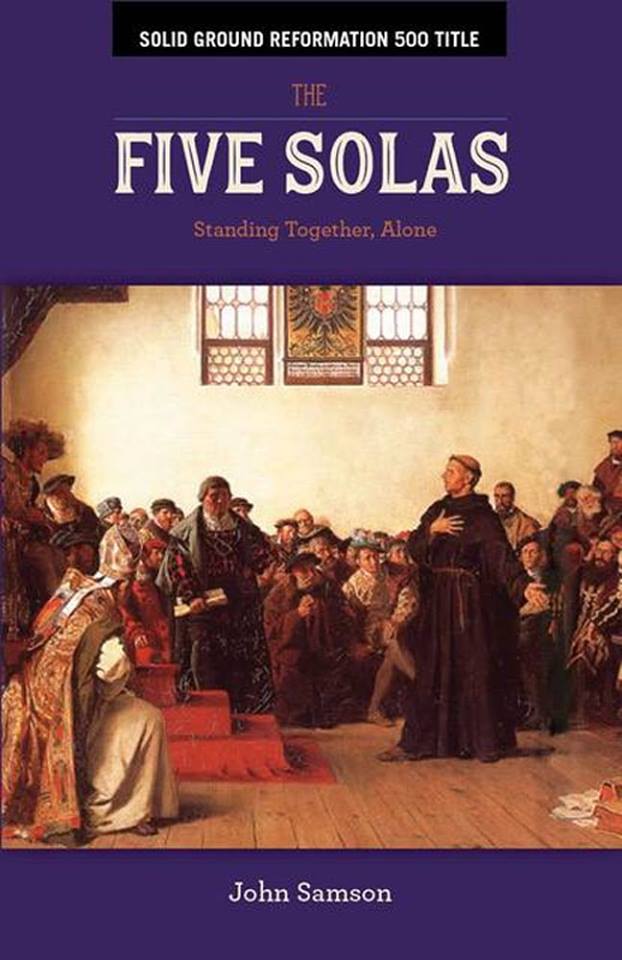
ANNOUNCEMENT: My new book/booklet “The Five Solas – Standing Togther Alone” is now available in EBOOK and AUDIO BOOK at this link. I trust you will find it to be a blessing in these new formats.

ENDORSEMENTS:

Recently wrote the author these words: “You have succinctly and clearly distilled the essence of the ‘Solas.’ May God mightily use your book for His glory. Thank you for the encouragement in the gospel you have brought to me.” – Dr. R.C. Sproul

“Some authors make you read three chapters before getting to the first point in their outline. If you wish to understand the foundation of the solas of the Reformation but would like to do so in under an hour, John Samson provides you with the basics right here.” – Dr. James White

“Get this book! Then get several more to share with your friends and family. John Samson has the remarkable ability to communicate essential truths with an undeniable passion and faithfulness that is winsome, clear, and devastating to the opposition. The people of God in this generation are in need of these old truths: the same truths that transformed the early church and led our heroes (throughout history) into living lives that changed the world. Go sell 100 of your vapid, modern Evangellyfish books and turn that money into getting this book into the hearts and minds of Christians everywhere.” – Jeff Durbin

“Recent years have seen a number of key anniversaries connected with events and people who were vital catalysts in the Protestant Reformation. Thankfully this has resulted in a renewed focus on the ‘five solas’ – a convenient shorthand list of the Reformers’ key convictions. Throughout church history, wherever these principles have been stressed and adhered to, the church has always flourished. So it is a highly encouraging trend. I’m thankful for this excellent booklet by John Samson; a cogent, focused, and accessible study of the solas that not only reminds us what these principles mean, but also shows us why they are important – and why they must stand together.” – Phil Johnson – Executive Director, Grace To You

“This is such a crucial topic; and having read many pieces written on the five solas, this one stands out for not only being theologically sound, but also clear and concise. It is written in a way that just about anyone could pick up and understand. I am thankful that God has raised up his servant John Samson for this deeply needed work; a work we ought to get into the hands of as many people as possible.” – John Hendryx, monergism.com

PAPERBACK VERSION: AVAILABLE HERE

EBOOK & AUDIO BOOK (read by the author): AVAILABLE HERE