

The Lord Told Me??

Article: Please Stop Saying — “God Told Me” by Josh Buice (original source here)

It happened again recently. I was listening to a sermon online and the preacher said, “God told me.” Apparently everyone in the congregation enjoyed it from the response I heard, but I immediately turned it off. This type of communication is becoming more prevalent in Christian circles. It’s showing up in conversations because people are hearing it from the pulpit and reading it in books they purchased from the local Christian bookstore. Perhaps it sounds spiritual or is emotionally stirring to the congregation.

Although the “God told me” method of communicating makes for interesting, suspenseful, and entertaining stories, what people need most is to hear from God. I would like to make a simple request. Please stop saying “God told me” unless the phrase is immediately followed up with a text of Scripture. Have you considered the connection between the “God told me” language and the sufficiency of Scripture? What connection does the “God told me” phrase have with the third of the Ten Commandments?

The “God Told Me” Language Violates the Sufficiency of Scripture
If God spoke to Moses from a burning bush (Ex. 3:4-6), to Samuel in the dark of night (1 Sam. 3:1-9), to Elijah in a cave (1 Kings 19:9), to John the Baptist and others at Jesus’ baptism (Mark 1:9-11), and to Saul (subsequently Paul) and his traveling companions on the road leading to Damascus (Acts 9:4-7)—why would God not speak to us today? That’s a fair question, but it might surprise you to know that God does still speak to us today. He does so through His sufficient and authoritative Word.

In chapter 1 and paragraph 6 of the 2nd London Baptist Confession of Faith (1689), we find these words:

The whole counsel of God concerning all things necessary for his own glory, man’s salvation, faith and life, is either expressly set down or necessarily contained in the Holy Scripture: unto which nothing at any time is to be added, whether by new revelation of the Spirit, or traditions of men.

During the days of the Old Testament, God was communicating to prophets in order to write Holy Scripture and to prepare the way for Jesus’ birth. All of the audible communication of God has direct connection to the redemptive plan of God to save sinners. God’s direct communication with His people was not centered on what to eat for breakfast, the need to give money to a random person at a bus stop, or to go join a group of college students at a morning workout.

During the days of the New Testament, and the early church period, God’s audible voice, although rare, was connected to the redemptive plan of God in Jesus Christ. Once the Bible was completed, there was no longer any need for God to speak to people audibly or to provide direct (divine) communication. God has communicated everything necessary for faith and life, worship and service, in His sufficient Word. To use the “God told me” language violates the sufficiency of Scripture. Simply put, it needs to stop.
It’s strange that many churches that once stood courageously for the inerrancy of Scripture in the past frequently employ the “God told me” language in their pulpit today. We don’t allow Mormons or Jehovah’s Witnesses to play the “God told me” divine revelation card, and we shouldn’t allow Baptists or Presbyterians or Methodists or mainstream evangelicals to have a free pass on this crucial issue. Continue reading
The Meaning of the Cross

In this brief clip from his Ligonier teaching series Hath God Said?, Dr. R.C. Sproul considers the various ways the cross was viewed by people in the New Testament.

Transcript

Notice how the cross was viewed by people in the New Testament. All we know if we’re an observer, a spectator, a member of the press—the Jerusalem Gazette, I’m assigned as a reporter to go out and witness the execution of a man whose been condemned for sedition by Pontius Pilate. And I watch this execution and I may go back to my pressroom and I write up the report in saying, “This afternoon a Jewish, seditious, pretender to the throne was justly executed by the Roman Empire.”

Or I can go to the palace of Caiaphas and say, “Caiaphas, what was the significance of that out there today? Was that simply the execution of a political zealot?” Caiaphas would say, “No, I see that as a historical expedient. It was necessary for the good of this nation that one man die.” That was Caiaphas’ observation.

And maybe then I go and interview the Centurion at the foot of the cross and he says to me, “I don’t know. Something strange happened here this afternoon. That man was different from any man we’ve ever executed; I think He’s the Son of God.”

Then you go and you read the letters of the Apostle Paul. And Paul tells us that what happened on the cross was an event of cosmic importance. That an atonement took place here by which those who receive Christ, among the human race, are reconciled to their Creator.

That this is the lamb of God who was slain. This was the sacrifice offered to satisfy the demands of God’s justice.

Conversion is More Than Head Knowledge

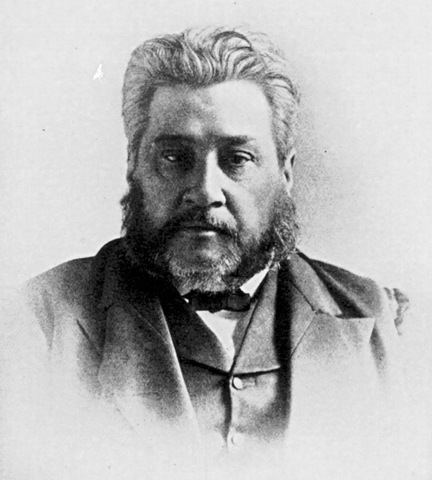
“Many persons row hard to get the ship to land by a notional belief in orthodox doctrine. This superstition is harder to deal with, but quite as dangerous as the belief in good works. It is quite as legal an idea for me to think to be accepted by believing good doctrine as to expect to be pardoned for doing good works. Yet we have scores of people who if they can get hold of the Calvinistic creed at the right end; if they become masters of it and know how to argue against Arminianism; if they become not only sound Calvinists but a little sounder still, having not only the sixteen ounces to the pound but two or three ounces over and above, so as to make them ultra-Calvinistic; why then they fancy that all must be well. ‘I never can hear a preacher,’ this man will say, ‘who is not sound. I can tell at once when there is a grain of free will in the sermon.’ This is all very well, but he who boasts thus may be no better than the devil; nay, he may not be so good, for the devil believes and trembles, but these men believe and are too much hardened in their own conceit to think of trembling. Away with the idea that believing sound doctrine and chaining ourselves to a cast-iron creed is vital godliness and eternal life. Orthodox sinners will find that hell is hot, and that their knowledge of predestination will not yield a cooling drop to their parched tongues. Condemning other people, cutting off the saints of God right and left, is but poor virtue, and to have these blessed doctrines in the head while neglecting them in the heart is anything but a gracious sign. If ye can “a hair divide betwixt the west and north-west side,” do not therefore fancy that your fine gifts and profound orthodoxy will ensure you an entrance into the kingdom of heaven, Ah! You may row with those oars, but you will not get the ship to land, ye must be saved by sovereign grace, through the operation of the Holy Spirit upon the heart, or you will not be saved at all. As it is not by doing that we are saved, neither is it by subscribing to creeds; there is something more than this needed ere the ship reach the port.”

– C. H. Spurgeon – From A Sermon Delivered on May 1, 1864, Metropolitan Tabernacle, Newington.