The Blessing of Catechizing our Children

Article by Joel Beeke (original source here)

God has given us a wonderful means of grace in catechizing our children. Yes, we need discipline and diligence to do it, but when we persevere, the rewards are sweet. Do not grow weary if you fail to see immediate progress in your children’s spirituality.

The Bible is our curriculum, or the content of our prophetic teaching. We cannot give our children a better or more useful gift than knowledge of the Holy Scriptures from their earliest days (2 Tim. 3:15). We should read and explain Scripture to them at the level of their own understanding. As they acquire the ability, they should read and memorize it for themselves. We need to introduce older children to study Bibles, concordances, commentaries, dictionaries, and other helps, and they should share in explaining God’s Word to their younger siblings.

Of particular importance in the Scriptures is the book of Psalms. The Bible says, “All scripture is given by inspiration of God, and is [therefore] profitable for doctrine, for reproof, for correction, for instruction in righteousness” (2 Tim. 3:16). All four of these characteristics are found in Psalms in abundance.

Also, as songs and prayers (Ps. 72:20), the psalms give us two valuable ways to teach God’s Word and to learn from it, that is, by singing it and praying it. To do this more effectively, Reformed churches use metrical versions of the psalms, or translations of the psalms into English verse, so they can be sung in public worship and private devotion. Part of our task is “shewing to the generation to come the praises of the LORD” (Ps. 78:4), so they can “sing praises to God … with understanding” (Ps. 47:6–7).”

Creeds and catechisms are other valuable tools or methods by which we may communicate the truths of the Word of God to our children. These documents provide clear, concise definitions of basic doctrines and key words in easily memorized form so our children can hide them in their hearts. Bible references (“proof texts”) anchor these definitions in Scripture. The catechisms not only teach basic Christian doctrine, but also show us how to live according to God’s law and how to pray. When we catechize our children, they learn the basic truths of Christian faith and living, and we reinforce and deepen our own knowledge of them.

Our English word catechism is derived from the Greek word katecheo, meaning “to sound from above,” “to recount something,” or “to instruct someone.” For example, Acts 18:25 says that Apollos, the great preacher of the apostolic age, “was instructed in the way of the Lord.” Luke wrote his gospel, or “declaration of those things which are most surely believed among us,” for the sake of “the most excellent Theophilus, that thou mightest know the certainty of those things, wherein thou hast been instructed” (Luke 1:1–4). These verses indicate that Apollos and Theophilus had been catechized.

As time passed, basic Christian instruction, or “catechesis,” was cast in the form of questions and answers, and this form remains in use today. In carefully scripted dialogue between teacher and student, questions are posed and answers are given. The answer is provided not just to be memorized, but also to give the teacher opportunity to explain it. Scripture proofs help teacher and student trace the answers back to their sources in the Bible. Specific catechisms have been prepared to serve all age levels, from the youngest children up through all levels of development into adulthood.

During the Reformation and particularly in the Puritan era, parents felt it their duty to catechize their children. Nearly every Puritan pastor wrote a catechism or his own exposition of a catechism. The people in the church used this tool to teach their children. Fathers were advised to catechize their children—whether together or individually—for forty-five to sixty minutes at least once a week.

Today, we have largely delegated this responsibility to the church. In doing so, we must take care not to abdicate our personal mandate as parents. Even if the church does catechize our children, we should incorporate such teaching into family worship, if for no other reason than to support what our church teachers are doing as they work with our children.

Finding time to catechize each child separately may not be possible, but such teaching may be easily incorporated into family worship, when parents speak naturally and openly with their children about spiritual matters. At the very least, each child should be required to say the portion of the catechism he is to memorize for that week’s class at church. Unlike church or school settings, where children may feel uncomfortable speaking up, family worship affords them a place of freedom and support where they may ask questions and make comments of their own.

During family worship, it is essential that we have the parental wisdom not just to recount biblical truths or rehearse catechism answers, but to ask questions and encourage children to respond, taking a conversational approach to the things of God. It is important that children not always be left on the receiving end of religious things but learn to actively think and communicate biblical truths. We need to open our hearts to our children. Many times parents discover that even their youngest children can teach them about the things of God (Ps. 8:2).”

It is also important that our children learn to pray aloud. If children pray aloud in the company of other family members at early ages, they are less likely to feel awkward doing so when they grow older. Praying in front of parents will be natural and unforced if parents start the practice when children are very young. As children get older, they should become more fluent in prayer. As with everything else, we must not expect or demand perfection in the form of the exercise. True prayer is first of all a matter of what is in the heart.

The goal of this kind of catechizing or teaching is that, in a cycle of a year or two, parents journey with their families through the whole field of biblical truth. Then they start over again. By the time children leave home, they will have made this journey several times, and will be more likely to incorporate such teaching in their own homes. Hopefully, they will set a similar pattern with their own children and, in God’s covenant faithfulness, this practice of family worship will continue from generation to generation (Ps. 34:11–15; 44:1; 71:17–18; 78:4–8; 145:4).

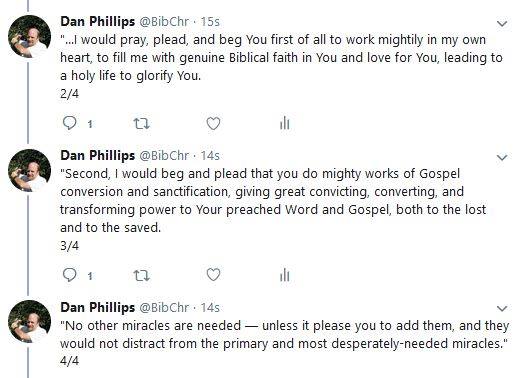
Remember, as in all things, we must bring the power of prayer to bear on the work of catechizing our children. It is not enough for us to hammer truths into their heads. The aim is to reach their consciences with conviction, to incline their hearts to embrace biblical teaching with true faith, and to stir in our children the desire to bring forth the fruit of it in their lives. Likewise, we will never teach the catechism with any real effectiveness if we do not first prepare to do so, meditating on the truths to be taught and seeking to bring forth their fruits in our own lives first of all. For this, we need the help of Christ, working in us and in our children by His Word and Holy Spirit.

God has given us a wonderful means of grace in catechizing our children. Yes, we need discipline and diligence to do it, but when we persevere, the rewards are sweet. Do not grow weary if you fail to see immediate progress in your children’s spirituality. The Bible says, “Train up a child in the way he should go: and when he is old, he will not depart from it” (Prov. 22:6). Plant the seeds over and over again. Look for fruit, but understand that blossoms do not appear overnight. “Our job is to plant the seed; the result belongs to the Lord.

Preaching & Liturgy Together

“When we think of the Protestant Reformation, we immediately think of the act of Biblical preaching as the means whereby the Gospel was established in the life of the Church. While a very true statement, it is not a complete one.

It was when not only idolatry and falsehood were removed from the worship service, but when in its place, Biblical, Gospel truth shaped the week by week liturgy (order of worship) of the Church, that the people truly ‘got the message.’

Each time the people gathered to worship God, with on purpose thought behind it, each element of the Reformed worship service was intentionally devised to reveal both Law and Gospel – the reality and consequences of our sin and the perfect work of the perfect Savior, the Lord Jesus Christ. As a result, the common people were able to gain a fuller and growing comprehension of the greatness of their salvation, and even more importantly, the greatness of their Savior God.

In the power of the Holy Spirit, the two together: preaching and liturgy (order of worship) brought Reformation in the Church.” – John Samson

Family Worship 101

Article by William Boekestein (original source here)

“Why did you steal my gods?” With these words, Laban ended a passionate speech against his son-in-law, Jacob (Gen. 31:30). In fact, Laban’s daughter Rachel had stolen the gods, doubtless to keep alive the memory of her family after moving away with her husband, Jacob. Rachel literally took her family religion with her.

Every family has a god. Every day, young adults leave home with the gods of self-fulfillment, money, leisure, work, or even ministry. Some leave with the God of Abraham, Isaac, and Jacob. To a large extent, the difference is determined by how our families worship in the home.

Understanding Family Worship

Family worship is the regular use of Scripture, song, and prayer by a family unit, guided by the head of the household.

Family Worship Is Worship
Family worship is not merely a religious discipline; it is a meeting with the triune God in a spirit of adoration by means of three key ingredients.

First, families worship through Scripture. When we read the Bible, God preaches about Himself and the indescribable gift of His dear Son to a needy world. This message is not just for information, but for exaltation.

Second, families worship through singing. It is inescapable: God’s people sing! The one hundred and fifty psalms reference singing around one hundred and fifty times. The New Testament call to admonish one another through song applies well in the context of the home (Col. 3:16).

Third, families worship through prayer. Since prayer is the chief way in which we show thankfulness to God (H.C. Q/A 116), our prayers must be worshipful, not merely formal. Family prayers should reflect the pastoral ethos and pathos of our High Priest (John 17).

Family Worship Is Regular
As illustrated by the practice of the early church, weekly congregational worship is insufficient for families that have been touched by God’s grace (Acts 2:47; 5:42). Scripture exhorts us to worship God daily, giving glory to Him in all things (Ps. 92:2; 1 Cor. 10:31).

Family Worship Is Covenantal
Before God established worship in the tabernacle, his people worshiped in family tents. “The voice of rejoicing and salvation is in the tents of the righteous…” (Ps. 118:15). Job’s piety shines in his prayers for his children (Job. 1:5). The faith of young Timothy blossomed in the fertile soil of family worship (2 Tim. 1:5). Christians must spend time alone with God in their prayer closets (Matt. 6:6). But they should also worship together with their families through the use of Scripture, song, and prayer.

Defending Family Worship

Scripture Requires Family Worship
Specifically, God requires heads of households, like good shepherds, to lead their families into green pastures (Josh. 24:15). God expected Abraham to “command his children and his household after him, that they keep the way of the Lord” (Gen. 18:19, emphasis mine). Consider also the example of Cornelius, “a devout man…who feared God with all his household” (Acts. 10:1). It is no surprise that when Peter came to Caesarea to preach the gospel, Cornelius rallied his household to attendance. “We are all present before God,” he said, “to hear all the things commanded you by God” (v. 33, emphasis mine).

Family Worship Yields Spiritual Growth
Family worship is an indispensible instrument for instilling both old and young with a consciousness of the Lord, His Word, and our call to worship. In research for a recent book, George Barna demonstrates that parents who pass along to their children the baton of spiritual maturity and vitality have one thing in common: they “take God’s words on life and family at face value, and apply those words faithfully and consistently.” Missionary John Paton relates the indelible impact family worship left on his life: “When, on his knees and all of us kneeling around him in Family Worship, [father] poured out his whole soul with tears…for every…need, we all felt as if in the presence of the living Saviour, and learned to know and love Him as our Divine Friend.”

Children notice when worship is only a once-a-week activity. God often works powerfully in young lives whose souls are warmed by the incubator of daily family worship.

Improving Family Worship

Many families are convinced by the need for family worship, but struggle in implementation. In such cases, what can be done?

Study Family Worship as a Family
Some time ago, our family spent a month carefully reading and discussing Joel Beeke’s booklet, “Family Worship.” Partly due to the dynamic of learning together, this study made a lasting impression on us.

Stick to a Plan
Haphazard Scripture reading rarely edifies over the long haul. Families should include variety in their plans and adjust them over time. But following a regular Scripture reading plan helps us read the Bible the way it was meant to be read: as a cohesive history of God’s redemptive work.

Select a Time that Works
Unless worship is codified in a family’s schedule it will likely be supplanted by life’s busyness. Some families will flourish with morning worship; others will better meet in the evening. Families that can find no time in their week for worship need to adjust their schedule.

Sing!
For some Christians–particularly those who were not raised in the church or in singing homes–the thought of introducing song into family worship seems utterly unrealistic. But, as with all things, to establish a fresh tradition of family singing, begin with what you know. Start with familiar songs and progress to less-familiar songs with the help of tools (e.g. www.hymnary.org).

Strive for Regularity, Not Perfection
Most of us have become frustrated when our family worship ideals eclipsed reality. Family worship is like a great friendship. It has its bumps, but it is forged through regular meaningful interaction. William Gouge observed that “a nail that at one blow barely enters, with many blows is knocked all the way in.” So it is with repetition in family worship.

Through the gospel, Jesus enters our lives and our families. Where He has entered, He is to be worshiped. Where He is worshiped, we trust He will stay and live and work and bless.