Dr. James White:
The True Face of Jehovah’s Witnesses
Reply

Website: http://www.utlm.org/
Mormonism: Book -“One Nation Under Gods” – Richard Abanes
From the archives: Richard Abanes joins Hank to discuss his in depth work on the history of the Mormon church found in his book One Nation Under Gods.
Hidden truths behind Mormonism and the Church of the Latter Day Saints (James R White)
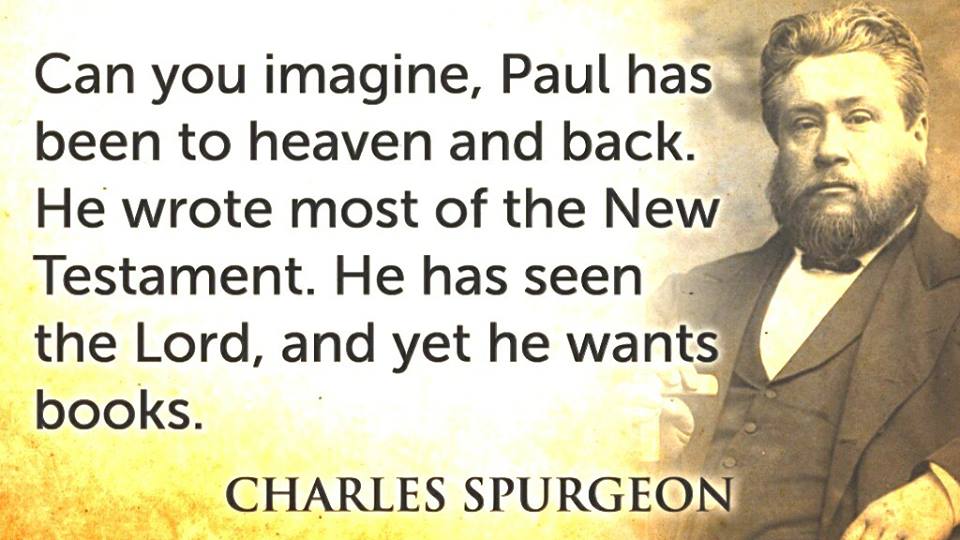 In one of his many books, Spurgeon made a comment well worth hearing. It comes from the preface to his book on commentaries. A book he wrote for pastors to convince them of the need to use commentaries and to engage in deep study for their sermon preparation. Spurgeon well knew the value of reading for preaching. He had a personal library of around 25,000 books. And this in the eighteen hundreds! And what’s more, he actually read most of them.
Well, in the preface to his book, he speaks to an objection to using commentaries. The objection goes something like this: As a Christian, I have the Holy Spirit. And I have his wonderful work of illumination. I don’t need commentaries, I don’t need to rely on the thoughts of others, I can go right to the source.
Now, here’s Spurgeon’s answer to that objection. And I quote, “I find it odd that he who thinks so highly of what the Holy Spirit teaches him, thinks so little of what the Holy Spirit teaches others also.”
In this quote, Spurgeon reminds us that the Holy Spirit is not an individual gift. The Holy Spirit is a corporate gift to the body of Christ, and he has taught others, and uses others to teach us. So Spurgeon’s argument reaches the conclusion: use commentaries. Don’t be arrogant, and don’t think you have a corner on the market of the Holy Spirit—you don’t.
Now, let’s expand Spurgeon’s argument and apply it to the church today and its relationship to church history. Here’s my paraphrase of Spurgeon’s argument: I find it odd that the church of the 21st century thinks so highly of what the Holy Spirit has taught it today that it thinks so little of what the Holy Spirit has taught the church in the first century, the second, the third, the forth, and so on, and so on.
 The Holy Spirit is not unique to our age. The Holy Spirit has been at work in the church for the past 21 centuries. We could put the matter this way—it is rather prideful to think that we have nothing to learn from the past. And remember, pride is a sin. And also remember, as Scripture says, “pride comes before a fall.” We need a little humility. Enough humility to say we may not have all the answers in the present. Enough humility to say, we need the past, and enough humility to visit it from time to time, even if it is only for 5 minutes.
– Dr. Stephen Nichols
HT: Casey Peter Sandberg