The Slow Killing of Congregational Singing

“Worship is deformed when it becomes vicarious performance rather than congregational and participational.” – Sinclair Ferguson

The following article is by Mike Raiter, Director of the Centre for Biblical Preaching in Melbourne. He was formerly Head of Missions at Moore College and, more recently, Principal of Melbourne School of Theology. Mike spent 11 years working in Pakistan, largely in theological education. He is married to Sarah and they have 4 children (Joel, Nate, Pippa and Lauren). He is the author of over 35 books and articles, most notably the 2004 Australian Christian Book of the Year, Stirring of the Soul. (original source here)

Here is a great historical irony. Fifty years ago choirs ruled the church. Usually, they were supported by a very loud organ. To be frank, many choir members were performers, and when the choir was large they drowned out the singing of the congregation. So, sadly, the very people appointed to help the congregation sing actually smothered congregational singing. Bit by bit, choirs disappeared. I think most churches didn’t mourn the loss.

Here’s the irony: we then replaced the choirs with song leaders (or, what we inaccurately call ‘worship leaders’). Over time the number of song leaders grew and grew until they became as big as a choir. Then we gave the song leaders full-volume microphones and electrical instruments, and many became performers. When the music team was large and the microphones were turned up they drowned out the congregation. So, sadly, the very people appointed to help the congregation sing actually smothered congregational singing.

A few years ago I wrote an article entitled, ‘The Slow Death of Congregational Singing’ (The Briefing, April 2nd, 2008). I now believe my title was too generous. In fact, what we are witnessing in our churches is ‘The Slow Killing of Congregational Singing’.

I’ve just returned from another National Christian conference. Never have so many people complained to me about the singing. So, I am motivated to write again. Or, to use a more appropriate metaphor, to bang the same drum—but louder.

Paul tells us in Ephesians that we should be, “speaking to one another with psalms, hymns and spiritual songs…” (5:19). Similarly, in Colossians we are exhorted to, “teach and admonish one another with all wisdom with psalms, hymns and spiritual songs” (3:16). Singing is a corporate activity with a dual focus. We sing “to one another” and we sing “to God”. But now in many (most?) churches we are sung to by the musicians.

In the past I’ve been reluctant to accuse our worship teams of being primarily performers. I now believe I was wrong. Evidence suggests that most are performers, and the needs of the congregation they are meant to be ministering to are forgotten. Why do I say this?

Signs of Trouble
First, they don’t look at the congregation they’re meant to be leading. The musicians can, perhaps, be excused here but not the song leaders. I tell preachers I mentor there is nothing more important in delivery than eye contact. People must know that you are talking to them, and you must be able to see that they are attentive to your words. This is also true for the song leaders. Indeed, they need both eye and ear contact. Are people singing the songs they’re leading? In most cases I observe that it’s irrelevant to the song leaders whether the people are singing or not. Why? I conclude because the singing event is primarily about them.

Second, they sing new songs but don’t teach the new songs. At this conference it was announced that the next song would be a new one. At that point, the role of the song leader is to teach this song to the people. Mind you, I wonder if any of those leading singing are trained to teach new songs? This is important because a number of new songs are difficult to sing. But we were not taught the song. The band just began to play. If we were able to eventually pick it up, all well and good. If not (and in this case it seemed that many didn’t), no problem. Why? I conclude: because it’s not about the singing of the congregation it’s about the performance of the band. Continue reading
Why We Still Need Catechism

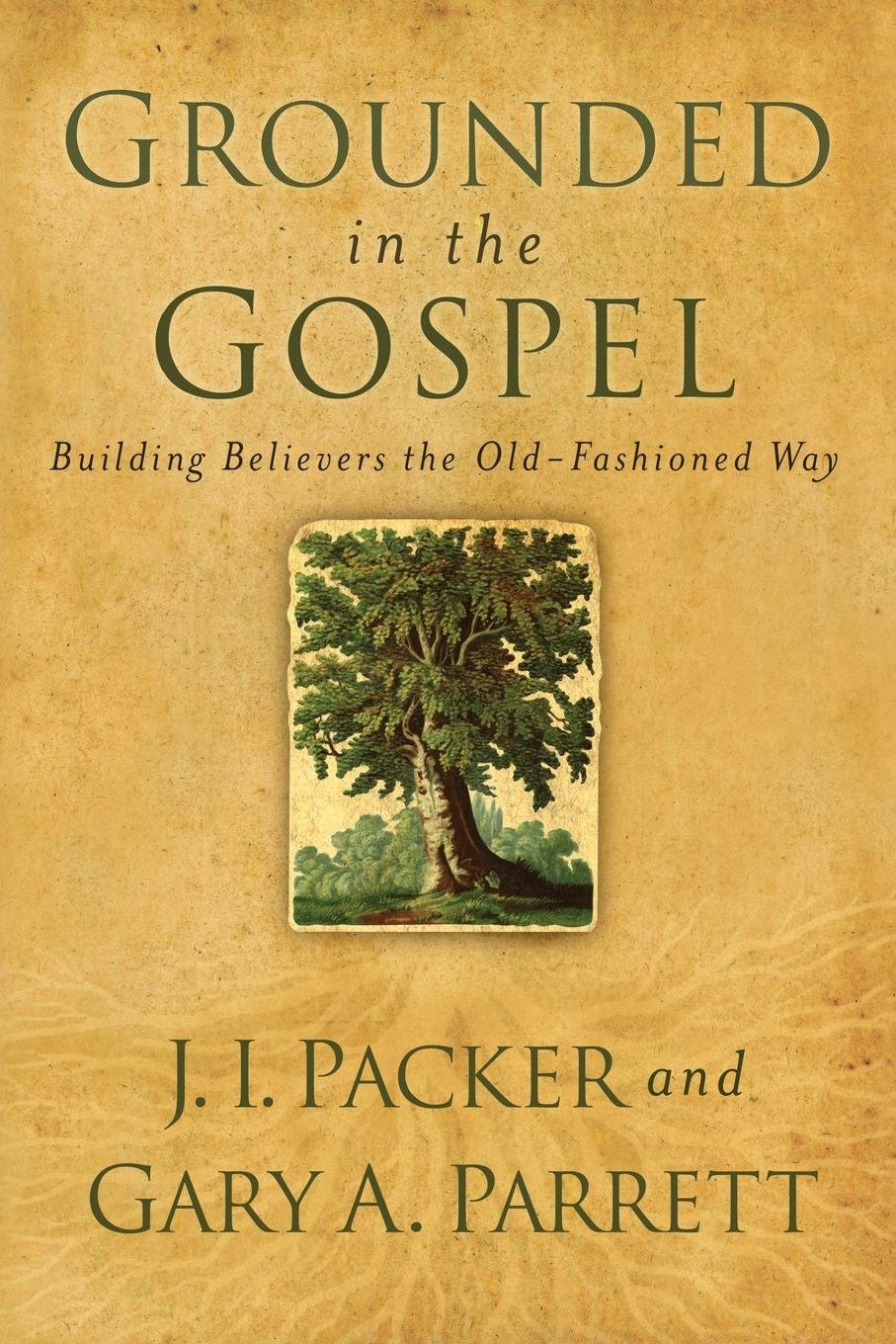
An Interview with J. I. Packer and Gary Parrett – Thursday, 30 Jun 2011 – original source WhiteHorseInn.org

Throughout the history of the church, young believers and new converts to the faith went through a process called “catechism.” Although this is an ancient practice, it has fallen out of use in contemporary Christianity. In seeking a remedy to this, White Horse Inn talked with J. I. Packer and Gary Parrett, authors of an important book entitled Grounded in the Gospel: Building Believers the Old Fashioned Way. Dr. Packer teaches theology at Regent College in Vancouver, B.C., and is the author of numerous books. Dr. Parrett is associate professor of educational ministries at Gordon-Conwell Theological Seminary, and is also the coauthor of another book on this subject, Teaching the Faith, Forming the Faithful: A Biblical Vision for Education in the Church.

Why did you feel compelled to write Grounded in the Gospel?
GP: In the garden-variety evangelical world I have moved in for most of the last thirty years, there’s very little sense of a catechetical vision or ongoing catechetical ministries. We therefore felt compelled to try to help address this. This has been on my mind for a while, largely because of seeds planted by Dr. Packer when I was his student almost twenty-five years ago.

Those who don’t come from a background in Reformed, Lutheran, or Anglican traditions might say that catechism sounds Roman Catholic. What is the origin of catechism and how do you define this word?
GP: It comes from the Greek word katekeo, which is used in several places in the New Testament and means “instruct.” In some ways, it is a general word for instruction; but very early on in the life of the church, it was a particular form of instruction that focused on the basics via oral communication’give and take, back and forth. There’s a biblical concern for teaching the faith in substantive ways.

When did this practice of catechesis start and when was it revived?
GP: In the ancient church, in the second through fifth centuries in particular, anybody who came to Christ, especially from outside of the Christian community, went through a rigorous preparation for baptism that was catechizing, equipping them in the basics of Christian doctrine, Christian living, and Christian praying’often for many months, up to two or three years of instruction’before they were permitted to be baptized. Then catechesis went underground in a lot of ways for most of the Middle Ages, was revived by the Reformers with great zeal, and was the dominant feature of Protestantism, at least through the era of the Puritans. But as you suggested, ever since the eighteenth or nineteenth centuries, it has been retained largely only in Reformed and Lutheran circles.

Our theme recently on the White Horse Inn was “Recovering Scripture.” Our producer visited a local Bible college, asking students if they were familiar with the book of Galatians. Here are some of their answers to the following questions:

What’s the book of Galatians about? Have you ever read that book or studied it?

I’ve read it, but I don’t really remember.
Um, I haven’t studied it in depth. I’ve read it, but I can’t really recall the one firm message.
I think it’s Paul writing to the church in Galatia. I would say it’s about how a Christian ought to live their life.
Hmm. I read through that a couple months ago, but I don’t recall specifically what that one’s about. I believe it talks a lot about community in the church.
I’m not familiar with it enough to talk a lot about it, I guess.
It comes back to strengthening others in Christ, I believe. I haven’t studied that book. I grew up in the church, but never had a study on that book, not in detail at least.

One of the words that pops up again and again through Galatians is “justification.” Are you familiar with that word?

No. I haven’t looked into it.
I’ve actually only heard of that concept in the last couple of years. I’ve never heard that phrase used in a church, which might just have to do with my church background. I went to one church as a kid and that was it. They never really got very deep.

That’s the same answer I’m getting from everybody. Are churches doing a poor job teaching the basic content of Scripture from kindergarten to college age?

Yeah, I agree with that. I think they need to do a better job of equipping us of how to read the Bible, and less on the topical, like how to do life.
My personal take is that they do a horrible job. Sometimes it could be teachers who don’t really know it themselves. We kind of dumb it down.
I don’t have remotely near the knowledge of the Bible that I feel I ought to have, being able to say, “I was raised in church and went to a Christian college.”
I do think that the church needs to have more in-depth teaching of the Bible, especially starting in Sunday school, because I think a lot of times it’s pretty shallow.

Now what’s striking here is that this is not at a public university campus; this is at a Bible college. Is this exceptional, or is this why you wrote Grounded in the Gospel?
JIP: The conversation you’ve just relayed shows that we today in the evangelical community are far out of sync with Christian discipling in the first century, in the apostolic age. We claim to be Bible people, and we talk a lot about the Bible; but whereas they in the first century drilled people in what now we may properly call Bible doctrine, we simply don’t do that. We go some distance in helping people understand a bit of the historical background and the books of the Bible; but even so, we don’t go very far in encouraging people to soak themselves in the Bible. As C. H. Spurgeon once said, “A Christian’s blood should be bibline.” He was being fanciful; but that is to say, if you prick the Christian with a pin, the blood that comes out should be just oozing Scripture. In the sixteenth and seventeenth centuries, the Reformers, the Puritans, the evangelicals were literally soaked in Scripture. They seemed to know their Bible backwards. They could quote it appropriately and apply it in relation to anything that came up in conversation. We simply aren’t like that, and yet we think we’re being loyal to the reformational heritage. Continue reading

Catechesis

Article by Dr. Michael S. Horton (original source – WhiteHorseInn.org)

In order to know what they believe and why they believe it, Christians need to be well catechized and grounded in the central doctrines of the faith. In his pastoral visits to the homes of parishioners, Martin Luther was astounded to find that few knew the Lord’s Prayer, the Ten Commandments, or the Apostles’ Creed. He therefore wrote his Small Catechism. Other Reformers followed suit, and generations of Christian families have been saturated with biblical teaching through catechisms to this day. Studies show, however, a staggering ignorance of the basic teachings of the Christian faith even among professing evangelicals. We need to get beyond shallow slogans and movements, grounding ourselves and our children in “the faith once and for all delivered to the saints.” Given the statistics we regularly encounter, Luther’s description of the desperate need for serious doctrinal instruction (catechesis) in his day sounds eerily relevant. In the preface to his Small Catechism, he explains,

The deplorable, miserable condition which I discovered lately when I, too, was a visitor, has forced and urged me to prepare [publish] this Catechism, or Christian doctrine, in this small, plain, simple form. Mercy! Good God! what manifold misery I beheld! The common people, especially in the villages, have no knowledge whatever of Christian doctrine, and, alas! many pastors are altogether incapable and incompetent to teach. Nevertheless, all maintain that they are Christians, have been baptized and receive the holy Sacraments. Yet they do not understand and cannot even recite either the Lord’s Prayer, or the Creed, or the Ten Commandments; they live like dumb brutes and irrational hogs; and yet, now that the Gospel has come, they have nicely learned to abuse all liberty like experts….O ye bishops! to whom this charge has been committed by God, what will ye ever answer to Christ for having so shamefully neglected the people and never for a moment discharged your office?

Luther implores pastors “to have pity on the people who are entrusted to you, and to help us inculcate the Catechism upon the people, and especially upon the young.” Following the example of the ancient church, the Reformation restored catechesis. So crucial was catechesis to the Reformers that they personally assumed responsibility for teaching it to the youth. The catechism was also taught in the home, usually after dinner, as parents’especially fathers’took responsibility for their “little parish,” as Luther called the family. Instead of lazily accommodating superficial and nominal profession, pastors and parents took up the responsibility of raising God’s people to the standard of honest Christian conviction.

It is often said today that Christians, at least evangelicals, know the truth but do not live it. But as far as knowing why we believe it, most cannot articulate anything beyond their personal experience. Many pastors, teachers, elders, and parents are preoccupied with pragmatic success and fail to take seriously the cry of their own parishioners for deeper, fuller, richer teaching. Participating in the more general cultural distractions, youth groups often fail to connect heirs of the covenant with the wider communion of saints. Luther’s indictment should ring in our ears today.

Therefore look to it, ye pastors and preachers. Our office is now become a different thing from what it was under the Pope; it is now become serious and salutary. Accordingly, it now involves much more trouble and labor, danger and trials, and, in addition thereto, little reward and gratitude in the world. But Christ Himself will be our reward if we labor faithfully. To this end may the Father of all grace help us, to whom be praise and thanks forever through Christ, our Lord! Amen.