To view a web page, all this has to happen behind the scenes (and it takes about a second).
To view a web page…
Reply

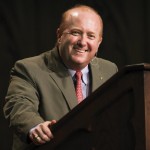 Here is Dr. R. C. Sproul, “Should Christians refuse to pay taxes when they are used to finance abortions?”
It is one of my great passions, the desire to see me, and the evangelical church take the evil of abortion more seriously, to have our hearts more deeply broken, and our actions more faithful. We have all, I fear, come to accept the status quo. We are content to vote for Republicans hoping they will give us justices that will slow down the horror. What we are generally unwilling to do is go through any kind of hardship to stop abortion. When I am asked about this, should we stop paying taxes, I am at least heartened to know that there are some willing to pay dearly to win this battle. Not paying taxes rarely ends up comfortably for those who won’t pay.
That said I can say with confidence that Christians should in fact pay whatever taxes they owe even when that money ends up financing abortions. The Christian who pays such taxes has no need to feel guilty, while the Christian that refuses to pay, however well intentioned, ought to feel guilty.
Theologians have long understood the principle that must be applied here- we are responsible for our own actions, not the actions of others. In this instance, the Bible is quite clear about our obligation to pay our taxes (Mark 12:17). It is also clear that the proper function of the state is not to finance evil, but to punish it (Romans 13). Their failure to do what God calls them to do, however, does not mean I am free to not do what I am commanded to do. That they have so horribly misused the taxes that I have paid doesn’t mean I am guilty of what they have done. I have been taxed, and when those taxes are paid, they are no longer mine. What the state does with them may be something I should speak against. It may be something I should condemn. But I am not guilty.
Remember that the same Caesar to whom Jesus commanded taxes be paid used those taxes for what may be the only thing worse than abortion. Those tax moneys financed the judgment of Pilate. They paid the salaries of the Roman soldiers. They purchased the nails that held our Lord on the cross. Those taxes crucified the Lord of Glory.
More close to home, suppose the more a husband loves his wife the less she respects him, or the more the wife respects her husband the less he loves her. In either instance we are not to try to guess the result of our behavior. We are supposed to do what God commands. We are not responsible for the results of what we do. We are responsible to obey whatsoever God commands. We are called not to success, but to obedience.
The state should repent for all misuses of taxes paid. Christians should prophesy against the state when they do evil, including financing evil. We should all be on our knees imploring God to stop the horror. But we should pay our taxes. March on Washington. Preach outside your local mill. Write your congressman. Support your local crisis pregnancy center. And, as painful as it may be, trusting in His providence, render unto Caesar the things that are Caesars, our taxes, and unto God the things that are God’s- obedience.
 Kevin DeYoung:
Jesus held Scripture in the highest possible esteem. He knew his Bible intimately and loved it deeply. He often spoke with language of Scripture. He easily alluded to Scripture. And in his moments of greatest trial and weakness—like being tempted by the devil or being killed on a cross—he quoted Scripture.
His mission was to fulfill Scripture, never disregarded, never disagreed with a single text of Scripture.
He affirmed every bit of law, prophecy, narrative, and poetry. He shuddered to think of anyone anywhere violating, ignoring, or rejecting Scripture.
Jesus believed in the inspiration of Scripture, down to the sentences, to the phrases, to the words, to the smallest letter, to the tiniest mark.
He accepted the chronology, the miracles, and the authorial ascriptions as giving the straightforward facts of history.
He believed in keeping the spirit of the law without ever minimizing the letter of the law. He affirmed the human authorship of Scripture while at the same time bearing witness to the ultimate divine authorship of the Scriptures.
He treated the Bible as a necessary word, a sufficient word, a clear word, and the final word.
It was never acceptable in his mind to contradict Scripture or stand above Scripture.
He believed the Bible was all true, all edifying, all important, and all about him. He believed absolutely that the Bible was from God and was absolutely free from error. What Scripture says God says, and what God said was recorded infallibly in Scripture.
Jesus submitted his will to the Scriptures, committed his brain to study the Scriptures, and humbled his heart to obey the Scriptures.
In summary, it is impossible to revere the Scriptures more deeply or affirm them more completely than Jesus did. The Lord Jesus, God’s Son and our Savior, believed his Bible was the word of God down to the tiniest speck and that nothing in all those specks and in all those books in his Bible could ever be broken.