
The Numbers Game

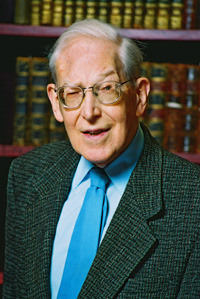
j-i-packer“I have found that churches, pastors, seminaries, and parachurch agencies throughout North America are mostly playing the numbers game—that is, defining success in terms of numbers of heads counted or added to those that were there before. Church-growth theorists, evangelists, pastors, missionaries, news reporters, and others all speak as if

(1) numerical increase is what matters most;

(2) numerical increase will surely come if our techniques and procedures are right;

(3) numerical increase validates ministries as nothing else does;

(4) numerical increase must be everyone’s main goal.

I detect four unhappy consequences of this.

First, big and growing churches are viewed as far more significant than others.

Second, parachurch specialists who pull in large numbers are venerated, while hard-working pastors are treated as near-nonentities.

Third, lively laymen and clergy too are constantly being creamed off from the churches to run parachurch ministries, in which, just because they specialize on a relatively narrow front, quicker and more striking results can be expected.

Fourth, many ministers of not-so-bouncy temperament and not-so-flashy gifts return to secular employment in disillusionment and bitterness, concluding that the pastoral life of steady service is a game not worth playing.

In all of this I seem to see a great deal of unmortified pride, either massaged, indulged, and gratified, or wounded, nursed, and mollycoddled. Where quantifiable success is god, pride always grows strong and spreads through the soul as cancer sometimes gallops through the body.

Shrinking spiritual stature and growing moral weakness thence result, and in pastoral leaders, especially those who have become sure they are succeeding, the various forms of abuse and exploitation that follow can be horrific.

Orienting all Christian action to visible success as its goal, a move which to many moderns seems supremely sensible and businesslike, is thus more a weakness in the church than its strength; it is a seedbed both of unspiritual vainglory for the self-rated succeeders and of unspiritual despair for the self-rated failures, and a source of shallowness and superficiality all round.

The way of health and humility is for us to admit to ourselves that in the final analysis we do not and cannot know the measure of our success the way God sees it. Wisdom says: leave success ratings to God, and live your Christianity as a religion of faithfulness rather than an idolatry of achievement.”

– J. I. Packer, A Passion for Faithfulness: Wisdom from the Book of Nehemiah (Wheaton: Crossway, 1995), 207-209.

Justification Quotes

judge-gavelIn the New Testament, words for salvation include: propitiation, vitally important for understanding the nature of the atonement yet only mentioned four times; Reconciliation is found just five times (all Pauline); and Redemption is not very common. But when we come to justification, we have 81 occurrences of the adjective, 100+ of the noun, 39 of the verb, and 5 of the adverb. Justification could be called the central idea in the doctrine of salvation.

John Calvin (1509-1564), “Justification is the main hinge on which salvation turns.”

Martin Luther (1483-1546), “When the article of justification has fallen, everything has fallen … This is the chief article from which all other doctrines have flowed … It alone begets, nourishes, builds, preserves, and defends the church of God; and without it the church of God cannot exist for one hour. Justification is the master and prince, the lord, the ruler, and the judge over all kinds of doctrines.”

Thomas Cranmer (1489-1556), “Justification is the strong rock and foundation of Christian religion. Whosoever denies this doctrine is not to be counted for a true Christian man but an adversary of Christ.”

John Stott, “Justification is not a synonym for amnesty, which is pardon without principle, a forgiveness which overlooks – even forgets – wrongdoing and declines to bring it to justice. No. Justification is an act of justice… When God justifies sinners, He is not declaring bad people to be good, or saying that they are not sinners after all; He is pronouncing them legally righteous, free from any liability to the broken law, because He Himself in His Son has borne the penalty of their law-breaking. We are justified by His blood.”

How can I know if I am elect?

but that is not possible; it is only to be discovered by “looking to Jesus.”1 If you desire to ascertain your own election, after the following manner shall you assure your heart before God.

Do you feel yourself to be a lost, guilty sinner? Go straight to the cross of Christ, and tell Jesus so, and tell Him that you have read in the Bible, “Whoever comes to me I will never cast out.”2 Tell Him that He has said, “The saying is trustworthy and deserving of full acceptance, that Christ Jesus came into the world to save sinners.”3 Look to Jesus and believe on Him, and you shall make proof of your election directly, for as surely as you believe, you are elect.

If you will give yourself wholly up to Christ and trust Him, then you are one of God’s chosen ones; but if you stop and say, “I want to know first whether I am elect,” you do not know what you are asking. Go to Jesus, just as you are, in all your guilt. Leave all curious inquiry about election alone. Go straight to Christ, and hide in His wounds, and you shall know your election. The assurance of the Holy Spirit shall be given to you, so that you shall be able to say, “I know whom I have believed, and I am convinced that he is able to guard until that Day what has been entrusted to me.”4

Christ was at the everlasting council-He can tell you whether you were chosen or not; but you cannot find it out in any other way. Go and put your trust in Him, and His answer will be, “I have loved you with an everlasting love; therefore I have continued my faithfulness to you.”5 There will be no doubt about His having chosen you when you have chosen Him.

Sons we are through God’s election,
Who in Jesus Christ believe.

1 – Hebrews 12:2
2 – John 6:37
3 – 1 Timothy 1:15
4 – 2 Timothy 1:12
5 – Jeremiah 31:3

From “Morning and Evening,” written by C.H. Spurgeon, revised and updated by Alistair Begg and made available by Truth for Life.