Ten Basic Facts About The New Testament Canon

Mike Kruger, author of Canon Revisited: Establishing the Origins and Authority of the New Testament Books (Crossway, 2012) and the forthcoming The Question of Canon: Challenging the Status Quo in the New Testament Debate (IVP, 2013), has a helpful series on the New Testament canon, linked below, “designed to help Christians understand ten basic facts about its origins. This series is designed for a lay-level audience and hopefully could prove helpful in a conversation one might have with a skeptical friend.” Here are the ten facts he covers:

1. “The New Testament Books are the Earliest Christian Writings We Possess”
2. “Apocryphal Writings Are All Written in the Second Century or Later”
3. “The New Testament Books Are Unique Because They Are Apostolic Books”
4. “Some NT Writers Quote Other NT Writers as Scripture”
5. “The Four Gospels are Well Established by the End of the Second Century”
6. “At the End of the Second Century, the Muratorian Fragment lists 22 of Our 27 NT Books”
7. “Early Christians Often Used Non-Canonical Writings”
8. “The NT Canon Was Not Decided at Nicea—Nor Any Other Church Council”
9. “Christians Did Disagree about the Canonicity of Some NT Books”
10. “Early Christians Believed that Canonical Books Were Self-Authenticating”

Here’s a link to the links:

HT: Jastin Taylor
Poem – The Book of Life

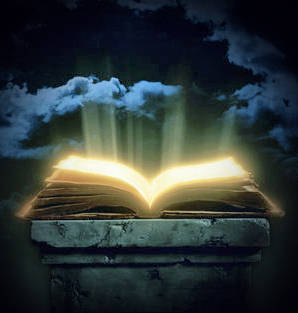
bookoflifeThe Book of Life, by John Piper

Before the night he was betrayed,
The Lord of glory died;
Indeed before the world was made,
The Lamb was crucified.

Before the sin, the spear, the lash
(Eternal was the flood!)
God put his inkwell at the gash,
And filled it with his blood;

Then with his crimson ink and quill,
A holy world compiled,
And wrote his kind and costly will:
The name of ev’ry child.

Then, finally, with tears, he took
A blade to foreordain,
And graved the title of the book:
The Life, the Lamb, the Slain.

* * *

And if your name is written there,
Though you may be the least,
You will not fall to any snare,
Nor bow before the Beast.

You will not marvel when it roars,
Nor any feat admire,
Nor drink the poison that it pours,
Nor taste the Lake of Fire.

But you will live forevermore,
Where dusk and dawn are done.
The Lamb will be the moon, and soar
Around an endless Sun.

And if, lamblike, you taste his shame
And finish life abased,
Remember, written one, your name
Will never be erased.

* * *

And so you ask, “How may I know
My name is in the Book?
May I beseech my God to show
The page where I may look?”

No. None may peer within by prayer,
Nor if he wait, or strive.
You know your name is written there,
Because you are alive.

Rejoice, my child, all heaven sings
When you make demons fall.
And yet to be inscribed with kings
In heav’n surpasses all.

* * * * * * *

Revelation 13:7 Also it was allowed to make war on the saints and to conquer them. And authority was given it over every tribe and people and language and nation, 8 and all who dwell on earth will worship it, everyone whose name has not been written before the foundation of the world in the book of life of the Lamb who was slain. 9 If anyone has an ear, let him hear…

Purgatory, Indulgences, the Treasury of Merit and the Gospel of Jesus Christ

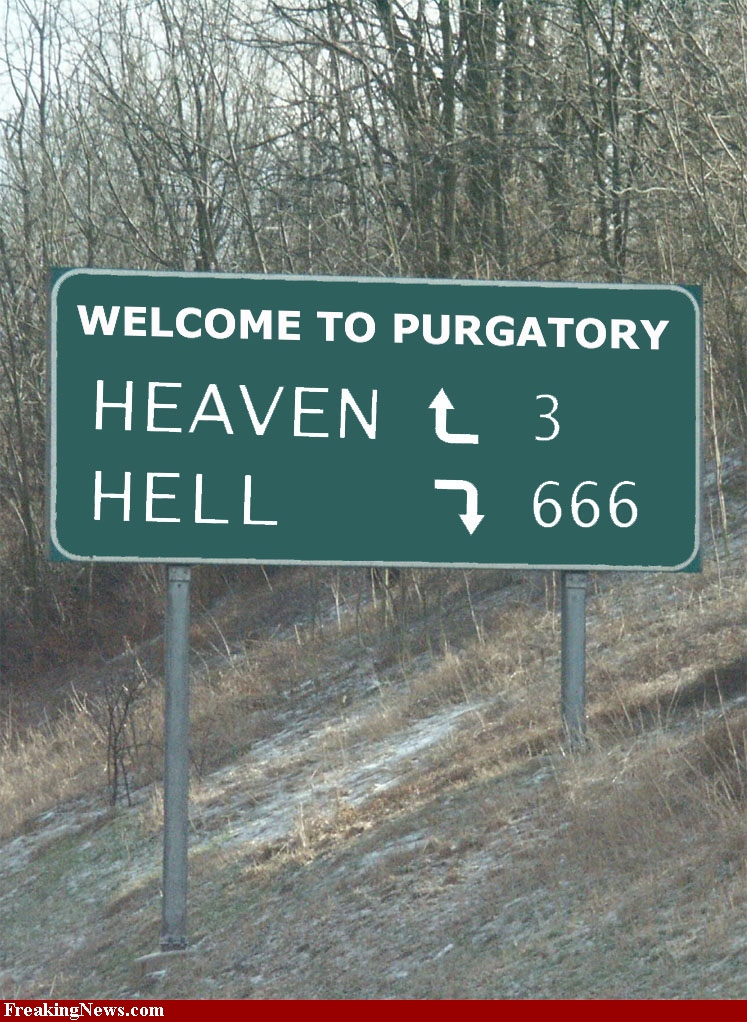
purgatory2As you may have heard in the news this week, the new Pope (Francis), wishing to make use of the new social media announced that indulgences would be granted not only to those who attend the upcoming Roman Catholic Youth Day celebration in Brazil (a week-long event which starts tomorrow, July 22), but also to those who follow the event online, and especially follow his tweets on twitter. Some people seem very surprised by this announcement and yet the only thing new about it is the twitter component. The doctrine of Indulgences remains a central teaching of the Roman Catholic Church.

PURGATORY: (Latin: purgatorium; from purgare, “to purge”) – the condition, process, or place of purification. This is a place of PURGING or temporary punishment in which the souls of those who die in a state of grace are made ready for heaven.

The doctrine of purgatory is an integral doctrine to the Roman Catholic understanding of redemption. It is the place where the vast majority of even professing Christians go upon their death.

As recently as the Roman Catholic Catechism, the Church declares that if a person dies with any spot or blemish or stain on their soul – any impurity – instead of going directly to heaven they must first go to this place of purging which is this intermediate state between earth and heaven. Rome makes clear that purgatory is not hell. It is not a place of the punitive wrath of God, but it is a place for the corrective wrath of God, as it were, where the sanctifying process is continued through the crucible of fire.

A person may be there for two weeks or they may be there for two hundred million years – as long as it takes for a person to become truly righteous – inherently righteous, and once that process is completed, they can be declared justified by God and released into heaven.

I’d now like to go through all the Bible verses that teach the doctrine of purgatory ________________________.

Ok.. well that did not take long, because there are none! That’s right, we do not find either the word or the concept of “purgatory” in the Bible. It is a tradition of the Roman Catholic Church that developed over a long period of time. Continue reading