

Does 2 Peter 2:1 Deny Particular Redemption?

questionmarkredstandingDoes 2 Peter 2:1 Deny Particular Redemption?

2 Peter 2:1 But false prophets also arose among the people, just as there will also be false teachers among you, who will secretly introduce destructive heresies, even denying the Master who bought them, bringing swift destruction upon themselves.

When someone tells me that they are a 4 point Calvinist, it is almost always the case that their struggle is with the “L” in the famous TULIP acrostic, namely so called “Limited Atonement.” “Definite Atonement” or “Particular Redemption” might be better terms to use (though they destroy the acrostic TULIP into “TUDIP” or even worse, “TUPIP” – hardly good memory devices).

Concerning the letters of Paul, the Apostle Peter was right when he related that some things are “hard to understand” (2 Peter 3:16). Sometimes it takes a good deal of prayer, hard work and study to determine what the Bible is teaching on certain matters. For my part, I have not always been a 5 point Calvinist and have great sympathy for those who struggle with these very vital “doctrines of grace.” I tend to think however that many do not struggle with them nearly enough.

Our traditions can be so strong that we are often blind to them in our own thinking. We all have our blind spots. Part of my own intellectual struggle with the doctrine of Limited Atonement stemmed from a faulty understanding of certain biblical texts. One of them was 1 John 2:2, another being 2 Peter 2:1. For many years, I thought that these verses were irrefutable texts that rejected the idea that Christ died to infallibly secure the salvation of a certain group (His people, His sheep, His friends, His elect – Particular Redemption) and were proof that Christ died for all people, at all times, in every part of the world (Universal Redemption). I wrote an article some time back called “The Divine Intention of the Cross” found here, in which I made a case for Particular Redemption from scripture.

I also wrote a short article on 1 John 2:2, found here, but also wanted to post a few brief comments I came across today made by Dr. James White on 2 Peter 2:1 in a comment section on a blog.

Regarding 2 Peter 2:1, Dr. White writes:

1) Derive soteriological truths from soteriological passages (this isn’t);
2) “Lord” is despotes (sovereign title) not kurios (soteriological title);
3) Is this the Father or the Son? Can it be proven?
4) “bought” (agorasanta) has no purchase price mentioned, which would be the only time that happens in the NT *if* this is a soteriological reference;
5) The passage says the Master did not *potentially* purchase these men, but that He did, in fact, purchase these men (sovereignty, not redemption). Compare Deuteronomy 32:5-6 for parallel use in the OT.
6) Derive the extent of the atonement from Hebrews that discusses it, not from 2 Peter’s reference to false teachers.

Though obviously these six short comments are not full rebuttals to the Arminian understanding of the verse, there is enough here to hopefully whet the appetite for further study.

For anyone interested in a more thorough discussion of 2 Peter 2:1, I would recommend an article written here by Simon Escobido. Of course, John Owen’s “The Death of Death in the Death of Christ” is the classic work on this subject.
The Results Depend on God

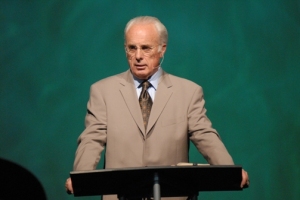
john-macarthurTranscript excerpt from spoken at the Truth Matters Conference, 2011:

Some people say, “You know, we have to kind of change the message cause we’re not getting results. We’ve got to deal with this message because it’s not very effective.” Really? Well the next point I want to give you is this. If you really understand the glory of the gospel, you know the results depend on God. Okay? The results depend on God.

Remember the parable of the sower? What does it say about the sower? Nothing, absolutely nothing, it doesn’t say whether he uses his left hand, right hand, throw high, low, curve ball. It didn’t say anything about the sower.

What does it say about the bag he carried the seed in? Nothing, didn’t say anything about that.

What does it say about the method he used to throw it? Nothing, absolutely nothing. It’s a parable about soil, it doesn’t even say anything about the seed other than the seed is the truth, the gospel. It’s not about your technique in throwing the seed, it’s about the state of the soil. I don’t do soil work. That’s Holy Spirit work.

I love that passage in Mark, the parable where Jesus says the farmer sows the seed and goes to sleep because he has no idea how it grows. That’s right. You say, “We not getting the results.” Really, you think you’re in charge of results? I hear there’s some discussions, “We have to overcome consumer resistance.” Lots of luck. Consumer resistance is called depravity. Consumer resistance means the sinner is unable and unwilling, left to himself.

Look at (2 Cor 4) verse 3, this is so… this is so reasonable, this whole presentation of Paul makes so much sense, it just flows the way you think. Some of you are already saying, “Well, it gets discouraging. Paul, look, you’re going from town-to-town-to town, the churches are small, the churches are full of trouble. The town rejects you. The leaders reject you. The populace rejects you. They want to kill you. The Jews are after you. You’re really not having much success.

Here’s his answer. “Our gospel is veiled, it is veiled to those that are perishing.” That’s a category of people. That’s the default position of the entire human race. I’m not the problem.

Well how did they get like that? Verse 4, “The god of this world has blinded the minds of the unbelieving so that they might not see the light of the gospel of the glory of Christ who is the image of God.”

The problem is not your technique, the problem is the heart. You have all these people coming up with pragmatical ways to do effective evangelism. Really? It’s overcome consumer resistance to make the message more palatable. We’ll say more about that in some of the other portions of Scripture. You put yourself in the position of…I wrote a book Slave, some of you seen the book Slave? Imagine trying to sell that message in a world full of slaves. By the way, a crucified Jew in Jerusalem who was rejected by His people, rejected by His leaders, who was executed as a common criminal by the Romans rose from the dead, He’s the true and living God, the only Savior and He wants you to be His slave. Oh really? And by the way, you have to reject all other masters, confess your sin, repent and turn to Him as the only source of salvation.

Who is this again? A crucified Jew? This is what Paul is preaching in the Gentile world. And you need not only to put your faith in Him, but you need to confess Him as Lord and you’re His slave.

That’s a hard sell. You can’t overcome consumer’s resistance in a pagan/Gentile world when you’re talking about a crucified Jew to Gentiles who have no Old Testament background, who have no understanding of the sacrificial system, and you’re asking them to believe that this crucified Jew is God incarnate, the only Savior, the only true and living God, the only hope of salvation and you’re supposed to become His slave. That won’t fly, humanly speaking. That’s why it says in 1 Corinthians 1, as we will see later, preaching the cross was…what?…foolishness.

The results depend on God. That’s been the joy of ministry. I’m in charge of sowing, I’m not in charge of growing. I can’t give life. God alone gives life. And I love this, watch this, verse 5, “We do not preach ourselves.” Some method that we’ve concocted, some personal stories about us. “But Christ Jesus as Lord,” and we’re calling everybody to become slaves for Jesus’ sake.

You say, “Well how in the world do you expect to have any results at all with a message like that?”

Here’s the answer, verse 6, “Oh, for God who said light shall shine out of darkness who is the one who has shone in our hearts to give the light of the knowledge of the glory of God in the face of Christ.”

Is that not the most profound verse? You know what he’s saying? He’s saying creation, God said, “Let there be light.” And He spoke it into existence. That’s the model for salvation. God steps into the darkness of the sinner’s heart and turns on the light of the knowledge of the glory of God in the face of Christ.

This is what makes ministry so thrilling. If you get all wrapped up in results, you’re going to wind up preaching yourself and your technique and your style. You’re going to get caught up in your wardrobe and your shtick and your music and your cultural adaptations.

Well, if you understand the glory of the gospel, you also understand your personal insignificance. So what have we been saying? If you understand the glory of the gospel? Just review; you understand the superiority of the New Covenant, the mercy of ministry, the necessity of a pure heart, the fact that the Scripture is to be preached accurately, that spiritual results depends solely on God. And that you are personally insignificant… insignificant.

The Worst Sinner You Know

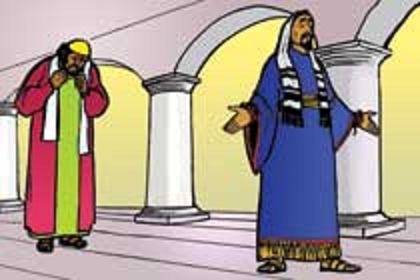
pharisee

“Unless you know yourself to be the lowest of sinners you will not see the greatness of your Savior. It is the one who is forgiven of much that loves much in response (Luke 7:41-49).”

This and other excellent insights from Joe Thorn can be found in an article if not inappropriate. So let me tell you up front that I am convinced the answer to this question, when posed to a Christian, ought to always be, “Yes. I am the worst sinner I know.” Many balk at this idea–pointing to people who are constantly overwhelmed by guilt and find no relief. Such theology can seem cruel. Yet when properly understood this leads to deliverance rather than to despair. Knowing ourselves and knowing our Savior highlights our transgressions and Christ’s glories in such a way that we are both humbled and made happy by the grace of God in Christ.

The Apostle Paul wrote of himself in a way that demonstrates what he believed about himself. First he said he was “least of the Apostles” (1 Cor. 15:9), then “least of all the saints” (Eph. 3:8), and, at the end of his life, he saw himself as the “foremost” of sinners (1 Tim 1:15). This, combined with Paul’s ongoing struggle with sin described in Romans 7:13-25, gives a picture of the Apostle’s self-image. Though now a saint he remained, in his own eyes, the worst sinner he knew due to his wicked past and even his present corruption. Note what the Second London Confession has to say about the sin nature in believers:

The corruption of nature, during this life, does remain in those that are regenerated; and although it be through Christ pardoned and mortified, yet both itself, and the first motions thereof, are truly and properly sin. – Second London Confession, VI.5

To say that you are the worst sinner you know is not to compare yourself to others. It is a confession of one’s own weakness and transgressions. What enables us to make such a judgment is that we know our sins better than we know anyone else’s. We know (at least in part) our motives, thoughts, and desires. We know not only those visible sins that others may take notice of, but also those that go unnoticed. We do not merely sense this as sinners, but we sense it primarily as saints. We feel our sins, and know the greatness of their heinousness in light of God’s patience toward us, and Christ’s sacrifice for us. In this we find deep humility. Continue reading