
Law and Gospel

for it depends on this distinction.” – Hermann Sasse, Here We Stand: Nature and Character of the Lutheran Faith, trans. by Theodore G. Tappert, (New York: Harper & Bros., 1938). p. 114.

C. F. W. Walther (known in his own day as the American Luther) says:

“The true knowledge of the distinction between the Law and the Gospel is not only a glorious light, affording the correct understanding of the entire Holy Scriptures, but without this knowledge Scripture is and remains a sealed book.” – C.F.W. Walther, The Proper Distinction Between Law and Gospel.

The Bible will be an impenetrable mystery as long as we are confused about this.

THE LAW refers to everything God commands of us in Scripture. “Do this and you shall live.” These commands are found throughout the entire Bible, Old and New Testament alike. The Law is holy, righteous and good. There is nothing wrong with the Law at all. It has its source in God Himself. The problem is us and our total inability as sinners to keep it.

The bad news gets even worse – to break even one part of the Law makes us guilty of breaking it all as a whole.

“For whoever keeps the whole law but fails in one point has become accountable for all of it.” (James 2:10).

THE GOSPEL refers to Jesus Christ – His Person and His work. The word “gospel” means “glad tidings” or “good news.” It is good news concerning something entirely outside of us or our actions. The news is an announcement concerning all that Christ has done for sinners through His sinless, perfect life, fulfilling all the demands of the Law; as well as His substitutionary death and resurrection. Christ died for our sins and lived for our righteousness. The Gospel is good news about what God has done for us in Christ.

“When God gives orders and tells us what will happen if we fail to obey those orders perfectly, that is in the category of what the Reformers, following the biblical text, called law. When God promises freely, providing for us because of Christ’s righteousness the status he demands of us, this is in the category of gospel. It is good news from start to finish. The Bible includes both, and the Reformers were agreed that the Scriptures taught clearly that the law, whether Old or New Testament commands, was not eliminated for the believer. Nevertheless, they insisted that nothing in this category of law could be a means of justification or acceptance before a holy God … The law comes, not to reform the sinner nor to show him or her the “narrow way” to life, but to crush the sinner’s hopes of escaping God’s wrath through personal effort or even cooperation. All of our righteousness must come from someone else-someone who has fulfilled the law’s demands. Only after we have been stripped of our “filthy rags” of righteousness (Isa. 64:6)- our fig leaves through which we try in vain to hide our guilt and shame-can we be clothed with Christ’s righteousness. First comes the law to proclaim judgment and death, then the gospel to proclaim justification and life.” – Modern Reformation: Good News: The Gospel for Christians (May/June 2003)

Law then is everything in the Scriptures that commands and gospel is everything in the Scriptures that promises God’s favor in Christ. If we confuse these, we’ll weaken the law, lowering the bar to something that we can (or think we can) actually do, and we’ll make the gospel anything but good news.

The Law is holy. It is also unbending, unyielding, and brutal in its harsh demands. Continue reading
What is the Septuagint?

The following is an interview with Peter Gentry, Professor of Old Testament Interpretation at The Southern Baptist Theological Seminary.

Dr. Gentry wrote a very helpful essay on the Septuagint for the ESV Study Bible.

He is currently editing Ecclesiastes and Proverbs for the Göttingen Septuagint Series and is giving leadership to the Hexapla Institute.

What is meant by the “Septuagint”?

In a strict or technical sense, made before the middle of the Third Century B.C. Within another hundred and fifty years, all the books of the Hebrew Bible had been translated into Greek and in a loose and non-technical sense, the term Septuagint is used for all of the Greek translation(s) of the Jewish Scriptures (what Christians call the Old Testament).

Similar to the history of the King James Version of the Bible, which was revised regularly from the time of translation in 1611 into the late Nineteenth Century, the original translation in Greek was being revised fifty or a hundred years later. Precise determination of what is the first translation as opposed to later revision is not clear in every book. Accurate editions of this text are in the process of preparation by the Septuagint Institute in Göttingen, Germany. All of these factors contribute to uncertainties as to exactly what we mean by the Septuagint.

When was the Pentateuch first translated into Greek, and when were the Prophets and Writings translated?

Most scholars agree that the Pentateuch was translated in Egypt during the Third Century b.c., possibly around 280, according to the testimony of the early church fathers. The books in the Prophets and Writings sections of the Hebrew Canon were translated later, most of them by 130 b.c. Systematic, thoroughgoing revisions were made from possibly 200 b.c.–a.d. 200.

Do we know what motivated Jews to translate the Hebrew Bible into Greek?

A number of theories have been proposed, including the following: Hellenistic Jews required Greek scriptures (1) for their religious life and worship; (2) for the education of their children; (3) as a legal document; or (4) as cultural heritage for the Alexandrian royal library. Others think that a new authoritative edition of Homer (c. 150 b.c.), which used textual criticism to establish its text, became a model and incentive for the Alexandrian Jews to have their own authoritative text of the Hebrew Scriptures.

Is it true that there were 72 translators?

No. This number comes from a piece of propaganda called The Letter of Aristeas (c. 150–100 b.c.), which purported to explain the origin of the Greek translation of the Pentateuch in light of criticisms at the time. The name Septuagint comes from the Latin word for 70, i.e., septuaginta. The Septuagint is commonly abbreviated LXX, the Roman numeral for 70.

How many translators of the Greek Pentateuch were there then?

Probably just five, one for each book, according to the rabbinic traditions (Aboth of Rabbi Nathan 37; Sôferîm i.7).

Should it bother evangelicals who believe in the inerrancy of Scripture that the NT writers sometimes quote the LXX where it differs from the Masoretic text?

The NT writers sometimes took the Septuagint wording and applied it to a new circumstance (e.g., Acts 14:11 borrowed words from Ps. 118:22; 2 Cor. 6:18a borrowed words from 2 Sam. 7:14 and other texts). At other times the NT writers corrected the Septuagint reading in order to bring it into greater conformity to the Hebrew texts (e.g., see the use of Isa. 28:11–12 in 1 Cor. 14:21, or the use of Isa. 63:10 in Eph. 4:30). The use of the Septuagint doesn’t imply that the NT writers thought that the original Hebrew was mistaken; rather, it means that they affirmed the truthfulness of that which they were quoting or adapting in their own writing.

Why is it important to study the Septuagint?

Several reasons make study of the Septuagint important: (1) It provides extremely early textual testimony to the Hebrew Scriptures; (2) it provides us with an extremely early understanding of Hebrew grammar and word meanings otherwise unknown to us; (3) it essentially provides for us the earliest commentary on the Hebrew text (since all translation involves interpretation); (4) it serves as a key witness to the thought and worldview of Second Temple Judaism (c. 450 b.c.–a.d.70), since it was produced in the intertestamental period; (5) it is the key to understanding the Greek of the NT, since it was used so often by the apostles and by the early church; (6) it can shed light on translation debates today.

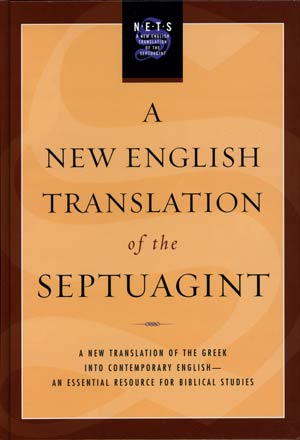
Septuagint-NETSWhat are some of the projects currently underway in Septuagint studies that may be of interest?

NETS is a new translation of the Greek Jewish Scriptures, entitled A New English Translation of the Septuagint and the Other Greek Translations Traditionally Included Under that Title (and abbreviated as NETS), which is also available for free online. An accompanying commentary series is also planned.

For those who want to learn more about the Septuagint, is there a good introductory text that you would recommend?

Yes: An Invitation to the Septuagint, by Karen Jobes and Moises Silva.

Air Travel – Mysteries Unveiled

passion — and questions.

If you’d like the answers, I highly recommend Patrick Smith’s new book, “Cockpit Confidential.” Mr. Smith is a pilot and blogger; much of the book’s format and contents are on display at his Web site, AskThePilot.com, or in the archives of the “Ask the Pilot” column he wrote for Salon.com for years.

But as a frequent flyer, I’d much rather have the book, which is a far more comprehensive book of questions and answers about airplanes, airports, airlines and the psychology of flying. Here are some excerpts — factoids that every flier should know:

“Turbulence scares me to death. Do I have reason to be afraid?”

No. “A plane cannot be flipped upside-down, thrown into a tailspin or otherwise flung from the sky by even the mightiest gust or air pocket. Conditions might be annoying and uncomfortable, but the plane is not going to crash.”

“If all of a jet’s engines were to fail, can the plane glide to a landing?”

Yes. “There’s no greater prospect of instant calamity than switching off the engine in your car when coasting downhill. The car keeps going, and a plane will too.”

“I understand that planes can jettison fuel. Is this done to lighten the load for landing?”

Yes. “For a few reasons, the obvious one being that touching down puts higher stresses on an airframe than taking off.” But Mr. Smith also points out that only some airplane models have the ability to dump fuel — the big ones. “The 747, the 777, the A340, and the A330 all can dump fuel. A 737, an A320, or an RJ cannot. These smaller jets must circle or, if need be, land overweight.”

“What happens when lightning hits an airplane?”

Nothing. The energy “is discharged overboard through the plane’s aluminum skin, which is an excellent electrical conductor.”

“Are the contents of airplane toilets jettisoned during flight?”

No. “There is no way to jettison the contents of the lavatories during flight.” Instead, the toilet contents are vacuumed out into a tank truck at the end of the flight.

“What do the dings and chimes mean?”

There are two kinds of chimes. “The first kind is basically just a phone call” from the cockpit to the flight attendants; it means, “pick up the intercom.” The other type is a “signaling device for the cabin crew” — when the seat-belt sign is turned on or off, when the plane reaches 10,000 feet (so that electronics are o.k. to use) and when initial descent begins, so it’s time to prepare the plane for landing.

“Many of the three-letter codes for airports make no sense.”

The non-obvious ones are probably holdovers from the airports’ previous names. “MCO is derived from MCCoy Field, the original name for Orlando International. Chicago O’Hare’s identifier, ORD, pays honors to the old Orchard Field.”

I should mention, by the way, that this book is frequently funny. For example, the author notes, “A campaign was launched in 2002 to change the identifier for the Sioux City, Iowa, from SUX to something less objectionable. The campaign failed.”

“We are told that modern commercial airplanes can essential fly themselves.”

Emphatically no. “A plane is able to fly itself about as much as the modern operating room can perform an operation by itself.” Autopilot is a tool, but “you still need to tell it what to do, when to do it, and how to do it.”

“Why the annoying rules pertaining to window shades, seat backs, tray tables, and cabin lights during takeoffs and landings?”

“Your tray has to be latched so that, in the event of an impact or sudden deceleration, you don’t impale yourself on it. The restriction on seat recline provides easier access to the aisle and also keeps your body in the safest position.” Raising your window shade, meanwhile, “Makes it easier for the flight attendants to assess any exterior hazards— fire, debris — that might interfere with an emergency evacuation.” Dimming the lights is the same precaution.

“Is it true that pilots reduce oxygen levels to keep passengers docile?”

No.

“Could some crazy or ill-intentioned person open one of the doors during flight?”

No. “You cannot — I repeat, cannot — open the doors or emergency hatches of an airplane in flight. The cabin pressure won’t allow it.”

Are cellphones and gadgets really dangerous to flight?

It depends. Laptops have to be put away for takeoff and landing “to prevent them from becoming high-speed projectiles during a sudden deceleration or impact.” As for tablets and e-book readers, “it’s tough to take a prohibition seriously now that many pilots are using tablets in the cockpit.” That’s why the Federal Aviation Administration is considering relaxing the ban on those gadgets.

And can cellphones really disrupt cockpit equipment? Probably not. “I’d venture to guess at least half of all phones, whether inadvertently or out of laziness, are left on during flight. If indeed this was a recipe for disaster, I think we’d have more evidence by now.”

My favorite bits of “Cockpit Confidential” are Mr. Smith’s rants. He’s a frequent passenger as well as a pilot, so he’s well equipped to rail about the stupidity of the methods for boarding a plane, and about the Transportation Security Administration’s expensive, absurdly misguided efforts. (One of the book’s funniest passages: the tale of the time he tried to carry airline silverware onto a flight, “part of my hotel survival kit.” The T.S.A. agent confiscated them — even though it was the same silverware the airline itself issues to passengers in flight!)

Truth is, the world would be a better place if the airline industry weren’t so secretive in the first place. The actions of pilots are hidden behind safety-reinforced doors, they speak to the flight attendants with signals and jargon and the airlines’ behavior in scheduling and pricing flights are always mysterious. They’d serve all of us better, including themselves, by offering a little transparency.

Until that day arrives, “Cockpit Confidential” is the document that belongs in the seat-back pocket in front of you.