
True Repentance v. Regret

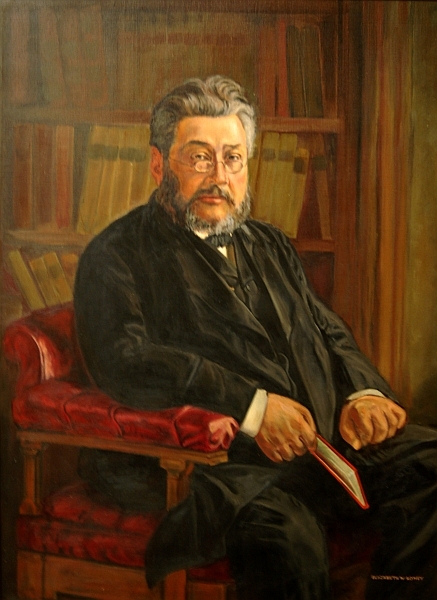
spurgeon-portrait-roneySome quotes from C. H. Spurgeon to ponder:

“True repentance has a distinct and constant reference to the Lord Jesus Christ. If you repent of sin without looking to Christ, away with your repentance. If you are so lamenting your sin as to forget the Savior, you have a need to begin all this work over again. Whenever we repent of sin, we must have one eye upon sin and another upon the cross; or, better still, let us have both eyes upon Christ, seeing our sin punished in him, and by no means let us look at sin except as we look at Jesus. A man may hate sin just as a murderer hates the gallows but this does not prove repentance. If I hate sin because of the punishment, I have not repented of sin; I merely regret that God is just.

But if I can see sin as an offense against Jesus Christ, and loathe myself because I have wounded him, then I have a true brokenness of heart. If I see the Savior and believe that those thorns upon his head were put there by my sinful words; if I believe that those wounds in his heart were made by my heart-sins; if I believe that those wounds in his feet were made by my wandering steps, and that the wounds in his hands were made by my sinful deeds, then I repent after a right fashion. Only under the cross can you repent. Repentance elsewhere is remorse, which clings to the sin and only dreads the punishment. Let us then seek, under God, to have a hatred of sin caused by a sight of Christ’s love.”

“Go as you are to Christ, and ask him to give that tenderness of heart which shall be to you the indication that pardon has come; for pardon cannot and will not come unattended by a melting of soul and a hatred of sin. Wrestle with the Lord! Say, I will not let you go except you bless me. Get a fast hold upon the savior by a vigorous faith in his great atonement. Oh! May his spirit enable you to do this! Say in your soul, here I will abide, at the horns of the altar; if I perish I will perish at the foot of the cross. From my hope in Jesus I will not depart; but I will look up and still say, savior, your heart was broken for me, break my heart! You were wounded; wound me! Your blood was freely poured forth, for me; Lord, let me pour forth my tears that I should have nailed you to the tree. Oh Lord, dissolve my soul; melt it in tenderness, and you will be forever praised for making your enemy your friend. May God bless you, and make you repent, if you have not repented; and if you have, may he enable you to continue in it all your days, for Jesus Christ sake. Amen.”

“Psalm 51 is the photograph of a contrite spirit. Oh, let us seek after the like brokenness of heart, for however excellent our words may be, yet if the heart is not conscious of the blackness and hell-deservingness of sin, we cannot expect to find mercy with the Judge of all the earth. If the Lord will break your heart, consent to have it broken; asking that he may sanctify that brokenness of spirit to bring you in earnest to a savior, that you may yet be numbered with the righteous ones.”

What we should all be about….

Dr. R. C. Sproul, Jr, writes:

Sproul JrIt is false to say that what we don’t know can’t hurt us, especially when it comes to the Bible. If ever there were anything we need to know, it is the very Word of God. That said, what is in all likelihood worse than what we don’t know about the Bible is what we do know that just isn’t so. Consider the Great Commission.

Go Into All the World

This, of course, is something we ought to be infinitely familiar with. These are not just the words of Jesus, as if that weren’t enough, but the “last” words of Jesus, His parting command just before He ascends to His heavenly throne. Not only that, but, as we might expect, what He commands is of eternal consequence. Jesus doesn’t tell the disciples to wash behind their ears or to remember to send thank-you cards after Christmas. No, Jesus tells His disciples to bring in the lost, to go to the four corners of the world that all the elect might be redeemed, forgiven, adopted.

And that’s where we stop. It is not only true, but a vital truth, that the Great Commission includes the call to preach the good news, to tell others about the life, death, and resurrection of Jesus, to call all men everywhere to repent. It is also vitally true that this is not at all the whole of the Great Commission.

Our Gospel is Too Small

Perhaps because we are selfish, or perhaps because we live in an era of cultural decline, too many in the church have adopted a narrow view of the gospel. Jesus, I am told, came to save my soul. Once that is accomplished, my sole calling is to be used by Him to seek the salvation of others. If God should so bless, these new believers in turn have as their sole calling the winning of still more souls. The good news, under this perspective, is that Jesus came to save sinners.

Yes, of course, Jesus came to save sinners. However, He did not come just to save souls. He came to save bodies. He came to save families. He came to save churches. He came to save communities. He came to save nations. He came to save, to redeem, to remake the whole groaning creation. He calls us, the church, His bride, to be the Eve to His Adam, a help suitable to Him in the great work of dominion.

We need not leave the Great Commission to see this. The command, along with the fullness of the gospel, is there already. We are called here to make disciples of the nations. Now some might argue that this still focuses on the winning of souls. “Nations,” in this view, isn’t the political or cultural institutions of a given land. Instead, it refers to the need to take the message to the outermost parts of the world. We are not to sit on our haunches, content that we and our kindred are redeemed, but we are to cross land and sea, seeking by the Spirit to make children of hell into the children of God.

Discipling Nations in Obedience

Fair enough. Even if this part of the Great Commission is focused on soul winning, what do we do with the next part — “teaching them to observe all that I have commanded”? Jesus certainly commanded throughout His earthly ministry that we repent, that we believe on His name. But is that all that He commanded? Did He not also command us to be meek, to be peacemakers, to mourn? He commanded that we should hunger and thirst for righteousness. He, in turn, told us where to find that righteousness, reminding us that not one jot or tittle of the law would pass away. He taught us to pray that His kingdom would come on earth as it has in heaven. How would we know such was happening? Because His will would be done here, as it is there.

Our labors, then, in instructing the found, in calling them toward godliness, in pursuing obedience, are not distractions from the Great Commission but fulfillments of it. Of course, we must seek His righteousness, that righteousness that can become ours only by the faith He must first give us. But we are called also to seek His kingdom. That kingdom, as the Lord’s Prayer demonstrates, is not just an invisible realm within the hearts of believers. Rather, it is everywhere, especially where His own joyfully confess Him.

Discipling the nations, teaching them to observe all that He has commanded, then, isn’t polishing the brass on a sinking ship. It is instead cultivating the mustard seed. A failure to disciple the nations even as we evangelize them, on the other hand, isn’t to be about the most important work. It is instead to run the ship aground.

The social gospel was all social and no gospel. Mere pietism, on the other hand, is impious. We are to proclaim the lordship of Christ over our souls, over our bodies, over our families, over our churches, over our communities, over our nations, over the whole of the groaning creation. So, let us repent and preach the good news, that the kingdom of God has come, that Jesus is Lord, to the glory of the Father, and that of the increase of His government there will be no end.

This post first appeared in Tabletalk magazine, June 2012.

Judge Not! (Revisited)

In an article titled, “Yes, We Are Judgmental (But Not In the Way Everyone Thinks),” Kevin DeYoung writes:

Evangelical Christians are often told not to judge. If there is one verse non-Christians know (after, perhaps, some reference to the “least of these”) is that’s Jesus taught people, “Judge not, that you be not judged” (Matt. 7:1). Of course, what the casual Christian critic misses is that Jesus was not calling for a moratorium on moral discernment or spiritual evaluation. After all, he assumes five verses later that his followers will have the wherewithal to tell what sort of people in the world are dogs and pigs (Matt. 7:6). Believing in the sinfulness of sin, the exclusivity of Christ, and moral absolutes does not make one judgmental. Just look at Jesus.

But this doesn’t mean Matthew 7:1 has nothing to teach conservative Christians. Like everyone else on the planet, we have a propensity to assume the worst about people, to happily pass on bad reports, and to size up individuals and situations without knowing all the facts (or even half the facts). I’m not talking about disciplining wayward church members, or having hard conversations about people caught in sin, or refusing to ever take someone’s past behavior into account, or being hopelessly naive about the way the world works, or refraining from the public exchange of ideas, or suspending all our powers of discernment until we understand something or someone with omniscience. I’m talking about the all too natural tendency to shoot first and ask questions later (or not at all).

Is there a piece of biblical wisdom more routinely ignored on the internet, not to mention in our own hearts, than Proverbs 18:17?—”The one who states his case first seems right, until the other comes and examines him.” I’ve never been accused of serious misconduct that I knew to be patently false or horribly misunderstood. But if I am someday, I hope folks will remember the book of Proverbs. “”If one gives an answer before he hears, it is his folly and shame” (Prov. 18:13). Too often we are quick to speak and slow to listen. The world, the flesh, the devil, and the internet want us to rush to judgment, when the Bible urges us to suspend judgment until we’ve heard from both sides. It happens all the time: pastors sinfully judge parishoners based on hearsay, church members criticize pastors without knowing the whole story, citizen assume the worst about politicians whenever another Scandalgate emerges, kids attack their siblings at the first whiff of error.

Most of us go through life hearing dozens of reports and accusations about celebrities, athletes, pastors, and people we know, operating under the unwritten rule that where there’s smoke there must be a fire. And that’s often true. But arsonists also light fires. Sometimes the cloud of controversy conceals a raging inferno of wrongdoing. But sometimes the pungent smell of smoke turns out to be crumbs in the toaster. Best not to yell “Fire!” in a crowded building, only to find out later your neighbor likes crispy Eggos.

Some readers may wonder what has prompted this post. Nothing in particular. And everything. There is no fresh incident which inspired these thoughts. Rather, I’m writing because of the sin that I know lurks in my own heart and because of the way the blogosphere and twitterverse demand full scale denunciations the way rambunctious eight year-olds demand pixie sticks. Give them what they want and they will only ask for more.

As Christians we realize that sin deserves rebuke and the sinned against should have our deepest compassion. But we should also remember from the last days of our Lord that believing every accusation can be just as bad as making them. As long as there is Jesus, we have to allow that “controversial” and “accused” do not always mean “troublemaker” and “guilty.” We should use the same measure with others that we would want used with us, which means an open heart and an open mind. Do you want people assuming the worst about you? Do I want people passing along every bad report they hear about me? What if people talked about us the way we talk about others?

I’ve often been challenged in this regard by the Heidelberg Catechism’s explanation of the ninth commandment:

God’s will is that I never give false testimony against anyone, twist no one’s words, not gossip or slander, nor join in condemning anyone without a hearing or without a just cause.

Rather, in court and everywhere else, I should avoid lying and deceit of every kind; these are devices the devil himself uses, and they would call down on my God’s intense anger. I should love the truth, speak it candidly, and openly acknowledge it. And I should do what I can do guard and advance my neighbor’s good name. (Q/A 112)

Think of your tweets (as I think of mine). Think of your posts. Think of your conversation with friends. Think of what you talk about with your husband. Or how you talk about your wife. Think of your emails and texts. Think of the speech pouring out of your heart. Are we doing all we can to guard and advance our neighbor’s good name? Or are we ready to believe the worst, eager to pass out failure, and happy to pile on when the pile gets popular? If the mere assertion of wrongdoing can ruin someone’s life–if that’s the moral universe we want to sustain, one where guilt is presumed and innocence is only declared after it’s too late–then you and I are only a whisper away from seeing it all go down the drain.

“Judge not, that you be not judged.”

It may not say what everyone wants it to say. But it still says a lot. Much more than many of us want to hear.