

The Preservation of the Saints

John 6:34 Then they said to Him, “Lord, always give us this bread.” 35 Jesus said to them, “I am the bread of life; he who comes to Me will not hunger, and he who believes in Me will never thirst. 36 “But I said to you that you have seen Me, and yet do not believe. 37 “All that the Father gives Me will come to Me, and the one who comes to Me I will certainly not cast out. 38 “For I have come down from heaven, not to do My own will, but the will of Him who sent Me. 39 “This is the will of Him who sent Me, that of all that He has given Me I lose nothing, but raise it up on the last day.”

In this passage of Scripture, Jesus presents the big picture perspective regarding salvation. His words are altogether clear and unmistakable, as He portrays the complete sovereignty of God in salvation. The crowd that was following Jesus “believed” in Him as a miracle worker and as the Messiah. John 6:14 states, “Therefore when the people saw the sign which He had performed, they said, “This is truly the Prophet who is to come into the world.”

However, Jesus makes it clear that this crowd did not possess true living faith – a faith that saves. They instead possessed a temporary “belief” or affection for Christ, but as the rest of the chapter shows, when Jesus finished preaching this latest message, most in the crowd were no longer following Him. John 6:66 says, “As a result of this (“this” meaning Jesus’ own words) many of His disciples withdrew and were not walking with Him anymore.”

This then is the context. Jesus is addressing this unbelieving crowd and seeks to explain to them why it is they do not believe. Lets allow Jesus to tell the redemption story from His perspective, in His own words.

Jesus starts by saying “But I said to you that you have seen Me, and yet do not believe.” If there was ever a claim to true faith, Jesus dismisses that idea out of hand, telling them that they did not in fact believe in Him, and He knew it. He then goes on:

“All that the Father gives Me will come to Me.”

Each word here is vitally important. As we meditate on these words, we should notice the order Jesus gives us. All that the Father gives to Jesus – every single one of them – will come to Jesus. It is not the coming to Jesus of a certain group of people that prompts God to then give them to the Son. No, according to Jesus, its the other way round. Firstly, the Father gives a group of people to the Son, who will then come to the Son. It is the Father’s giving that takes place before the people’s coming. Jesus teaches us, in verse 37, that there is never the possibility of a single person being given by the Father to the Son who will not come to the Son.

Why do only some come? Continue reading
Right Side Up

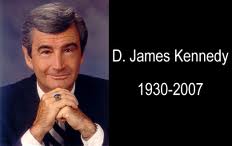
Dr. D. James Kennedy, was an American pastor, evangelist, and Christian broadcaster. He founded the Coral Ridge Presbyterian Church in Fort Lauderdale, Florida, where he was senior pastor from 1960 until his death in 2007. Kennedy also founded Evangelism Explosion International, Coral Ridge Ministries, the Westminster Academy in Ft. Lauderdale, the Knox Theological Seminary, and the Center for Reclaiming America for Christ.
Some years back, he wrote the following article “Turning the World Right Side Up” in Tabletalk magazine:

The apostles came into one of the bastions of paganism in the ancient world, and the cry went up that “these men who have turned the world upside down have come here also …” (Acts 17:6b). Now that is an amazing compliment, though it wasn’t intended to be one, that in such a brief period of time the apostles already were seen as those who had transformed the world. Now what those pagans didn’t know is that long since — since the fall of man — the world has been upside down, and what the apostles were doing was turning it right side up. But from the pagan perspective, as always, up is down and down is up; right is wrong and wrong is right.

This makes clarity of thought in doctrinal matters all the more crucial. We are not to allow our theology to be swayed by the upside-down mentality of the world. Right doctrine, indeed, Reformed doctrine, serves as the impetus for biblical evangelism. Many would suppose the opposite, as if the sovereignty of God in election is somehow opposed to the preaching of the Gospel. Our evangelism must be informed by sound, orthodox theology. What, then, does such theology look like?

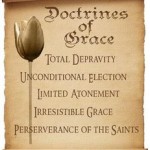
“Orthodoxy” can be paraphrased as “straight thinking.” It means the truth of the Christian faith — the historic truth. Now I must confess that I had a number of professors in seminary that did not believe in that, and they did their best to twist the minds of the students to get them also to disbelieve it. But despite the attempts of such men, we are to learn the historic orthodoxy of the faith. Some of those are called the fundamentals of the faith: the verbal plenary full inspiration and infallibility of the Scriptures; the full deity and humanity of Jesus Christ; the divine Trinity; the atonement of Christ; the resurrection of the body of Christ; His second coming. Those, of course, and many other great truths we are to learn, like the great truths of the Reformation — the five solas and the doctrines of grace.

Readers of Tabletalk are no doubt familiar with these, but do not be surprised when even ministers do not know what the doctrines of grace are. Not knowing what they are is tragic, indeed.

The doctrines of grace are sometimes called “the five points of Calvinism,” and these five points are called the doctrines of grace for this reason: to whatever extent you deviate from one of them, you deviate from grace. But what help are these five points to the evangelist? Why should salvation be by grace alone? In order that it may be of God. Salvation is of God, from alpha to omega, from infinity past to infinity future, beginning and end — it is all of God and for His glory.

This is what the doctrine of total depravity, for example, protects. It means not that man is as bad as he could be, but that every aspect of man’s being has been corrupted and tainted with sin. His mind, his understanding, his heart and affections, his will and volition are all corrupted. From the top of his head to the soles of his feet he is one huge sore and corrupt. Therefore, he is incapable of doing anything good in the sight of God, or even understanding. Not only does he have total sin, he also has total inability to understand or deal with spiritual things: “But the natural man (the unsaved man) receiveth not the things of the Spirit of God: for they are foolishness unto him: neither can he know them because they are spiritually discerned” (1 Cor. 2:14 KJV). Jesus taught us that the unregenerate man, the natural man, as he is called before conversion, has eyes and sees not spiritual things; he has ears and hears not; his mind is darkened and veiled; his heart is a stone and is at enmity with God.

Therefore, since the will always does what the mind and the heart tell it to do, it will always reject Christ, because basically the unsaved man hates God. He is hostile to God. He will never admit that, but that is the truth. Total depravity and inability describes man’s condition — there is nothing he can do to gain his salvation.

This was the orthodoxy of the church back from the very beginning, exemplified when Augustine labored and fought with Pelagius. The question was: Is natural man born dead in sin? Is he born alive and well, or is he merely sick? If he is dead, he needs God to resurrect him. If he is merely sick, then all he needs is a physician with whom he can cooperate. In that case, Jesus and he will do the saving. Glory be to them both. Always man is trying to gain some part of his salvation. If he is well, all he needs is a little instruction, and he will stay in the way everlasting and will never fall into sin.

Contrarily, the church from the very beginning taught what is now called Augustinianism, namely that man is dead in sins and, therefore, needs Christ to resurrect him. “You hath he quickened who was made alive, which were dead in trespasses and sins” (Eph. 2:1 KJV). How many people today seem to think that unsaved man has some ability to cooperate in his salvation? It is as if Jesus said to Lazarus: “Lazarus, if you will just come out of that tomb, I will make you alive.” And so Lazarus got up and walked out of the tomb as a dead man, and then Jesus made him alive. If you believe that, you will believe a lot of popular Arminian preaching of our time.
Continue reading

Are you Reformed?

Richard Lucas is a Resident with The NETS Institute for Church Planting and a Ph.D. candidate in New Testament at The Southern Baptist Theological Seminary. He has writen two excellent articles describing the theological map of Reformed thought:

Source: Part 1: http://www.credomag.com/2012/07/26/are-you-reformed-part-1/
Part 2: http://www.credomag.com/2012/07/27/are-you-reformed-part-2/

Perhaps the question has been posed to you at one time or another. The appropriate answer it seems depends almost as much on the questioner as the one replying. For those in the emerging “Young, Restless, and Reformed” category, they might not realize that not everyone else understands the self-describing moniker of “Reformed” in quite the same way.

I have two goals for these blog posts: 1) to sketch out something of the landscape of those who consider themselves “Reformed”; and 2) to provide some historical perspective to the development of the T.U.L.I.P. acronym in an effort to perhaps curb some misplaced enthusiasm.

Map of the Reformed Landscape
Here I’m merely surveying from my limited experience those who I’ve run into in the modern American Evangelical landscape. I also will focus on those groups most likely to interest readers of this blog, which is “self-consciously Evangelical, Reformational, and Baptistic.” My sympathies will become apparent as I don’t withhold my own biases along the way.

The survey really falls into more of a spectrum than separate categories, because there is quite a bit of overlap between various groups. Nevertheless I think some differentiation will still prove to be helpful, because these groups are often using the word “Reformed” in different senses (i.e. historically, soteriologically, biblical-theologically, etc.).

1) Theonomists –
They believe they are the only ones who are consistently reformed. To them being reformed is applying their bi-covenantal theology in every area of life, including ethics, in a thoroughly consistent manner. So, not just the OT moral law, but also the civil law is binding today (this is simplistic, but sufficient). Their claim is that they are the only ones who are truly reformed because they alone hold to the historic Protestant view of the Old Testament law as taught by many of the magisterial reformers. They are a small minority in Evangelicalism, nevertheless they continue to be a thorn in the side of the next group.

2) Confessionally Reformed –
This group is perhaps the most vocal critics of others co-opting the term “Reformed.” They claim an objective, ecclesiastical, and confessional definition to being Truly Reformed (TR). Agreement with the Three Forms of Unity (Belgic Confession, Heidelberg Catechism, and the Canons of Dort), or better yet…add three more and get Six Forms of Unity (throw in the Westminster Confession of Faith, as well as the Larger and Shorter Catechism) all from the 16th and 17th Century.

That can get cumbersome, so at times this group simply refers to subscription to the Westminster Standards as its litmus test…but then again, do they mean “loose” or “strict” subscription? This very question can seem to an outsider like they are more concerned with faithfulness to a document produced in 1644 than they are to the Bible. One loudly hears protests that the WCF is merely a subordinate standard to the Bible, but I fear this distinction is often lost in practice.

While I often use the term ‘Evangelical’ to refer broadly to those who find unity around the evangel and confess orthodox Christian doctrine in a Protestant heritage, they would not want to bear that label. This group considers themselves “Reformed Christians,” from which they distinguish themselves from being Evangelicals.

3) Reformed Baptists –
This group finds its common identity also around a confessional document from the 17th Century, namely the 1689 Second London [Baptist] Confession of Faith (a baptized version of the WCF). In this way, there is much shared ethos between Reformed Baptists and the Confessionally Reformed Presbyterians referenced above. The aforementioned group would not consider those holding a credobaptist position to be Truly Reformed, yet they seem to tolerate them sufficiently as evidenced by the fact that The Institute for Reformed Baptist Studies is integrated with Westminster Seminary California.
Continue reading