 The first ever question in the Universe was uttered by the crafty serpent to Adam’s wife Eve in the Garden of Eden, why would he ever need to change what is obviously a winning tactic? He knows that unless doubt is countered, it will lead to skepticism, and in due course, outright unbelief.
In former days it was just scholars who needed to be aware of this kind of material. Yet now that the blatant attacks on the Bible have gone mainstream in the media through men like Dan Brown and Bart Ehrman, Christians in our day need to be armed with answers. Here’s what we know:
The Jews had an unparalleled reverence for the Scripture. As the book of Deuteronomy expresses it, “man shall not live by bread alone but by every word that proceeds out of the mouth of God.” Jesus quotes this verse in response to the devil’s first temptation in the wilderness (Matthew 4:4, Luke 4:4).
We can determine Christ’s view of Scripture with even greater certainty from His words in Matthew 22. In the context of quoting from the book of Genesis, He said, “…have you not read what was spoken to you by God…” (Matt. 22:31) According to Jesus, when the text of Genesis is read, you are reading words spoken to you by God. To say that Jesus had a high view of the text of the Bible would be a huge understatement.
But that is not all. In Matthew 5:18, Jesus said, “For assuredly, I say to you, till heaven and earth pass away, one jot or one tittle will by no means pass from the law till all is fulfilled.” This is hugely significant. A “jot” is the Hebrew letter “yodh”, the 10th letter of the Hebrew alphabet. It is also the smallest letter. A “tittle” is the small decorative spur or point on the upper edge of the yodh. If you can imagine a tiny letter with a slightly visible decorative mark (similar to the dot used in the lower case letter “i” in our English language), the meaning of Christ’s statement becomes abundantly clear. Jesus was saying that not even the smallest letter or even a tiny mark above a Hebrew letter will ever disappear from God’s law, until all is fulfilled. He not only believed that inspiration extended to every word, but to every tiny mark on the page.
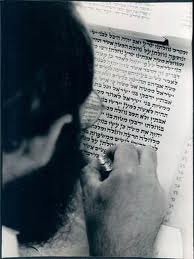
For an orthodox Jew, nothing was more sacred than the word of God. This meant that when it came to making copies of the Biblical text onto scrolls, each Jewish scribe was meticulous in the extreme, viewing his task as a high and holy calling. Tradition tells us that each scribe would actually take a bath before writing the name of God on a scroll, even if it appeared only a few words apart in a verse. Multiple references meant multiple baths!
As is the case in a number of other languages, each letter in Hebrew has a numerical value. This means that each line in the text could be given a numerical value, as did each page and each scroll. If the number total of the copied scroll was not the same as the original, the entire copy was burned. Similarly, if a letter even touched another letter, the copy would be destroyed and the scribe was asked to start his work all over again. Talk about precision!
Continue reading →

 Ok – now I am confused… It seems that rumours rather than facts are flying round the internet at an alarming rate today. A few hours ago, believing it to be fraudulent. Now it seems that this information is not accurate at all and that in fact they will. Stayed tuned for accurate news as this story develops.
 Hello! Hello! Main Stream Media… Hello! Anybody Home????