Gregory Alan Thornbury is president of The King’s College and the author of Recovering Classic Evangelicalism: Applying the Wisdom and Vision of Carl F. H. Henry (Crossway). In an article “How I Almost Lost the Bible” he I likely would have gone the way of liberal scholar Bart Ehrman.
I was born at the Evangelical Community Hospital in Lewisburg, Pennsylvania—a fact that once prompted a friend of mine to say, “You’re evangelical born, evangelical bred, and when you die, you’ll be evangelical dead.” My father, John Forrest Thornbury, was the model of a country parson, serving as the pastor of Winfield Baptist Church, a historic congregation in the American Baptist tradition, for 44 years.
My childhood environs prefigured what has become my life’s passion: the relationship of Christian faith to higher education. Lewisburg is home to Bucknell University, an elite private college whose alumni include two evangelical luminaries: Tim Keller, pastor of Redeemer Presbyterian Church in New York City, and Makoto Fujimura, acclaimed contemporary painter. Several years ago, Tim told me that he had occasionally attended my father’s church while at Bucknell.
Founded by a Baptist association, Bucknell originally existed to further the cause of Christ. Writing to fellow churches across Pennsylvania, the association’s leaders explained that through Bucknell, they sought “to see . . . the cause of God, the honor and glory of the Redeemer’s kingdom promoted in all our bounds, and spreading far and wide until the kingdoms of this world shall become the kingdoms of our Lord and his Christ.” Bucknell held its first classes in the basement of the First Baptist Church in the fall of 1846.
The school’s reputation loomed large in our community, but like so many other premier US colleges and universities, it slowly abandoned orthodoxy. Today, you would be hard-pressed to find anything on Bucknell’s website about its origins as a Christian institution. As I grew up, perhaps unconsciously I was aware of this fact: Faith is something that can be lost.
Still, because of my father, I heard the gospel faithfully preached every Sunday. My mother cooked bacon and eggs for me every morning and read to me passages from Jonathan Edwards, Matthew Henry, and Scottish minister Robert Murray M’Cheyne. But John and Reta Thornbury weren’t fundamentalists. My father wrote biographies of Reformed evangelist Asahel Nettleton and missionary David Brainerd, but he also kept the house supplied with records by Elvis, Johnny Cash, Jerry Reed, and Marty Robbins. And he never came home from the newsstand without bringing some comic books for me.
I professed faith and was baptized at age 9. My father had been nervous baptizing me, saying that I should be buffeted about by the world more before being baptized. I remember him citing as support Edwards, who said that authentic child conversions are rare. He was right. On every level, I seemed to be a fine Christian young person. I even preached my first sermon at age 14 to a statewide Sunday school convention, but I had no business doing so.
After high school, I attended a Christian liberal arts college. In the first semester of my freshman year, I signed up for a course with a brilliant, articulate, recently minted DPhil graduate of Oxford University. The textbook for our introduction to the Bible course was Jesus: A New Vision, by Marcus J. Borg, a prominent fellow of the Jesus Seminar. The scholarly project intended to discover “the historical Jesus” apart from creedal commitments or church teaching.
In that volume, Borg coolly explained that Jesus had never claimed to be the Son of God and had never thought of himself as Savior. We learned that the Bible was a pastiche of traditions and sources, cobbled together mainly in the second century. Our task as biblical interpreters was to unravel what was “authentically Jesus” from mythology and church tradition.
In a subsequent course on the synoptic Gospels, we read works from Robert W. Funk, the founder of the Jesus Seminar. We learned how to do form and redaction analysis, a method of study that assumes the author of a biblical text is motivated by a theological agenda rather than by reporting what he had seen. We simply “knew” that the book we were holding in our hands did not have a direct connection to the apostles whose names were associated with the Gospels and Epistles.
For me, this dose of higher criticism was nearly lethal. Any sense that the Bible was divinely inspired and trustworthy, or that the creeds had metaphysical gravitas, started to seem implausible. The best I could muster was that, somehow mystically, perhaps Jesus was the Christ, existentially speaking. I was approaching something close to New Testament scholar Bart Ehrman’s own story of losing faith.
Philosopher’s Defense
When I told my father what I was thinking, he was alarmed. He recommended different apologetics works that defended biblical authority. I sloughed them off. Keep in mind that this was an era before figures such as Craig Blomberg, N. T. Wright, and Luke Timothy Johnson had gained notoriety among evangelicals and had written their best work on the historical reliability of the Scriptures.
Then Dad had a brainstorm. He knew that I was enamored with modern philosophy. So one day when I phoned home, he said, “There’s an evangelical theologian who might interest you. His PhD is in philosophy. He believes the Bible is inerrant. His name is Carl F. H. Henry. Find the volumes of God, Revelation, and Authority in your library, and read them before you decide to give up the faith.”
Soon after, I walked down the long staircase at the college library, sat down on the floor in the stacks, and pulled out God, Revelation, and Authority. It was my own tolle lege—“take up and read!”—moment of crisis. The first lines of the first chapter of the first volume rang out to me:
No fact of contemporary Western life is more evident than its growing distrust of final truth and its implacable questioning of any sure word.
That was me. I kept reading for days on end. I cried and kept searching, and genuine faith began to awaken.
Henry helped secure my faith because he was doing more than responding tit-for-tat to higher critics of the Bible’s historical reliability. Henry did that, but he went one step further: He brought philosophical gravitas to God, Revelation, and Authority. His focus was broad. He addressed epistemology—how we can know the truth, which was my primary concern as an undergraduate philosophy student. I had come within a whisker of losing my faith. But because Henry was a philosopher defending biblical authority, I rallied.
Humanly speaking, had it not been for the first editor of Christianity Today, the theologian with a titanic brain and a journalist’s pen, I could have gone the other way. Henry showed me how to be both a scholar and a follower of Jesus. From that moment in my undergraduate days, I covenanted with God to help people like the 18-year-old version of myself—people who are on the boundary of leaving the church, and are looking for just one good reason to stay.
Nearly one decade after my dark night of the soul, Paul House, C. Ben Mitchell, Richard Bailey, and I wrote Henry at his retirement home in Watertown, Wisconsin, to express our collective appreciation for and indebtedness to his work. He wrote back, and invited us to visit him and his wife, Helga. Our time together began a wonderful season of visits, correspondence, and mutual encouragement.
Carl combined head and heart. Both piety and doctrinal precision mattered to him. Once, in a PhD seminar, a student asked 20th-century evangelicalism’s leading thinker: “What is the greatest question being asked in contemporary theology?”
Carl didn’t miss a beat: “The same question that the apostles posed to their generation: ‘Have you met the resurrected Lord?’ ”
That gritty, realistic response took me back to that library and to the books that helped secure my faith in the resurrected Lord. And all these years later, it’s clearer to me now more than ever: Carl F. H. Henry is still asking the right questions.

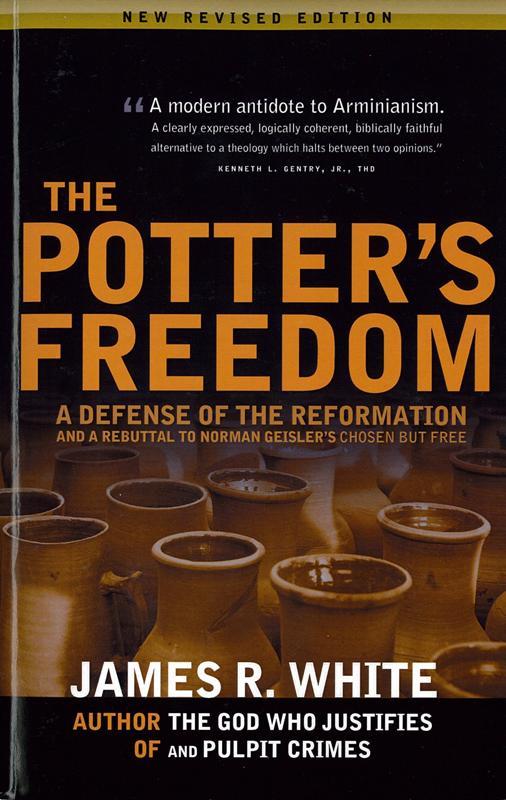 It was the visit to Scottsdale of Dr. Sproul in the year 2000 and Dr. James White’s book “The Potter’s Freedom” that were the two major means God used to turn me from a word of faith pastor into…. slowly but surely… over time… a Reformed Baptist pastor subscribing to the 1689 London Baptist Confession. A third means would be the vast theological resources of sermons and essays at monergism.com, a site hosted by John Hendryx.