
Sola Scriptura – Five Part Series

Part 1: Dr. James White – “Went 135 minutes today (hence the “uber-mega” designation) covering two primary topics: sola scriptura defined and defended against a recent attack upon it by Karlo Broussard of Catholic Answers (first 90 minutes), and then a “live” review of a new video against the deity of Christ from a Muslim perspective (link). A lot of foundational, basic teaching today that we think is very, very important for all believers!”

Part 2: Dr. James White – “We continued our series on sola scriptura today, looking at what sola scriptura is and is not. Touched on the issues raised by charismatic claims of “thus says the Lord” a bit as well. We really believe this is an important series, and hope our listeners will find it foundationally edifying.”

Part 3: Dr. James White – “Three topics on the program today; for the first 15 minutes or so a quick rejoinder to Jory Micah and her ‘El Shaddai means ‘one with many breasts” tweet, then about half an hour in response to Spencer Toy’s article on crossexamined.org, ‘An Open Question for Presuppositionalists.’ Then we got back for the last 45 minutes to our study of sola scriptura. We are now able, in the next program, to finally start working through Karlo Broussard’s comments on Catholic Answers Live.”

Part 4: Dr. James White – “Aside from a few brief comments at the start about a few current events we focused pretty much fully on the sola scriptura series, finally getting to the clip from the debate with Mitch Pacwa and listening to a number of segments from the Catholic Answers Live show with Karlo Broussard. Important information!”

Part 5: Dr. James White – “I managed to resist the temptation to do the ‘politics talk’ and finished up the introduction to sola scriptura today in a 90 minute program focusing upon the final sections of Karlo Broussard’s arguments on Catholic Answers Live, and then discussing two more important aspects, ‘Apostolic Tradition’ in the early fathers as well as the issue of the canon. Not easy material to cover, but so very important!”
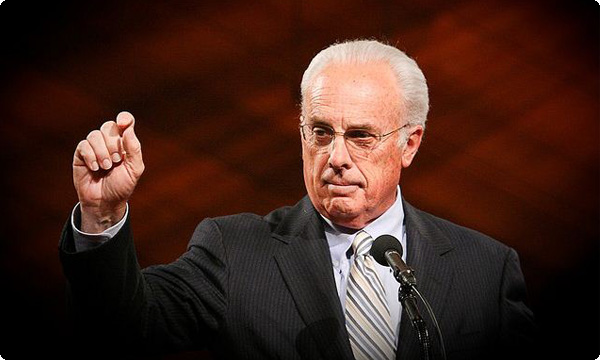
Sola Scriptura – Why It Still Matters

MacArthurArticle: Why Does Sola Scriptura Still Matter? by John MacArthur (original source John Calvin, and John Knox are still well-known today, five centuries after they lived. Through their writings and sermons, these courageous Reformers—and others like them—left an enduring legacy for the generations of believers who have followed them.

But the true power behind the Reformation did not flow from any one man or group of men. To be sure, the Reformers took bold stands and offered themselves as sacrifices for the cause of the gospel. But, even so, the sweeping triumph of sixteenth-century revival cannot ultimately be credited to either their incredible acts of valor or their brilliant works of scholarship. No, the Reformation can only be explained by something far more profound: a force infinitely more potent than anything mere mortals can produce on their own.

Like any true revival, the Reformation was the inevitable and explosive consequence of the Word of God crashing like a massive tidal wave against the thin barricades of man-made tradition and hypocritical religion. As the common people of Europe gained access to the Scriptures in their own language, the Spirit of God used that timeless truth to convict their hearts and convert their souls. The result was utterly transformative, not only for the lives of individual sinners, but for the entire continent on which they resided.

The principle of sola Scriptura (Scripture alone) was the Reformers’ way of acknowledging that the unstoppable power behind the explosive advance of religious reform was the Spirit-empowered Word of God. Continue reading

The Church Fathers on Sola Scriptura

Nathan Busenitz – original source Arius was arguably the most notorious heretic of the early church.

Though Arius’s heretical views were soundly condemned by the Council of Nicaea (in A.D. 325), the controversy he sparked raged for another fifty years throughout the Roman Empire. During those tumultuous decades, the defenders of Trinitarian orthodoxy often found themselves outnumbered and out of favor with the imperial court. Yet they refused to compromise.

Among them, most famously, stood Athanasius of Alexandria—exiled on five different occasions for his unwavering commitment to the truth. He was joined by the Cappadocian Fathers: Basil of Caesarea, Gregory of Nazianzas, and Gregory of Nyssa.

But how did these early Christian leaders know that the doctrine they were defending was, in fact, a truth worth fighting for? How did they know they were right and the Arians were wrong? Was it on the basis of oral tradition, a previous church council, or an edict from the bishop of Rome?

No. They ultimately defended the truth by appealing to the Scriptures. Continue reading