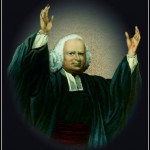
 “Come, ye dead, Christless, unconverted sinner, come and see the place where they laid the body of the deceased Lazarus; behold him laid out, bound hand and foot with graveclothes, locked up and stinking in a dark cave, with a great stone placed on top of it. View him again and again; go nearer to him; be not afraid; smell him, Ah! how he stinketh. Stop there now, pause a while; and whilst thou art gazing upon the corpse of Lazarus, give me leave to tell thee with great plainness, but greater love, that this dead, bound, entombed, stinking carcase, is but a faint representation of thy poor soul in its natural state;…thy spirit which thou bearest about with thee, sepulchered in flesh and blood, is literally dead to God, and as truly dead in trespasses and sins, as the body of Lazarus was in the cave. Was he bound hand and foot with graveclothes? So art thou bound hand and foot with thy corruptions; and as a stone was laid on the sepulchre, so there is a stone of unbelief upon thy stupid heart. Perhaps thou has lain in this estate, not only four days, but many years, stinking in God’s nostrils. And, what is still more effecting, thou art as unable to raise thyself out of this loathsome, dead state, to a life of righteousness and true holiness, as ever Lazarus was to raise himself from the cave in which he lay so long. Thou mayest try the power of thy boasted free will, and the force and energy of moral persuasion and rational arguments (which, without doubt, have their proper place in religion); but all thy efforts, exerted with never so much vigor, will prove quite fruitless and abortive, till that same Jesus, who said ‘take away the stone” and cried “Lazarus, come forth,” also quicken you. This is grace, graciously offered, and grace graciously applied. Or as the Confession originally puts it, “grace offered and conveyed.” – George Whitefield
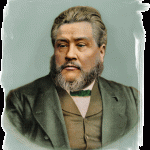 “Do not think Christians are made by education; they are made by creation. You may wash a corpse as long as you please, and that corpse could be clean, but you cannot wash life into it! You may deck it in flowers, and robe it in scarlet and fine linen, but you cannot make it live! The vital spark must come from above! Regeneration is not of the will of man, nor of blood, nor of the will of the flesh, but by the power and energy of the Spirit of God, and the Spirit of God alone! See then, the ruin of nature and the freeness of grace! Void and dark, a chaos given up to be covered with blackness and darkness forever, and, while as yet it is unseeking God, the light arises, and the promise is fulfilled, “I am found of them that sought me not; I said, behold me! behold me! to a people that were not a people.” While we were lying in our blood, filthily polluted, defiled, he passed by, and he said in the sovereignty of his love, “Live!” and we do live. The whole must be traced to sovereign grace! From this sacred well of discriminating distinguishing grace we must draw water this morning, and we must pour it out, saying, “Oh Lord, I will praise your name, for the first origin of my light was your sovereign purpose, and nothing in me.” – C. H. Spurgeon, Light, Natural and Spiritual” No. 660

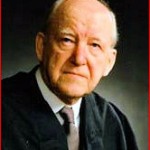 Surely we cannot accept… universalistic ideas, because, if we do so, it means that we find ourselves contradicting the plain teaching of Scripture in those places where there is a clear division between the saved and the unsaved, the good and the bad, the redeemed and the lost. In spite of the arguments based upon a philosophic idea of the love of God, the Scripture draws the ultimate distinction between eternal salvation and eternal destruction… There is only one salvation—by the blood of Christ—and no-one can enter the kingdom except by belief in Christ. Such is the Universal teaching of the Scripture…
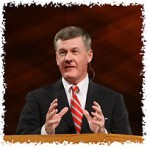 “In this system of theology [the doctrines of grace], the glory of God is central. As every planet revolves around the blazing sun, every truth of sovereign grace rotates around this one fixed point – the glory of God. The unrivaled pre-eminence of God stands at the focal point of this theological universe. That God is to be the chief object of praise in the display of His grace is what energized this solar system of truth. As the compass always points north, so the doctrines of grace constantly point upward the lofty heights of the glory of God.” – Steve Lawson, Foundations of Grace, A Long Line of Godly Men, Volume 1, page 31.