
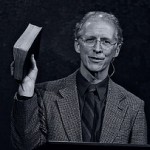
Am I a Calvinist? You decide!

We are Christians. Radical, full-blooded, Bible-saturated, Christ-exalting, God-centered, mission-advancing, soul-winning, church-loving, holiness-pursing, sovereignty-savoring, grace-besotted, broken-hearted, happy followers of the omnipotent, crucified Christ. At least that’s our imperfect commitment.

In other words, we are Calvinists. But that label is not nearly as useful as telling people what you actually believe! So forget the label, if it helps, and tell them clearly, without evasion or ambiguity, what you believe about salvation.

If they say, “Are you a Calvinist?” say, “You decide. Here is what I believe….”

I believe I am so spiritually corrupt and prideful and rebellious that I would never have come to faith in Jesus without God’s merciful, sovereign victory over the last vestiges of my rebellion. (1 Corinthians 2:14; Ephesians 2:1–4; Romans 8:7).

I believe that God chose me to be his child before the foundation of the world, on the basis of nothing in me, foreknown or otherwise. (Ephesians 1:4–6; Acts 13:48; Romans 8:29–30; 11:5–7)

I believe Christ died as a substitute for sinners to provide a bona fide offer of salvation to all people, and that he had an invincible design in his death to obtain his chosen bride, namely, the assembly of all believers, whose names were eternally written in the book of life of the Lamb that was slain. (John 3:16; John 10:15; Ephesians 5:25; Revelation 13:8)

When I was dead in my trespasses, and blind to the beauty of Christ, God made me alive, opened the eyes of my heart, granted me to believe, and united me to Jesus, with all the benefits of forgiveness and justification and eternal life. (Ephesians 2:4–5; 2 Corinthians 4:6; Philippians 2:29; Ephesians 2:8–9; Acts 16:14; Ephesians 1:7; Philippians 3:9)

I am eternally secure not mainly because of anything I did in the past, but decisively because God is faithful to complete the work he began—to sustain my faith, and to keep me from apostasy, and to hold me back from sin that leads to death. (1 Corinthians 1:8–9; 1 Thessalonians 5:23–24; Philippians 1:6; 1 Peter 1:5; Jude 1:25; John 10:28–29; 1 John 5:16)

Call it what you will, this is my life. I believe it because I see it in the Bible. And because I have experienced it. Everlasting praise to the greatness of the glory of the grace of God!

– John Piper, from the Desiring God blogsite.

Miscellaneous Quotes (25)

“He that hath slight thoughts of sin never had great thoughts of God.” – John Owen
“We know but little of true Christianity, if we do not feel a deep concern about the souls of unconverted people.” – J.C. Ryle

“When a Christian is weak, and can hardly pray for himself, Jesus Christ is praying for him; and he prays for three things.

First, that the saints may be kept from sin (John 17:15). “I pray that thou shouldest keep them from evil.” We live in the world as in a pest-house; Christ prays that his saints may not be infected with the contagious evil of the times.

Second, for his people’s progress in holiness. “Sanctify them” (John 17:17). Let them have constant supplies of the Spirit, and be anointed with fresh oil.

Third, for their glorification: “Father, I will that those which thou hast given me, be with me where I am” (John 17:24). Christ is not content till the saints are in his arms. This prayer, which he made on earth, is the copy and pattern of his prayer in heaven. What a comfort is this; when Satan is tempting, Christ is praying! This works for good.” – Thomas Watson: All Things for Good, 1663, (Carlisle, PA: Banner of Truth Trust, 2008), 23

“If you feel that you are empty, if you feel you are nothing, if you feel you are poor and wretched and blind, if you hate your inclination to sin and have any suspicion of a feeling of self-loathing and hatred, you can take it from me that you have eternal life, for no one ever experiences such things until the life of God comes into his or her soul.” – Martyn Lloyd-Jones

“If, however, you feel and are inclined to think you have made it, flattering yourself with your own little books, teaching, or writing, because you have done it beautifully and preached excellently; if you are highly pleased when someone praises you in the presence of others; if you perhaps look for praise, and would sulk or quit what you are doing if you did not get it—if you are of that stripe, dear friend, then take yourself by the ears, and if you do this in the right way you will find a beautiful pair of big, long, shaggy donkey ears.

Then do not spare any expense! Decorate them with golden bells, so that people will be able to hear you wherever you go, point their fingers at you, and say, “See, see! There goes that clever beast, who can write such exquisite books and preach so remarkably well.” That very moment you will be blessed and blessed beyond measure in the kingdom of heaven. Yes, in that heaven where hellfire is ready for the devil and his angels.” – Martin Luther, LW 34:287-288.

“Whatever works we perform are the results of our justification and in no way the grounds of it or the cause of it.” – R.C. Sproul

“Let God have your life; he can do more with it than you can.” – D.L. Moody

“Christianity, if false, is of no importance, and if true, of infinite importance. The only thing it cannot be is moderately important.” – C.S. Lewis

“The article of justification must be sounded in our ears incessantly because the frailty of our flesh will not permit us to take hold of it perfectly and to believe it with all our heart.” – Martin Luther

“Even the best things we do have something in them to be pardoned.” – J.C. Ryle

“There is no sadder sight than a young pessimist.” – Mark Twain

“The specter of death haunts the symphony of life like a cello. The trumpet, however, herald of the King, will triumph in the end.” – R. C. Sproul, Jr

“No man ever fell into error through being too watchful.” – Charles Spurgeon

“If we could only see our souls as the ten afflicted lepers saw their bodies, we would pray far better than we do.” — J.C. Ryle
Continue reading

John Stott Quotes on the Cross

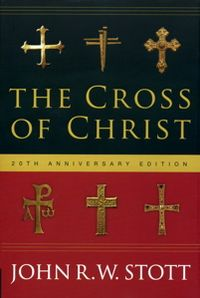
For the past several weeks, Tim Challies has been encouraging visitors to his blog to read “the Cross of Christ” by Dr. John Stott. Its a truly marvellous book.

This week, chapter 8 of the book is in view and the quotes Tim picks out for further consideration are well worth reading several times.

Truly, when Christ died and was raised from death, a new day dawned, a new age began. This new day is “the day of salvation” (2 Cor 6:2), and the blessings of “such a great salvation” (Heb 2:3) are so richly diverse that they cannot be neatly defined. Several pictures are needed to portray them. Just as the church of Christ is presented in Scripture as his bride and his body, the sheep of God’s flock and the branches of his vine, his new humanity, his household or family, the temple of the Holy Spirit and the pillar and buttress of the truth, so the salvation of Christ is illustrated by the vivid imagery of terms like propitiation, redemption, justification and reconciliation, which form the theme of this chapter.

Those four terms form the theme and the structure, allowing Stott to progressively reveal the salvation accomplished at the cross.

“They are not alternative explanations of the cross, providing us with a range to choose from, but complementary to one another, each contributing a vital part to the whole. As for the imagery, propitiation introduces us to rituals at a shrine, redemption to transactions in a marketplace, justification to proceedings in a court of law, and reconciliation to experiences in a home or family.” Substitution is not a theory of the atonement but the foundation of all of these words and concepts.

And so Stott turns to each of them. Let me share just three great quotes.

The reason why a propitiation is necessary is that sin arouses the wrath of God. This does not mean (as animists fear) that he is likely to fly off the handle at the most trivial provocation, still less that he loses his temper for no apparent reason at all. For there is nothing capricious or arbitrary about the holy God. Nor is he ever irascible, malicious, spiteful or vindictive. His anger is neither mysterious nor irrational. It is never unpredictable, but always predictable, because it is provoked by evil and evil alone. The wrath of God … is his steady, unrelenting, unremitting, uncompromising antagonism to evil in all its forms and manifestations. In short, God’s anger is poles apart from ours. What provokes our anger (injured vanity) never provokes his; what provokes his anger (evil) seldom provokes ours.

Tim writes: That last sentence gives us all an “ouch” moment, I think. Here is another good quote:

Our body has not only been created by God and will one day be resurrected by him, but it has been bought by Christ’s blood and is indwelled by his Spirit. Thus it belongs to God three times over, by creation, redemption and indwelling. How then, since it does not belong to us, can we misuse it? Instead, we are to honor God with it, by obedience and self-control. Bought by Christ, we have no business to become the slaves of anybody or anything else. Once we were slaves of sin; now we are the slaves of Christ, and his service is the true freedom.

In conclusion, at the end of the chapter, he says this:

Substitution is not a “theory of the atonement.” Nor is it even an additional image to takes its place as an option alongside the others. It is rather the essence of each image and the heart of the atonement itself. None of the four images could stand without it. I am not of course saying that it is necessary to understand, let alone articulate, a substitutionary atonement before one can be saved. Yet the responsibility of Christian teachers, preachers and other witnesses is to seek grace to expound it with clarity and conviction. For the better people understand the glory of the divine substitution, the easier it will be for them to trust in the Substitute.