
 How to Make an Effective Preacher – Author Unknown by Clint Archer (original source here)
John MacArthur, as the President of our seminary, read this out at my graduation ceremony. It has haunted me and inspired me since I became a pastor eleven years ago. When I am tempted to rethink and retool the focus of my ministry, I read and reread this lyrical piece of sage advice, and I am reassured that the priority of my calling is preaching God’s word in God’s way to God’s people.
As much as I love spending time with my flock, socializing and fellowshipping, counseling and discipling, I frequently remind myself that those tasks are essential, but not primary, and must happen only if/when the sermon preparation is complete for Sunday.
My goal is to deliver a well-crafted, thoroughly researched, biblically faithful, theologically sound, and practically applicable world class sermon every week. I will never enter the pulpit unprepared or even underprepared. In times of illness or urgent pastoral duties I have asked others at the last minute (who had been tasked with having “one in the chamber” at all times) to cover for me. But I have never once tried to wing it while standing before the sacred desk.
So, I’d like to share these hardcore marching orders to you, the congregation, to help your pastor be an effective preacher…
Fling him into his office. Tear the “Office” sign from the door and nail on the sign, “Study.”
Take him off the mailing list. Lock him up with his books and his Bible. Slam him down on his knees before a holy God and a holy text and broken hearts and a superficial flock.
Force him to be the one man in our surfeited communities who knows about God.
Throw him into the ring to box with God until he learns how short his arms are. Engage him to wrestle with God all the night through. And let him come out only when he’s bruised and beaten into being a blessing. Shut his mouth forever from spouting remarks, and stop his tongue forever from tripping lightly over every nonessential. Require him to have something to say before he dares break the silence. Bend his knees in the lonesome valley.
Burn his eyes with weary study. Wreck his emotional poise with worry for God. And make him spend and be spent for the glory of God. Rip out his telephone. Burn up his ecclesiastical success sheets. Give him a Bible and tie him to the pulpit. And make him preach the Word of the living God!
Test him. Quiz him. Examine him. Humiliate him for his ignorance of things divine. Shame him for his good comprehension of finances, batting averages, and political in-fighting. Laugh at his frustrated effort to play psychiatrist. Form a choir and raise a chant and haunt him with it night and day: “Sir, we would see Jesus!”
When at long last he dares assay the pulpit, ask him if he has a word from God. If he does not, then dismiss him. Tell him you can read the morning paper and digest the television commentaries, and think through the day’s superficial problems, and manage the community’s weary drives, and bless the sordid baked potatoes and green beans, ad infinitum, better than he can.
Command him not to come back until he’s read and reread, written and rewritten, until he can stand up, worn and forlorn, and say, “Thus saith the Lord.”
Break him across the board of his ill-gotten popularity. Smack him hard with his own prestige. Corner him with questions about God. Cover him with demands for celestial wisdom. And give him no escape until he’s back against the wall of the Word.
And sit down before him and listen to the only word he has left — God’s Word.
Let him be totally ignorant of the down-street gossip, but give him a chapter and order him to walk around it, camp on it, sup with it, and come at last to speak it backward and forward, until all he says about it rings with the truth of eternity.
And when he’s burned out by the flaming Word, when he’s consumed at last by the fiery grace blazing through him, and when he’s privileged to translate the truth of God to man, finally transferred from earth to heaven, then bear him away gently and blow a muted trumpet and lay him down softly.
Place a two-edged sword in his coffin, and raise the tomb triumphant.
For he was a brave soldier of the Word. And ere he died, he had become a man of God.
 The shepherd’s staff serves the dual purpose of rescuing lost sheep when their heads get caught in the hedges and fending off vicious wolves who seek to devour. In the same way, when God raises up a pastor, it is a gift to the people of God – a man who demonstrates God’s love for His sheep and yet also a man fearless when God’s people need protection. A Pastor needs both a tender and a brave heart.
 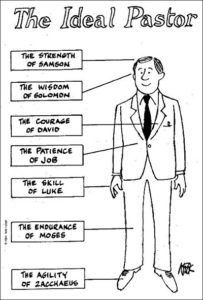 I am so blessed in getting to pastor the precious people at King’s Church. However, not every pastor’s experience mirrors mine. Here is an article about Pastors and the expectations often put upon them. (original source