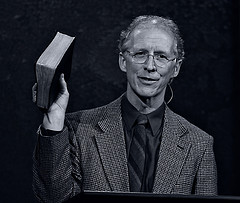
One of the Most Important Principles in Reading the Bible

By John Piper: Website: www.desiringGod.org. Email: [email protected]. Toll Free: 1.888.346.4700.

Sometimes readers of the Bible see the conditions that God lays down for his blessing and they conclude from these conditions that our action is first and decisive, then God responds to bless us.

That is not right.

There are indeed real conditions that God often commands. We must meet them for the promised blessing to come. But that does not mean that we are left to ourselves to meet the conditions or that our action is first and decisive.

Here is one example to show what I mean.

In Jeremiah 29:13 God says to the exiles in Babylon, “You will seek me and find me, when you seek me with all your heart.” So there is a condition: When you seek me with all your heart, then you will find me. So we must seek the Lord. That is the condition of finding him.

True.

But does that mean that we are left to ourselves to seek the Lord? Does it mean that our action of seeking him is first and decisive? Does it mean that God only acts after our seeking?

No.

Listen to what God says in Jeremiah 24:7 to those same exiles in Babylon: “I will give them a heart to know that I am the Lord, and they shall be my people and I will be their God, for they shall return to me with their whole heart.”

So the people will meet the condition of returning to God with their whole heart. God will respond by being their God in the fullest blessing. But the reason they returned with their whole heart is that God gave them a heart to know him. His action was first and decisive.

So now connect that with Jeremiah 29:13. The condition there was that they seek the Lord with their whole heart. Then God will be found by them. But now we see that the promise in Jeremiah 24:7 is that God himself will give them such a heart so that they will return to him with their whole heart.

This is one of the most basic things people need to see about the Bible. It is full of conditions we must meet for God’s blessings. But God does not leave us to meet them on our own. The first and decisive work before and in our willing is God’s prior grace. Without this insight, hundreds of conditional statements in the Bible will lead us astray.

Let this be the key to all Biblical conditions and commands: “Work out your own salvation with fear and trembling, for it is God who works in you, both to will and to work for his good pleasure.” (Philippians 2:12-13). Yes, we work. But our work is not first or decisive. God’s is. “I worked harder than any of them, though it was not I, but the grace of God that is with me” (1 Corinthians 15:10).
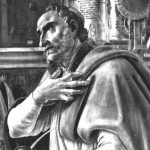
Augustine on Effectual Grace

Five quotes:

(1) Some might interpret ‘It is not of him who wills, nor of him who runs, but of God Who shows mercy’ (Rom.9:16), in this sense — that salvation comes from both, that is, both from the human will and from the mercy of God. In that case, we must understand the saying, ‘It is not of him who wills, nor of him who runs, but of God Who shows mercy,’ as if it meant that the human will alone is not sufficient, unless the mercy of God goes with it. But then it would follow that the mercy of God alone is not sufficient, unless the human will goes with it! Therefore, if we may rightly say, ‘it is not of man who wills, but of God Who shows mercy,’ because the human will by itself is not enough, why may we not also rightly put it the other way round: ‘It is not of God Who shows mercy, but of man who wills,’ because the mercy of God by itself is not sufficient? Surely, no Christian will dare to say this, ‘It is not of God Who shows mercy, but of man who wills,’ in case he openly contradicts the apostle!

So it follows that the true interpretation of the saying, ‘It is not of him who wills, nor of him who runs, but of God Who shows mercy,’ is that the entire work belongs to God, Who both makes the human will righteous, and prepares it in this way for His assistance, and then assists it when it is prepared. For human righteousness of will precedes many of God’s gifts, but not all of them; and it must itself be included among those gifts which it does not precede. We read in Holy Scripture, both that God’s mercy ‘shall meet me’ (Ps.59:10), and that His mercy ‘shall follow me’ (Ps.23:6). Mercy goes before the unwilling person to make him willing; it follows the willing person to make his will effective. Why are we taught to pray for our enemies, who are plainly unwilling to lead a holy life, unless that God may produce willingness in them? And why are we ourselves taught to ask in order that may receive, unless that He who has created in us the wish, may Himself satisfy the wish? We pray, then, for our enemies, that the mercy of God may go before them, as it has gone before us; and we pray for ourselves that His mercy may follow us.

Enchiridion, 32

(2) The kind of teaching we are talking about is spoken of by the Lord when He says: ‘Everyone who has heard and learned from the Father comes to Me’ (Jn.6:45). So if someone does not come to Christ, we cannot correctly say of him, ‘he has heard and learned that he ought to come to Christ, but he is not willing to do what he has learned.’ It is indeed absolutely improper to apply such a statement to God’s method of teaching people by grace. For if, as the Truth says, ‘Everyone who has learned comes,’ it follows, of course, that whoever does not come has not learned. But who can fail to see that a person’s coming or not coming is by the choice of his will? If a person does not come to Christ, he has simply made his choice not to come. But if he does come, it cannot be without assistance — such assistance that he not only knows what it is he ought to do, but actually does what he knows.

And so, when God teaches, it is not by the letter of the law, but by the grace of the Spirit. Moreover, He teaches so that whatever a person learns, he not only sees it with his perception, but also desires it with his choice, and accomplishes it in action. By this method of divine instruction, our very choosing itself, and our very performance itself, are assisted, and not merely our natural ‘capacity’ of willing and performing. For if nothing but this ‘capacity’ of ours were assisted by this grace, the Lord would have said, ‘Everyone that has heard and learned from the Father may possibly come to Me.’ This, however, is not what He said. His words are these: ‘Everyone who has heard and learned from the Father comes to Me.’

Now Pelagius says that the possibility of coming lies in our nature. Or as we even found him attempting to say some time ago, it lies in grace (whatever that may mean according to him), as when he says, ‘grace assists our capacity of coming to Christ.’ But he holds that our actual coming to Christ lies in our own will and act. Now just because a person may come to Christ, it does not follow that he actually comes, unless he has also willed and acted to come. But everyone who has learned from the Father not only has the possibility of coming, but actually comes! And in this result are already included the use of the capacity, the affection of the will, and the effect of the action.

On the Grace of Christ and Original Sin, 1:27
Continue reading

Effectual Grace

In so far as I can glean from the historical records, the phrase “effectual grace” was first coined by Augustine in his letter to Simplicianus in 396 AD. It describes grace of such power and magnitude that it accomplishes everything intended for it by God. It is grace that saves, really saves. It achieves no mere hypothetical salvation that only becomes effective if man decides to cooperate. Grace Saves. It raises spiritually dead men to life, imparting to them a new nature as the old heart of stone is removed and a pliable tender heart of flesh is put in its place, one that loves Christ and willingly submits to Him in repentance and faith, trusting Christ alone for salvation by grace alone through faith alone, renouncing all human merit and all other Saviors. No other grace is necessary and no other grace can accomplish this – only a miracle working grace that changes the disposition of the heart and carries the newly born again saint all the way to the heavenly shore, even to be conformed to the image of Christ. It is the grace that calls the sinner to faith in Christ with 100% success, for “these whom He called, He justified,” and it is the grace that causes all those justified to be fully glorified “these whom He justified, He glorified.” (Romans 8:29,30)

It was this kind of effectual grace that was in the mind and heart of John Newton as he penned the famous hymn:

Amazing Grace how sweet the sound
That saved a wretch like me
I once was lost but now am found
Was blind but now I see

T’was Grace that taught my heart to fear
And Grace, my fears relieved
How precious did that Grace appear
The hour I first believed

Through many dangers toils and snares
I have already come
Tis Grace hath brought me safe thus far
And Grace will lead me home

In speaking of grace in this way, we must always remind ourselves that grace is not a “thing” or “substance.” As Dr. Sinclair Ferguson said so well:

It is legitimate to speak of “receiving grace,” and sometimes (although I am somewhat cautious about the possibility of misuing this langauge) we speak of the preaching of the Word, prayer, baptism, and the Lord’s Supper as “means of grace.” That is fine, so long as we remember that there isn’t a thing, a substance, or a “quasi-substance” called “grace.” All there is is the person of the Lord Jesus — “Christ clothed in the gospel,” as John Calvin loved to put it. Grace is the grace of Jesus.

If I can highlight the thought here: there is no “thing” that Jesus takes from Himself and then, as it were, hands over to me. There is only Jesus Himself. Grasping that thought can make a significant difference to a Christian’s life. So while some people might think this is just splitting hairs about different ways of saying the same thing, it can make a vital difference. It is not a thing that was crucified to give us a thing called grace. It was the person of the Lord Jesus that was crucified in order that He might give Himself to us through the ministry of the Holy Spirit.